Skip to content
BETA

Menu

Account

Language

Practical Thailand guides

Practical Thailand guides

Step-by-step guidance for planning a trip, a longer stay or a move to Thailand.

  • Banking

    Chronological roadmap for your first 30 days in Thailand: 5G SIM, TM30 compliance, temporary housing, banking, and essential mobile apps.

    1 min read

    The First 30 Days in Thailand: Complete Expat Relocation Checklist 2026

    Banking

    The First 30 Days in Thailand: Complete Expat Relocation Checklist 2026

    Last reviewed: 23 September 2026 Written by Ricardo Santos

    Chronological roadmap for your first 30 days in Thailand: 5G SIM, TM30 compliance, temporary housing, banking, and essential mobile apps.

    The First 30 Days in Thailand: Complete Expat Relocation Checklist 2026

    Actionable 30-Day Relocation Roadmap: A smooth transition into Thailand requires executing tasks in a structured sequence to avoid immigration penalties, banking delays, and unnecessary rental expenses.


    Chronological Onboarding Timeline

    Timeline Critical Priority Actions
    Days 1–3 • Purchase a local postpaid/unlimited 5G SIM (AIS or True).• Download everyday lifestyle apps: Grab, Bolt, Lineman, Google Translate, ViaBus.• Confirm hotel TM30 lodging registration.
    Days 4–10 • Tour condominiums across 2–3 shortlist neighborhoods.• Negotiate 12-month lease with direct government MEA/PEA electric rates.• Conduct comprehensive photo move-in inspection.
    Days 11–20 • Open a local bank account using your lease and visa.• Activate mobile banking and instant PromptPay QR.• Schedule DLT appointment for driver's license conversion.
    Days 21–30 • Locate nearest international hospital trauma center.• Install home fiber broadband (AIS Fibre or True).• Set calendar reminders for 90-day reports and visa extensions.

    Sources

  • Banking

    Overview of school curriculums (IB, British, American, French), annual tuition ranges, and student/guardian visa processing in Thailand.

    1 min read

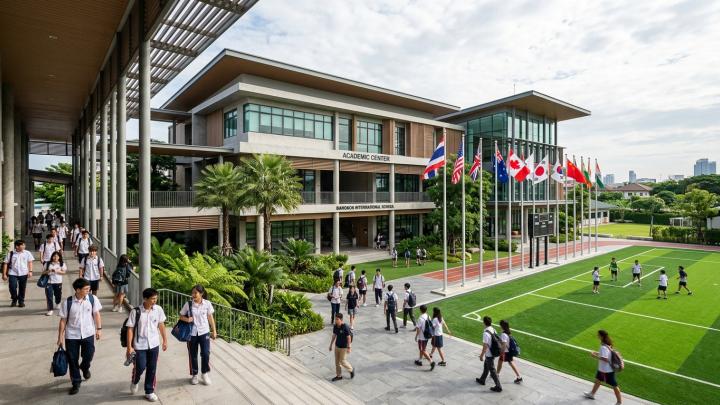
    International & Bilingual Schools in Thailand: 2026 Education Guide

    Banking

    International & Bilingual Schools in Thailand: 2026 Education Guide

    Last reviewed: 23 September 2026 Written by Ricardo Santos

    Overview of school curriculums (IB, British, American, French), annual tuition ranges, and student/guardian visa processing in Thailand.

    International & Bilingual Schools in Thailand: 2026 Education Guide

    Thailand International School Landscape: Over 200 accredited international schools operate across Thailand under ONESQA certification. Annual tuition ranges from 250,000 THB to over 1,000,000 THB per child depending on curriculum and campus facilities.


    1. Curriculum Comparison Matrix

    Curriculum Core Educational Focus Prominent Schools Annual Tuition Range
    British (IGCSE / A-Levels) Rigorous subject specialization Bangkok Patana, Shrewsbury, Harrow 450,000 – 950,000 THB
    International Baccalaureate (IB) Holistic inquiry-based learning NIST International, KIS 600,000 – 1,050,000 THB
    French (AEFE) French National Curriculum Lycée Français de Bangkok (LFIB) 280,000 – 480,000 THB
    English Program (EP Bilingual) 50/50 dual language Thai-English Sarasas, Assumption 150,000 – 280,000 THB

    Sources

  • Insurance

    Guide to working legally in Thailand: DTV remote work visa, digital work permits (WP.11), and the official list of 40 restricted occupations.

    1 min read

    Working Legally in Thailand 2026: Work Permits, DTV Visa & Restricted Jobs

    Insurance

    Working Legally in Thailand 2026: Work Permits, DTV Visa & Restricted Jobs

    Last reviewed: 23 September 2026 Written by Ricardo Santos

    Guide to working legally in Thailand: DTV remote work visa, digital work permits (WP.11), and the official list of 40 restricted occupations.

    Working Legally in Thailand 2026: Work Permits, DTV Visa & Restricted Jobs

    Core Thai Labor Law Principle: Any local employment within Thailand strictly mandates a Non-Immigrant B Visa and a valid Work Permit issued by the Department of Employment. Remote workers and digital nomads servicing exclusively foreign employers or international clients can legally operate under the Destination Thailand Visa (DTV).


    1. Legal Working Frameworks Compared

    Status Required Visa Work Permit Mandatory? Permitted Clients / Employer
    Thai Company Employee Non-Immigrant B YES (Digital Work Permit) Sponsoring Thai corporate entity
    Digital Nomad / Remote Professional DTV (Destination Thailand Visa) NO (Explicitly exempt) 100% overseas foreign employers & clients
    Foreign Business Owner / Director Non-Immigrant B YES (Director Work Permit) Thai Co., Ltd maintaining 4 Thai staff per permit

    2. Strictly Prohibited Occupations for Foreign Nationals

    Thai Royal Decree strictly reserves 40 professions exclusively for Thai citizens, including:

    • Tour Guide / Tour Leader
    • Hairdressing, Barbering, and Beauty Salon work
    • Driving passenger transport (taxis, tuk-tuks, vans)
    • Unskilled manual labor
    • Legal representation in court

    Sources

  • Visa & Immigration

    Complete guide to the 2026 Thailand Digital Arrival Card (TDAC): 72-hour window, official procedure, QR code, and common mistakes.

    3 min read

    TDAC 2026: Official Guide to the Thailand Digital Arrival Card

    Visa & Immigration

    TDAC 2026: Official Guide to the Thailand Digital Arrival Card

    Last reviewed: 23 September 2026 Written by Ricardo Santos

    Complete guide to the 2026 Thailand Digital Arrival Card (TDAC): 72-hour window, official procedure, QR code, and common mistakes.

    TDAC 2026: Official Guide to the Thailand Digital Arrival Card

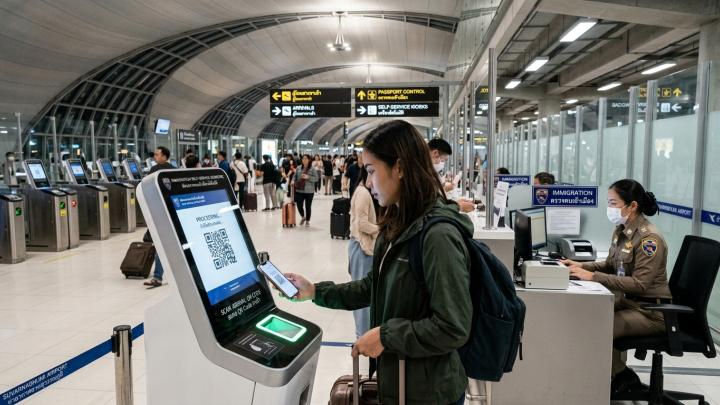
    2026 Official Regulation: The Thailand Digital Arrival Card (TDAC) permanently replaces the paper TM6 form for all international arrivals by air, sea, and land. Submissions must be completed exclusively online via the official Royal Thai Immigration portal (tdac.immigration.go.th).


    1. What is TDAC and Who is Required to Complete It?

    The TDAC is the mandatory digital arrival declaration established by the Royal Thai Immigration Bureau. Every non-Thai traveler entering the Kingdom of Thailand must submit this form prior to border immigration clearance.

    Who Must File the TDAC?

    • Tourists entering under visa exemption (60 days) or Tourist Visa (TR).
    • Long-term residents and visa holders (DTV, Non-Immigrant O, B, ED, LTR, Elite).
    • Minors and children: Each traveler, regardless of age, must have an individual TDAC linked to their passport number.

    Thai passport holders are exempt from filing the TDAC.


    2. When and How to Submit Your TDAC?

    The TDAC must be submitted within the 72-hour window prior to scheduled arrival in Thailand.

    Step Timeline Required Action
    1. Preparation Day -7 to Day -3 Gather: passport (valid > 6 months), flight number, 1st accommodation address in Thailand.
    2. Online Submission Within 72h of departure Visit tdac.immigration.go.th, fill out personal identity, flight details, and lodging info.
    3. QR Code Issuance Instant Download the confirmation PDF and save the QR Code to your mobile photo library.
    4. Border Clearance Upon Arrival Present the QR Code along with your passport at immigration counters or automated e-Gates.

    3. Required Information and Verification

    Ensure you have the following details ready before starting:

    1. Biometric Passport: Passport number, issuance/expiry dates, nationality.
    2. Flight Details: Arrival flight number (e.g., TG931, EK384) and scheduled arrival date.
    3. Exact Address in Thailand: Hotel name, condominium or private residence, province (Changwat), district (Amphoe), and postal code.
    4. Contact Info: Valid email address and active mobile phone number.

    Beware of Third-Party Scam Websites: The official TDAC application is 100% FREE OF CHARGE. Never enter payment details on unverified third-party websites claiming to charge "processing fees". The only authentic URL is tdac.immigration.go.th.


    4. Frequently Asked Questions (FAQ)

    What should I do if my flight or hotel changes after submitting the TDAC?

    You can log back into the official portal using your reference number and passport credentials to modify your flight details or initial accommodation address for free.

    Does the TDAC replace a Thai Visa?

    No. The TDAC is an arrival immigration declaration (landing card). It does not replace the visa requirements or visa exemptions governing your nationality.

    Does TDAC replace the TM30 notification upon arrival?

    No. The TDAC records your border crossing. The TM30 declaration remains strictly mandatory for your landlord or hotel within 24 hours of reaching your accommodation.

    Sources

  • Visa & Immigration

    Complete practical and legal guide to TM30 (24h notification) and TM47 (90-day reporting) in Thailand for 2026.

    2 min read

    TM30 & TM47: Residence Notification & 90-Day Report in 2026

    Visa & Immigration

    TM30 & TM47: Residence Notification & 90-Day Report in 2026

    Last reviewed: 23 September 2026 Written by Ricardo Santos

    Complete practical and legal guide to TM30 (24h notification) and TM47 (90-day reporting) in Thailand for 2026.

    TM30 & TM47: Residence Notification & 90-Day Report in 2026

    Core Legal Distinction:

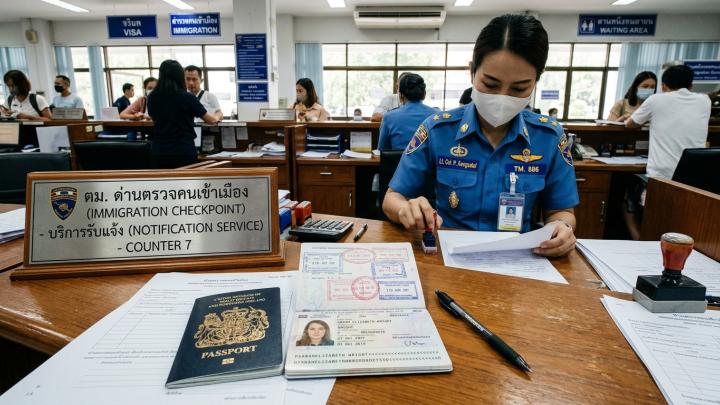
    1. TM30 (Section 38): Notification of alien residence, strictly mandatory within 24 hours of arrival at any property. Legally falls upon the landlord, property owner, or hotel manager.
    2. TM47 (Section 37): 90-day continuous stay reporting, a personal legal obligation of the foreign national residing in Thailand.

    1. TM30 Notification: Legal Duties, Steps, and Penalties

    The TM30 receipt is an essential document in Thailand. Without a valid TM30 receipt (Tor Mor 30), immigration offices will routinely deny visa extensions, 90-day reports, and certificates of residence.

    Who Must File the TM30?

    • Hotels & Guesthouses: Process automatic lodging registration via the commercial portal.
    • Private Landlords: Must file via tm30.immigration.go.th or the official mobile application.
    • Tenant Self-Filing: If the owner is unresponsive, tenants can file in person with the lease agreement, Chanote copy, and landlord's Thai ID/Tabien Baan copy.
    Failure to Report Penalty Statutory Fine Range
    Non-compliant landlord / hotel 800 to 2,000 THB per undeclared foreigner
    Foreigner living in self-owned condo 800 to 1,600 THB upon regularization

    2. TM47: Online 90-Day Stay Reporting

    Foreigners residing continuously in Thailand for more than 90 days without exiting the country must submit a TM47 notification every 90 days.

    Submission Windows:

    • Online (tm47.immigration.go.th): Between 15 days prior and the exact due date.
    • In-Person at Immigration: Between 15 days prior and 7 days after the due date.
    • Registered Mail: Sent at least 15 days prior to the due date.

    Leaving Thailand Resets the Clock: Every departure from Thailand resets your 90-day count to zero. Your re-entry date becomes Day 1.


    3. Frequently Asked Questions (FAQ)

    What happens if I miss my 90-day report deadline?

    A statutory fine of 2,000 THB will be assessed when reporting in person (up to 4,000 THB if arrested by authorities).

    Do I need to file a TM47 if I extend my visa before day 90?

    No. Processing a visa extension in person at immigration resets your 90-day reporting schedule.

    Sources

  • Moving to Thailand

    Practical guide to opening a bank account in Thailand in 2026: eligible visas (Non-Immigrant, LTR, Elite), DTV visa status, recommended banks, and TrueMoney Wallet alternative for PromptPay.

    3 min read

    Opening a Thai Bank Account in 2026: Requirements & Best Banks

    Moving to Thailand

    Opening a Thai Bank Account in 2026: Requirements & Best Banks

    Last reviewed: 23 September 2026 Written by Ricardo Santos

    Practical guide to opening a bank account in Thailand in 2026: eligible visas (Non-Immigrant, LTR, Elite), DTV visa status, recommended banks, and TrueMoney Wallet alternative for PromptPay.

    Opening a Thai Bank Account in 2026: Requirements & Best Banks

    Bank of Thailand 2026 Regulations & DTV Visa Status: Due to heightened Anti-Money Laundering (AML) controls and strict measures against mule accounts, traditional Thai banks now restrict bank account openings to residents with long-term visas and local anchoring (Non-Immigrant B with Work Permit, Non-Immigrant O marriage/retirement, LTR, Elite/Privilege). Important notice for DTV (Destination Thailand Visa) holders: As the DTV is classified under the nomad/special tourist category without a local work permit, traditional banks generally refuse to open standard bank accounts for DTV holders. However, DTV holders can register and use the TrueMoney Wallet for Foreigners app to scan and pay seamlessly via the nationwide PromptPay QR network.


    1. Recommended Traditional Banks for Eligible Foreigners

    Bank Expat Policy & Acceptance Required Visas & Conditions Mobile Banking Strengths
    Bangkok Bank (BBL) Most expat-friendly for long-term residents Non-O, Non-B, LTR, Elite + Certificate of Residence Direct SWIFT transfers and robust bilingual app
    Kasikornbank (KBank) Industry-leading K PLUS user interface Work Permit or long-term visa strictly required Effortless PromptPay integration and merchant QR scanning
    SCB (Siam Commercial Bank) Major presence across metropolitan branches Non-Immigrant visas with proof of income or lease Modern SCB EASY app with virtual card support
    Krungsri (Bank of Ayudhya) Expat-focused services backed by MUFG Non-Immigrant or LTR with financial background Favorable FX exchange rates and cross-border remittances

    2. Required Document Checklist (Physical Banks)

    Eligible applicants (Non-Immigrant, LTR, Elite) should bring the following to their branch appointment:

    1. Original Passport with valid visa sticker/stamp (Non-O, Non-B, LTR, Smart Visa, Elite).
    2. Work Permit or Proof of Residence: Work Permit book/digital WP, Immigration Certificate of Residence, or 1-year registered lease with TM30 slip.
    3. Income or Employment Proof: Thai employment contract, employer recommendation letter, or official pension slip for retirees.
    4. Registered Thai SIM Card: Active local mobile number registered under your name for 2FA SMS/OTP verification.

    3. DTV Visa Holders: The TrueMoney Wallet Solution for PromptPay

    Since physical bank branches generally refuse account openings for DTV holders, TrueMoney Wallet (Foreigner) serves as the most effective official solution for everyday living and spending in Thailand:

    Feature Details for DTV Visa Holders
    Eligibility & Sign-Up Open to foreigners with a valid passport and valid DTV visa stamp/e-visa.
    Identity Verification (e-KYC) Complete in-app passport scanning + biometric verification at any True Shop or 7-Eleven kiosk.
    PromptPay QR Payments Scan and pay instantly at any street food vendor, restaurant, mall, or supermarket accepting PromptPay QR.
    Wallet Top-Up Top up THB balance using international credit/debit cards (Visa/Mastercard, Wise, Revolut) or cash over-the-counter at 7-Eleven.
    Supported Services Bill payments, rides/orders on Grab / Lazada / Shopee, and peer-to-peer TrueMoney transfers.

    Pro-Tip for DTV Digital Nomads: Link an international multi-currency card (such as Wise or Revolut) to your TrueMoney account to easily fund your daily living expenses across Thailand without needing a local bank account.

    Sources

  • Moving to Thailand

    Comprehensive analysis of 2026 Thai taxation: 180-day rule, taxation of remitted foreign income, and Foreign Tax Credit guidelines.

    1 min read

    Foreigner Taxation in Thailand 2026: Tax Residency & Section 41

    Moving to Thailand

    Foreigner Taxation in Thailand 2026: Tax Residency & Section 41

    Last reviewed: 23 September 2026 Written by Ricardo Santos

    Comprehensive analysis of 2026 Thai taxation: 180-day rule, taxation of remitted foreign income, and Foreign Tax Credit guidelines.

    Foreigner Taxation in Thailand 2026: Tax Residency & Section 41

    Revenue Department 2026 Enforcement: Under Section 41 of the Thai Revenue Code, individuals present in Thailand for 180 days or more in a calendar year qualify as tax residents. Foreign-sourced assessable income remitted into Thailand is subject to Thai Personal Income Tax (PIT) progressive rates.


    1. Key Rules of Thai Tax Residency

    • 180-Day Rule: Staying in Thailand for 180 days or more between January 1 and December 31.
    • Domestic Income: Taxable in Thailand regardless of residency duration.
    • Foreign-Sourced Income: Taxable only when remitted or transferred into a Thai financial institution.

    2. Personal Income Tax (PIT) Brackets 2026

    Net Assessable Income (THB) Marginal Tax Rate
    0 – 150,000 THB 0% (Exempt)
    150,001 – 300,000 THB 5%
    300,001 – 500,000 THB 10%
    500,001 – 750,000 THB 15%
    750,001 – 1,000,000 THB 20%
    1,000,001 – 2,000,000 THB 25%
    2,000,001 – 5,000,000 THB 30%
    Over 5,000,000 THB 35%

    3. Double Taxation Agreements (DTA) & Foreign Tax Credit

    Thailand has active Double Tax Agreements with over 60 countries. Tax paid in your home jurisdiction on foreign income may be credited against Thai tax obligations using the Revenue Department's official Foreign Tax Credit provisions.

    Sources

  • Travel

    Complete guide to renting in Thailand in 2026: lease negotiation, direct MEA/PEA utility rates, TM30 registration, and deposit return.

    1 min read

    Renting a Condo or House in Thailand 2026: Leases, Deposits & Pitfalls

    Travel

    Renting a Condo or House in Thailand 2026: Leases, Deposits & Pitfalls

    Last reviewed: 23 September 2026 Written by Ricardo Santos

    Complete guide to renting in Thailand in 2026: lease negotiation, direct MEA/PEA utility rates, TM30 registration, and deposit return.

    Renting a Condo or House in Thailand 2026: Leases, Deposits & Pitfalls

    2026 Standard Rental Terms: Long-term leases in Thailand typically require a 12-month contract, with 2 months security deposit + 1 month advance rent. Always insist on paying direct government electricity rates (MEA in Bangkok / PEA in provinces) at standard rates of approximately 4 to 5 THB per kWh.


    1. Essential Lease Agreement Clauses

    1. TM30 Commitment: Landlord must explicitly agree to submit the TM30 notification within 24 hours of move-in.
    2. Direct Utility Billing: Avoid apartments charging inflated private rates (e.g., 8–10 THB/kWh). In condos, pay government bills directly via mobile banking or convenience stores.
    3. Air Conditioner Maintenance: Units must be professionally serviced before handover; routine 6-month cleanings (~500 THB/unit) are customary for tenants.
    4. Detailed Photo Inventory: Document every pre-existing mark, scratch, and appliance condition on move-in day.

    2. Security Deposit Return Procedure

    • Standard deposit refund timelines range between 30 to 45 days following key return to settle final utility bills.
    • Include a specific clause detailing refund terms via bank transfer upon satisfactory final inspection.

    Sources

  • Visa & Immigration

    What the ED visa actually covers, from short-term language courses to full degree programs, how the application and 90-day reporting process works, and a clear warning about the 'visa mill' schools to avoid.

    6 min read

    Studying in Thailand: The Non-Immigrant ED (Education) Visa Explained

    Visa & Immigration

    Studying in Thailand: The Non-Immigrant ED (Education) Visa Explained

    Last reviewed: 19 July 2026 Written by Ricardo Santos

    Ron Lach / Pexels

    What the ED visa actually covers, from short-term language courses to full degree programs, how the application and 90-day reporting process works, and a clear warning about the 'visa mill' schools to avoid.

    The Non-Immigrant "ED" visa is Thailand's education visa: a long-stay visa category for foreigners coming to study, covering everything from a short-term Thai-language course to a full university degree or a Ministry of Education-registered vocational program. It is genuinely useful for real students — and it has also been, historically, one of the most abused visa categories in Thailand, which is why due diligence matters as much as the paperwork itself. This guide explains how the ED visa actually works, end to end, and how to avoid the schemes built around it.

    What the ED visa covers

    The ED visa is not one fixed product; it spans a spectrum of study types, and the conditions attached to it depend heavily on what — and where — you are actually studying.

    The basic end: short-term language study

    At the simpler end, foreigners enroll in a Thai-language (or other language) course at a school registered with Thailand's Ministry of Education. This typically supports an initial visa or permit-of-stay period that is extended in relatively short increments while enrollment continues, with real class attendance expected. Because pure language-study ED visas were, for years, the category most exploited by "visa mill" operators (see below), Thai Immigration has periodically tightened how long a language-course ED visa can be renewed for — in practice, cumulative language-study stays are often capped well before an indefinite continuation, commonly discussed as being limited to roughly a year or so of pure language study at many immigration offices, though exact limits and enforcement vary by school, by immigration office, and over time. Never treat a specific duration as guaranteed; confirm current practice with the school and with Thai Immigration directly.

    The advanced end: degree and registered vocational study

    At the more substantial end, the same visa category covers enrollment in a full university degree program (undergraduate or postgraduate) at a Thai higher-education institution, or in vocational and professional training providers that are properly registered with the Ministry of Education or the relevant Thai authority — this includes some Muay Thai training programs and other professional/technical courses, provided the training provider holds real MOE-recognized registration rather than simply advertising "visa courses." For genuine degree and registered-program students, the ED visa is renewable annually for the duration of the study program, tied to continued enrollment and academic progress confirmed by the institution.

    How the application and extension process works

    The general path is broadly consistent regardless of the type of study:

    1. Enrollment first. You need a confirmed offer or letter of acceptance from an institution properly registered with the Ministry of Education (via the Office of the Private Education Commission for private schools, or the relevant higher-education authority for universities) before a visa application can proceed.
    2. Initial visa application. This is normally done at a Thai embassy or consulate in your home country (or country of legal residence) using the Non-Immigrant "ED" category, supported by the institution's documents, proof of financial means, and standard visa-application paperwork (TM7 form, photos, passport validity).
    3. Arrival and address registration. Once in Thailand, your accommodation (or you, if renting privately without a registered landlord filing it) generally needs to notify Immigration of your address (TM30) — hotels and many landlords handle this automatically, but it's worth confirming.
    4. 90-day reporting. As with other long-stay visa categories, ED-visa holders must report their current address to Thai Immigration every 90 days (TM47), either in person, by mail, or online, for as long as they remain in the country continuously.
    5. Extensions. Extending your permit of stay is handled at a Thai Immigration office inside Thailand, and each extension typically requires an updated confirmation letter from the school or university verifying continued enrollment and — increasingly scrutinized — genuine attendance.

    Exact document lists, fees, and processing details change and also vary somewhat by immigration office, so always confirm current requirements directly with the Thai embassy/consulate handling your application and with the Immigration office that will handle your extensions, rather than relying solely on a school's summary of the process.

    Scam warning: "visa mill" schools

    This is the part of the ED visa system every prospective student should read carefully. For years, a number of Thailand's language schools and course providers have functioned less as real schools and more as "visa mills" — operations whose actual business model is selling long-stay visa status, with little or no real class attendance required. Thai authorities have carried out periodic crackdowns on these operations (Thai Immigration and the Ministry of Education have both, at different points, delisted or investigated schools found to be issuing enrollment documents without providing genuine education), and getting caught up with a delisted or fraudulent provider can put your entire visa status at risk, not just your course fees.

    Red flags to watch for:

    • A school whose marketing leads with "get your visa" rather than with the course content, teachers, or curriculum.
    • Promises of little or no real class attendance, or vague statements like "you don't really need to show up."
    • Package pricing that bundles "visa service" as the product, rather than pricing a genuine course with the visa support as a normal administrative service.
    • No visible, specific class schedule, no real curriculum outline, and no ability to see a sample class or meet a teacher before enrolling.
    • A school that cannot show, or is evasive about, its Ministry of Education / Office of the Private Education Commission registration.
    • Reports or reviews from past students describing the school as never actually checking attendance.

    Due-diligence steps before enrolling:

    • Verify the school's registration directly — Thailand's Ministry of Education (moe.go.th) and the Office of the Private Education Commission (opec.go.th) oversee registered private education providers; a legitimate school should be able to confirm its registration status without hesitation.
    • Ask for the actual weekly class schedule and the minimum attendance requirement, and treat vague or evasive answers as a warning sign, not a detail to sort out later.
    • Cross-check the school's reputation with independent reviews and expat/student communities, not only its own marketing materials.
    • Confirm current visa and extension requirements directly with Thai Immigration (immigration.go.th) — policy and enforcement around education visas has changed multiple times, and a school's claims about visa rules are not a substitute for the current official position.
    • Be especially cautious of "too good to be true" pricing for a full visa-and-course package — legitimate education has real delivery costs, and unusually cheap all-inclusive visa packages are a recurring pattern in past crackdowns.

    The ED visa is a legitimate, useful route for people who are genuinely in Thailand to study — but it only stays that way if the institution behind it is real. Treat "is this a real school" as at least as important a question as "will I get the visa."

    Sources

  • Education

    How Thai public education actually works from kindergarten to university, what private and international schools cost and where they cluster, and how the country's language-school landscape fits together — a plain-language guide before you enroll a child or start a course.

    6 min read

    Thailand's Education System: Public Schools, Private Schools and Language Schools

    Education

    Thailand's Education System: Public Schools, Private Schools and Language Schools

    Last reviewed: 19 July 2026 Written by Ricardo Santos

    Ron Lach / Pexels

    How Thai public education actually works from kindergarten to university, what private and international schools cost and where they cluster, and how the country's language-school landscape fits together — a plain-language guide before you enroll a child or start a course.

    Thailand's education landscape is a mix of a large public system run by the Ministry of Education, a fast-growing private and international-school sector concentrated in a handful of cities, and a wide range of language schools serving both foreign residents learning Thai and Thai students learning English and other languages. This guide walks through all three, in plain terms, so you can understand how schooling actually works before you plan a family move, choose a school, or budget for tuition.

    Public and state schools

    Early years through lower secondary

    Thai public education follows a structure familiar to most parents moving from abroad, but with local names worth learning. Children usually start with anuban (kindergarten), roughly ages 3 to 5, which is widely attended but not compulsory. Primary school, prathom 1 to 6, covers ages 6 to 12. Lower secondary, matthayom 1 to 3 (often written M1-M3), follows directly. Together, primary and lower secondary make up Thailand's legally compulsory education: nine years, from prathom 1 through matthayom 3, under the Compulsory Education Act. Beyond that, government policy has extended free basic education well past the compulsory minimum, covering pre-primary through the end of upper secondary in public schools, administered mainly through the Office of the Basic Education Commission (OBEC) under the Ministry of Education.

    Upper secondary and the academic calendar

    Upper secondary, matthayom 4 to 6 (M4-M6, roughly ages 15 to 18), is not compulsory but is free in public schools and is where students choose a track — broadly science-math, arts-language, or vocational-oriented streams — that shapes their later university applications. The Thai academic year does not follow the Northern Hemisphere September-to-June pattern: it typically runs from mid-May to around March, split into two semesters with a short break around October and a longer break over the Thai summer (April), which matters for anyone timing a family relocation or transfer. Instruction in standard public schools is in Thai. A subset of public schools run English Program (EP) or Mini English Program (MEP) tracks that teach a portion of the curriculum in English, but full public education in English is the exception rather than the rule.

    University and higher education

    Higher education is where Thailand's public university system becomes genuinely internationally regarded. Admission to public universities runs through TCAS (Thai University Central Admission System), a centralized, multi-round process — including portfolio-based rounds, quota rounds, and a general admission round — that replaced the older separate entrance-exam system. Students apply and rank preferred faculties through the official TCAS platform. Long-established public universities with strong international reputations include Chulalongkorn University and Thammasat University in Bangkok, and Mahidol University, particularly recognized for medicine and the sciences; other major public universities include Chiang Mai University and Kasetsart University. Many public universities also run international programs taught fully in English, alongside their standard Thai-medium faculties, and these are increasingly popular with both Thai and foreign students.

    Private and international schools

    Curricula and accreditation

    Outside the public system, Thailand has a large and diverse private-school sector, broadly split into two tiers. Bilingual schools generally follow the Thai national curriculum with a significant English-language component, sometimes marketed as an "English Program" within an otherwise Thai school. Full international schools instead follow a foreign curriculum end to end — commonly the British curriculum (IGCSE and A-Levels), the American curriculum (AP courses and a US-style high-school diploma), or the International Baccalaureate (IB, from the Primary Years Programme through the Diploma Programme). Private schools operating in Thailand are registered with the Office of the Private Education Commission (OPEC), a body under the Ministry of Education, and many international schools additionally hold accreditation from recognized international bodies (such as the Council of International Schools or US regional accreditors) on top of that domestic registration — worth checking independently for any school you're considering, since accreditation quality varies.

    Where international schools concentrate

    International and bilingual schools are not spread evenly across the country. Bangkok has by far the largest concentration and the widest range of curricula, reflecting its size and its large expatriate and affluent local population. Chiang Mai has a smaller but genuinely established international-school scene, popular with long-term expat and digital-nomad families. Phuket and the Pattaya/Chonburi area also host a meaningful number of international schools, tied to their resident foreign communities. Outside these four hubs, options for full international curricula thin out considerably.

    Typical fees and the enrollment process

    Fees vary enormously by school prestige, curriculum, campus, and grade level, so treat any figure as a general market range rather than a quote. As a rough guide: bilingual, Thai-English programs tend to run somewhere in the order of 150,000 to 400,000 THB per year. Full international or IB schools tend to run higher, roughly 300,000 to 900,000+ THB per year at primary level, generally rising further at secondary and IB Diploma level. On top of tuition, expect a non-refundable registration or application fee, sometimes a refundable enrollment deposit, and separate costs for uniforms, books, and materials. Popular schools — particularly well-regarded international schools in Bangkok — commonly run waiting lists, so early enrollment enquiries and entrance assessments (academic testing and/or a family interview) are standard practice rather than a formality. This guide intentionally does not name or recommend individual schools; treat all school-specific claims (fees, curriculum details, accreditation status) as something to verify directly with the institution and, where relevant, with OPEC.

    Language schools

    Learning Thai as a foreigner

    Alongside the school system, Thailand has a substantial network of language schools and language centers, most heavily concentrated in Bangkok and Chiang Mai. For foreign residents, the most common reason to enroll is learning Thai — for daily life, for work, or, in many cases, because enrollment at a Ministry of Education-registered language school is itself the basis for an ED (education) visa (covered in detail in a separate guide). Thai-language schools range from small independent operators to larger, longer-established institutes, and quality and real classroom rigor vary significantly between them — a point worth taking seriously rather than treating language study as a formality.

    English and other language schools

    For Thai students and professionals, English-language schools and tutoring centers are widespread, ranging from large international chains to small local academies, reflecting strong demand for English proficiency for work, study abroad, and international university programs. Beyond English and Thai, language schools teaching Chinese, Japanese, Korean, and other languages have grown alongside Thailand's expanding regional trade and tourism ties, particularly in Bangkok.

    Course structures

    Course formats are fairly consistent across the sector: group classes (typically the most affordable option), one-on-one private tutoring (more expensive, more flexible), and a choice between intensive courses (several hours a day, multiple days a week — the format most relevant for anyone using study as the basis for a long-stay visa) and part-time or evening/weekend courses aimed at residents balancing study with work. Course length, weekly hour requirements, and pricing differ meaningfully from school to school, so comparing actual class schedules — not just marketing material — is the most reliable way to judge a program before enrolling.

    Sources

  • Travel

    From a relaxed afternoon stir-frying pad thai to structured, multi-week culinary programs that can support a Non-Immigrant ED visa: how Thailand's cooking-class scene actually works, region by region, dish by dish.

    10 min read

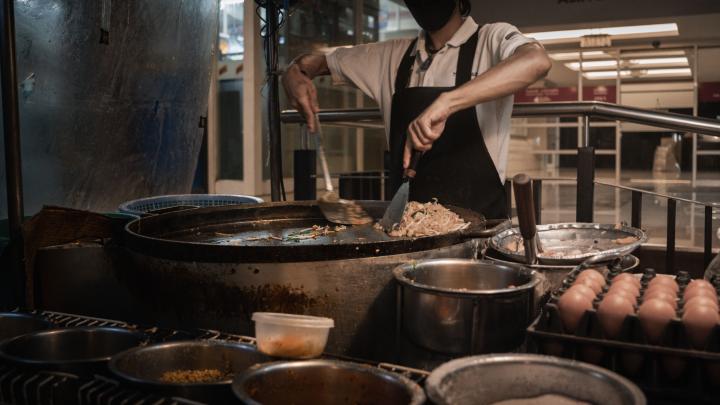
    A chef stir-frying Thai food over a hot wok at a street food stall in Thailand

    Travel

    Learning Thai Cuisine: Cooking Classes, Costs, and the Culinary Training Visa Route

    Last reviewed: 19 July 2026 Written by Ricardo Santos

    Photo by Kim Villanueva / Pexels

    From a relaxed afternoon stir-frying pad thai to structured, multi-week culinary programs that can support a Non-Immigrant ED visa: how Thailand's cooking-class scene actually works, region by region, dish by dish.

    Thai food is one of the main reasons people fall in love with the country, and for a growing number of travellers, eating it isn't enough — they want to learn how it's made. Thailand has built a genuine cooking-class industry around that curiosity, running from a single relaxed afternoon in a hotel kitchen to structured, multi-week culinary programs that can anchor a long stay in the country. This guide walks through why Thai cuisine rewards the effort, what a class actually looks like, what it costs, where the country's cooking-school scene concentrates, and — for anyone thinking well beyond a holiday souvenir — how a genuine culinary education can connect to Thailand's Non-Immigrant "ED" (education) visa.

    Why Thai cuisine is worth learning

    Thai food is often flattened into a handful of export dishes — pad thai, green curry, tom yum — but the cuisine actually eaten across the country is far more regionally distinct than that shortlist suggests. Central Thai cooking, the style most familiar internationally, balances sweet, sour, salty, and spicy in the same dish, often within a single bite, using palm sugar, tamarind, fish sauce, and fresh chillies in careful proportion. Northern (Lanna) cuisine, centred on Chiang Mai and the old kingdoms around it, is generally milder and more herbal, built around dishes like khao soi (a curried noodle soup with Burmese and Yunnanese influence), sai ua (herb-packed grilled sausage), and nam prik varieties eaten with sticky rice and raw or blanched vegetables. Northeastern (Isaan) food, closely tied to neighbouring Laos, leans sour, funky, and fiery — som tam (green papaya salad), larb (minced meat salad with toasted rice powder), and grilled meats built around fermented fish sauce (pla ra) rather than the milder fish sauce used elsewhere. Southern Thai cuisine, shaped by the peninsula's Malay and Muslim influence and its access to seafood, is typically the spiciest and most turmeric-forward of the four, seen in dishes like gaeng tai pla and khao yam.

    What ties these regional cuisines together, more than any single flavour, is technique: a reliance on fresh herbs and aromatics — galangal, lemongrass, kaffir lime leaf, Thai basil, cilantro root — pounded rather than simply chopped, and a cook's instinct for balancing the four core tastes against each other rather than following a fixed recipe. That instinct is genuinely difficult to pick up from a cookbook alone, which is exactly why hands-on classes have become so popular: they teach the logic of Thai cooking, not just a list of steps.

    What a typical cooking class looks like

    "Thai cooking class" covers a wide range of actual experiences, and it's worth knowing the differences before booking one.

    Format. The most common option is a half-day class, usually three to four hours, held either at a dedicated cooking school, a hotel kitchen, or a home-style setup run by a local family. Full-day classes extend this with a market tour at the start — walking through a fresh or wet market with an instructor who explains unfamiliar herbs, curry pastes, and produce before you cook with them — and sometimes cover a longer menu or an additional cooking technique, such as making your own curry paste from scratch with a mortar and pestle rather than using a pre-made one.

    Kitchen-only versus market-inclusive. Kitchen-only classes save time and are more predictable (useful if you're short on a day), but market-inclusive classes are widely considered the more rewarding introduction to Thai food culture, since they show where ingredients actually come from and why Thai cooks choose particular vegetables, herbs, or cuts of meat. Chiang Mai in particular is well known for this market-to-table style of class, often built around one of the city's produce or morning markets.

    Skill level. Casual one-off classes assume no prior cooking experience and are designed for tourists fitting a few hours into an itinerary — they typically walk small groups through four or five classic dishes with a lot of hands-on guidance. At the other end, structured multi-week courses and professional culinary-school programs are aimed at people who want a real qualification: proper knife skills, food-safety training, menu planning, and enough repetition to actually retain technique, not just a pleasant afternoon.

    Typical costs. As a general market range rather than a fixed quote — prices vary by city, venue, and inclusions — a single half-day tourist class in Thailand commonly runs somewhere in the order of 800 to 1,800 THB per person, with market-inclusive or full-day classes often landing in a 1,500 to 3,000+ THB range. Private classes, small-group premium formats, or classes at higher-end hotels can run well above that. Multi-week or longer structured culinary programs, by contrast, are priced more like a course than an activity — costs can run from the tens of thousands of THB up into six figures (THB) depending on the institution, program length, and whether it leads to a recognized culinary qualification. Always confirm current pricing directly with the school; these are rough orientation figures, not quotes.

    Where cooking schools concentrate

    Thailand's cooking-class scene isn't spread evenly across the country — it concentrates in a handful of well-established hubs. Bangkok has the largest and most varied offering, from budget-friendly group classes to high-end culinary institutes, reflecting the capital's size and its role as the country's main hospitality and culinary-training centre. Chiang Mai is particularly well known for market-to-table style classes and home-style, family-run schools, helped by its strong food culture and relatively relaxed pace. Phuket and Koh Samui are also commonly cited hubs, largely because of their concentration of resorts and hotels that run cooking classes as part of a broader guest-activity offering, often with a stronger seafood focus given their coastal setting. This guide deliberately doesn't name or link to individual commercial schools — treat any specific business you find through your own research the same way you would any other tourism operator: check recent reviews, confirm what's actually included, and compare a few options before booking.

    What to expect, and how to prepare

    A typical class starts with introductions and a rundown of the day's menu, followed either directly by cooking or by a market walk first. Expect hands-on cooking rather than pure demonstration at nearly all tourist-facing classes — you'll be at your own wok or station for most dishes, with the instructor circulating to correct technique, not cooking for you while you watch. Most schools provide a printed or digital recipe booklet to take home, and some include a small take-home kit of curry paste or spices you made during the class.

    Dietary needs. Vegetarian, vegan, and allergy-conscious adaptations are generally well accommodated in Thailand's cooking-class industry, since many core techniques (stir-frying, curry-making, salads) adapt naturally to substituting tofu or vegetables for meat and swapping fish sauce for a soy-based alternative. That said, "generally accommodated" is not a guarantee for any specific school or dish — confirm your dietary requirements directly with the school before booking, especially for serious allergies (shellfish and peanuts in particular), since shared kitchen equipment and pastes made in bulk can carry cross-contamination risk even when a substitute ingredient is used in your own dish.

    Hygiene and food safety. Reputable cooking schools that cater to tourists generally follow standard commercial kitchen hygiene practices — you should expect a clean, organized kitchen, properly stored ingredients, and an instructor who handles raw meat and produce separately. As with any food-related activity anywhere in the world, it's reasonable to use ordinary judgment: a well-reviewed, established operation with a real kitchen setup is a safer bet than an ad hoc arrangement with no visible standards. If a market tour is included, the same general food-safety awareness travellers already apply to Thai street food and market stalls applies there too.

    From hobby to qualification: the culinary training visa route

    A one-day or half-day cooking class is a tourist activity, not a course of study, and it does not qualify anyone for any Thai visa — that distinction matters and is worth stating plainly before going further. But Thailand's cooking-school sector also includes a genuinely different tier: structured, longer-term culinary programs run by registered vocational or culinary institutes, some of which lead to a recognized professional qualification. Much like Thailand's well-established Thai-language schools, some of these institutes are registered in a way that allows them to support a student's application for a Thai Non-Immigrant "ED" (education) visa, provided the applicant is genuinely enrolled in a substantial course of study rather than using enrollment as a formality.

    The mechanics broadly mirror any other Thai education visa route: the institute must be properly registered with the relevant Thai education authority for the purpose of sponsoring foreign students, the applicant needs a genuine offer or acceptance letter and an actual curriculum with defined class hours, and — once in the country — real attendance and progress requirements apply, since Thai immigration can and does check that ED-visa holders are actually attending their course, not simply holding paperwork. This is materially different from, and should never be confused with, a short tourist cooking class, which carries no visa eligibility of any kind regardless of how many classes are booked in sequence.

    The same due-diligence rules that apply to any Thai study-visa route apply here. Before committing time, tuition, or a visa application to a culinary program:

    • Verify the institute's registration independently. Confirm the school is registered with the appropriate Thai authority for the specific purpose of sponsoring student visas — don't rely solely on the school's own marketing claim that it "does ED visas."
    • Confirm the real curriculum and attendance requirements in writing. A legitimate program will be able to tell you exactly how many class hours per week are required, what the course actually covers, and what happens if attendance drops.
    • Be cautious of any provider whose main pitch is the visa itself. This is the same visa-mill pattern that affects language schools: an operator that leads with "get a long-stay visa" rather than "learn professional Thai cooking," offers suspiciously minimal or no real class time, or promises the visa with little or no attendance, is a red flag worth taking seriously — both because it risks the applicant's immigration status and because it undermines genuine culinary institutes doing the work properly.
    • Treat it as immigration law, not a booking detail. Visa rules, registration requirements, and enforcement practices can change; confirm current requirements with the institute and, ideally, independently through official Thai government sources or a qualified immigration adviser before relying on any program to support a visa application.

    For most visitors, the destination is simple: a single class, or a short series of them, is a memorable, hands-on way to understand Thai food from the inside — no visa considerations involved. For the smaller number of people considering Thailand as a place to seriously study cooking over months rather than hours, the ED-visa route exists and is real, but it demands the same care, verification, and healthy scepticism as any other long-term study-visa decision.

    Sources

  • Travel

    Muay Thai is Thailand's national martial art and a serious training option for visitors and residents. How to choose a gym, what training actually costs, the etiquette to know, and how the Non-Immigrant ED training visa works for long-term students.

    8 min read

    Muay Thai in Thailand: training as a traveller or resident, from drop-in classes to the ED training visa

    Travel

    Muay Thai in Thailand: training as a traveller or resident, from drop-in classes to the ED training visa

    Last reviewed: 19 July 2026 Written by Ricardo Santos

    Alari Tammsalu / Pexels

    Muay Thai is Thailand's national martial art and a serious training option for visitors and residents. How to choose a gym, what training actually costs, the etiquette to know, and how the Non-Immigrant ED training visa works for long-term students.

    What Muay Thai is

    Muay Thai is Thailand's national sport and one of the country's most recognised cultural exports. Its roots trace back to unarmed combat methods developed alongside Thai battlefield weapons training from at least the Sukhothai and Ayutthaya periods, when soldiers who lost their weapons needed an effective close-combat system. Over centuries this evolved from the older Muay Boran ("ancient boxing") styles into the modern ring sport codified in the early twentieth century, with standardised rules, gloves, a roped ring and weight classes.

    Muay Thai is often called the "art of eight limbs" because a fighter can strike with fists, elbows, knees and shins — four pairs of striking weapons rather than the two (fists) used in Western boxing. This range of legal strikes, combined with clinch work (grappling and off-balancing an opponent at close range), makes it distinctive among stand-up striking arts. It remains taught through a lineage system: a student trains under a "kru" (teacher), and larger gyms and stadiums carry their own lineage and reputation built up over generations. Bangkok's two historic government-affiliated stadiums, Lumpinee and Rajadamnern, are the sport's best-known competitive venues and a useful reference point for understanding Muay Thai's institutional weight in Thai society — well beyond a tourist activity.

    Practicing Muay Thai as a traveller or resident

    Thailand's Muay Thai scene covers a wide spectrum, and it helps to know where a given gym sits on it before committing time or money:

    • Tourist-oriented gyms offer single drop-in classes, usually group sessions covering pad work, bag work and basic technique, aimed at complete beginners and short-stay visitors who want one class or a few sessions during a holiday.
    • Serious training camps cater to long-term students, amateur and professional fighters, and often combine accommodation, meals and multiple daily sessions into live-in packages lasting weeks or months.
    • Both categories include Thai-owned gyms run by former fighters and trainers, and foreign-run gyms (often owned by expatriates or partnerships with Thai trainers), each with a different atmosphere, teaching style and mix of nationalities among students.

    Fitness levels catered to range from complete beginners with no combat-sports background to competitive amateur and professional fighters preparing for bouts; most established camps grade class intensity or offer separate beginner and advanced sessions so the two groups are not simply thrown together.

    Typical costs vary a great deal by region, gym reputation and package length, so treat the following as general market ranges rather than a quote:

    • A single drop-in class commonly runs roughly 300–600 THB.
    • A private one-on-one session with a trainer is commonly around 600–1,200 THB.
    • A monthly training-only membership (unlimited group classes, no accommodation) is commonly in the region of 8,000–15,000 THB.
    • A live-in package combining training, accommodation and meals typically runs from around 15,000–40,000 THB per month at mid-range camps, rising to roughly 25,000–60,000 THB or more per month at premium, resort-style training camps.

    A typical week at a training camp

    Most full-time camps follow a similar daily rhythm built around Thailand's climate: an early-morning session (often starting around 7am, before the heat builds) covering roadwork, pad work, bag work and technique, followed by a rest period through the hottest part of the day, then a second session in the late afternoon that often adds clinch work and sparring for more experienced students. A single rest day per week, commonly Sunday, is typical. Complete beginners are usually welcome to join at whatever pace they can manage, while fighters preparing for a bout follow a more structured, higher-volume schedule set by their trainer.

    Regions and areas known for Muay Thai gyms and camps

    Muay Thai training is available across the country, but several regions are particularly well known as hubs, each with a different character:

    • Bangkok — the sport's institutional and competitive heart, home to Lumpinee and Rajadamnern stadiums and a dense concentration of gyms ranging from small neighbourhood setups to large training camps.
    • Phuket — one of the most internationally established training destinations, with a large concentration of both Thai-owned and foreign-run camps geared toward long-stay foreign students.
    • Chiang Mai — a popular base in the north, often associated with a slightly slower pace and a strong ED-visa training-camp presence.
    • Pattaya — a large, varied gym scene close to Bangkok, popular with both short-term visitors and longer-term residents.
    • Koh Samui — a smaller but established island scene, often combined with a beach-holiday stay.
    • Koh Phangan — a growing training destination alongside the island's other activities.
    • Hua Hin — a quieter seaside town with a smaller number of well-regarded camps, popular with residents and long-stay visitors.

    This list describes the general landscape rather than recommending any specific business — the right gym for any individual depends on personal goals, budget and the trainers' fit with the student, and is worth researching directly rather than choosing on region alone.

    Customs and etiquette to know

    Muay Thai carries real cultural and ritual weight, and visitors are expected to show respect for it:

    • Wai kru ram muay is the ceremonial dance performed before a fight, in which the fighter pays respect to their trainers, gym and the art itself, usually accompanied by traditional Sarama music. Spectators and training partners should watch respectfully rather than treat it as a photo prop.
    • Respect for the kru (trainer) runs through everyday gym life: a wai (the traditional Thai greeting, palms pressed together with a slight bow) on meeting a trainer for the first time each day is common, and instructions from a kru are followed promptly and without argument.
    • Gym etiquette typically includes bowing or stepping over the ropes rather than through them when entering the ring, removing footwear before stepping onto training mats, keeping equipment (gloves, pads, shin guards) clean and returning it after use, and not offering unsolicited advice or correction to other students.
    • Appropriate training attire is modest and practical: Muay Thai shorts or athletic shorts, a t-shirt, rash guard or sports bra, hand wraps and gloves for pad or bag work. Jewellery is normally removed before training for safety.

    Practical advice for choosing a gym

    • Check trainer credentials and reputation. Look for a track record — how long the gym has operated, who the head trainers are and their fighting background, and recent, verifiable reviews rather than only a gym's own marketing.
    • Confirm insurance coverage before training. Muay Thai is a contact sport with a genuine injury risk (bruising, cuts, sprains, and occasionally more serious injuries during sparring). Many standard travel insurance policies exclude contact sports or martial-arts training entirely — check the policy wording explicitly for Muay Thai or "combat sports" coverage before signing up for regular training, and ask the gym what it covers, if anything.
    • Set realistic expectations about intensity. A first class at a serious camp can be far more demanding than a typical gym workout; pace yourself, communicate your fitness level and injury history to the trainer, and treat any pain beyond normal muscle fatigue as a signal to stop.
    • Take Thailand's heat seriously. Training sessions, especially outdoors or in non-air-conditioned gyms, happen in consistently high heat and humidity. Hydrate well before, during and after sessions, use electrolytes if training more than once a day, and build up training volume gradually rather than matching an experienced fighter's schedule from day one.

    Training on a Non-Immigrant ED visa

    Long-term, serious students sometimes train under a Non-Immigrant ED (education) visa, sponsored by a Muay Thai gym or camp that is also licensed as a vocational or sports-training institute — structurally similar to the ED visa route used by language schools. SawaLife's dedicated guide to Thailand's study and training visas at /en/visas/thailand-study-and-training-visas covers the visa mechanics (application process, extensions and documentation) in full; this section only summarises how it applies to Muay Thai specifically.

    A few precautions matter before relying on this route:

    • Verify the gym or camp is genuinely registered with the relevant Thai authorities to sponsor an ED visa. Not every gym can do this — ask for the institution's registration or licence details directly rather than taking a gym's marketing claim at face value.
    • Confirm real training-hour requirements apply. A genuine ED visa route requires actual, trackable attendance at training (commonly cited in the range of roughly 8–15 hours per week), not a nominal enrolment used only to obtain a visa. Immigration can request attendance records at extension time, and a gym that treats the visa as a formality rather than a real training obligation is a warning sign.
    • Treat it as the same scam risk as any ED-visa-sponsoring institution. So-called "visa mill" arrangements — schools or camps that sell ED visa sponsorship with little or no real instruction — carry a genuine risk of visa cancellation or refused extension if discovered. Apply the same due diligence used for any ED-visa-sponsoring language school: check the institution's standing, ask other current students about their real experience, and be wary of any gym that presents the visa itself, rather than the training, as the product being sold.

    Sources and review

    This guide was researched and reviewed before publication using publicly available Thai tourism and visa information. Gym pricing, regional gym density, visa processing details and training-hour requirements change over time and vary by institution — verify current details directly with any gym, training camp or Thai immigration office before committing money, time or a visa application.

    Sources