Skip to content
SawaLife BETA

Practical Thailand guides

Practical Thailand guides

Step-by-step guidance for planning a trip, a longer stay or a move to Thailand.

Relocation & Customs in Thailand 2026: Duty-Free Personal Effects Guide
Visa & Immigration

Relocation & Customs in Thailand 2026: Duty-Free Personal Effects Guide

Duty-free tax exemption rules for importing used household goods and shipping containers into Thailand.

1 min ↗
Visa & Immigration

Relocation & Customs in Thailand 2026: Duty-Free Personal Effects Guide

· Last reviewed: 23 September 2026 · Written by Ricardo Dos Santos
Relocation & Customs in Thailand 2026: Duty-Free Personal Effects Guide

Duty-free tax exemption rules for importing used household goods and shipping containers into Thailand.

Relocation & Customs in Thailand 2026: Duty-Free Personal Effects Guide

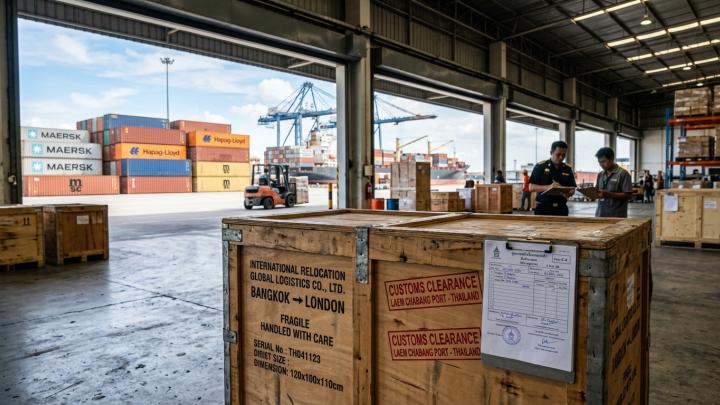
Thai Customs Exemption Criteria: Duty-free importation of used household effects is strictly reserved for holders of qualifying Non-Immigrant Visas (with a minimum 1-year Work Permit or LTR status). Personal belongings must arrive between 1 month prior and 6 months after your official date of arrival in Thailand.


1. Eligible Goods vs Taxable Items

Goods Category Duty Status Guidelines
Used clothing, books, personal items Exempt Must show evident signs of prior ownership
Used household electrical appliances Exempt (1 unit per category) 1 TV, 1 refrigerator, 1 washing machine per household
Motor Vehicles (Cars & Motorcycles) Heavily Taxed (200%–300% duties) Commercial importation strongly discouraged
Lost or Stolen Passport & Smartphone in Thailand: Emergency Guide 2026
Visa & Immigration

Lost or Stolen Passport & Smartphone in Thailand: Emergency Guide 2026

Step-by-step emergency procedures: tourist police report, emergency travel document from your embassy, and visa stamp transfer at Immigration.

1 min ↗
Visa & Immigration

Lost or Stolen Passport & Smartphone in Thailand: Emergency Guide 2026

· Last reviewed: 23 September 2026 · Written by Ricardo Dos Santos
Lost or Stolen Passport & Smartphone in Thailand: Emergency Guide 2026

Step-by-step emergency procedures: tourist police report, emergency travel document from your embassy, and visa stamp transfer at Immigration.

Lost or Stolen Passport & Smartphone in Thailand: Emergency Guide 2026

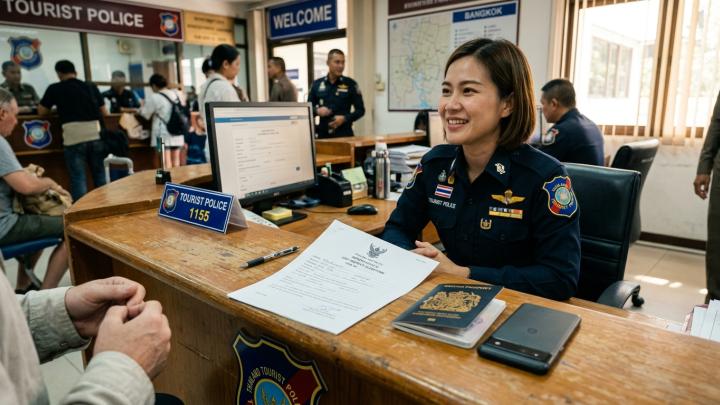
Three-Step Emergency Replacement Protocol:

  1. File a formal report at the nearest Tourist Police Station (Call 1155) to secure an official Police Report.
  2. Visit your embassy or consulate in Bangkok for an emergency passport or travel document.
  3. Attend the Immigration Bureau Headquarters to officially transfer your entry stamps and valid visa endorsements.

1. Securing Your Smartphone & Financial Apps

  • Instantly contact your bank hotlines to freeze mobile banking access (K PLUS, Bualuang, SCB EASY).
  • Initiate remote locking via Apple Find My or Google Find My Device.
  • Obtain a replacement SIM card at a carrier shop with your police report and identity proof.
TDAC 2026: Official Guide to the Thailand Digital Arrival Card
Visa & Immigration

TDAC 2026: Official Guide to the Thailand Digital Arrival Card

Complete guide to the 2026 Thailand Digital Arrival Card (TDAC): 72-hour window, official procedure, QR code, and common mistakes.

3 min ↗
Visa & Immigration

TDAC 2026: Official Guide to the Thailand Digital Arrival Card

· Last reviewed: 23 September 2026 · Written by Ricardo Dos Santos
TDAC 2026: Official Guide to the Thailand Digital Arrival Card

Complete guide to the 2026 Thailand Digital Arrival Card (TDAC): 72-hour window, official procedure, QR code, and common mistakes.

TDAC 2026: Official Guide to the Thailand Digital Arrival Card

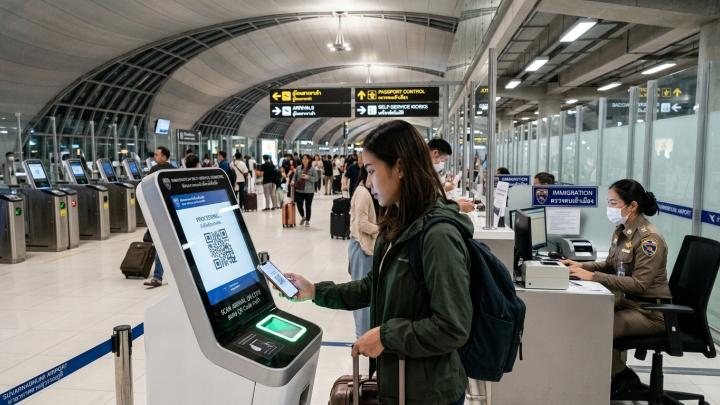
2026 Official Regulation: The Thailand Digital Arrival Card (TDAC) permanently replaces the paper TM6 form for all international arrivals by air, sea, and land. Submissions must be completed exclusively online via the official Royal Thai Immigration portal (tdac.immigration.go.th).


1. What is TDAC and Who is Required to Complete It?

The TDAC is the mandatory digital arrival declaration established by the Royal Thai Immigration Bureau. Every non-Thai traveler entering the Kingdom of Thailand must submit this form prior to border immigration clearance.

Who Must File the TDAC?

  • Tourists entering under visa exemption (60 days) or Tourist Visa (TR).
  • Long-term residents and visa holders (DTV, Non-Immigrant O, B, ED, LTR, Elite).
  • Minors and children: Each traveler, regardless of age, must have an individual TDAC linked to their passport number.

Thai passport holders are exempt from filing the TDAC.


2. When and How to Submit Your TDAC?

The TDAC must be submitted within the 72-hour window prior to scheduled arrival in Thailand.

Step Timeline Required Action
1. Preparation Day -7 to Day -3 Gather: passport (valid > 6 months), flight number, 1st accommodation address in Thailand.
2. Online Submission Within 72h of departure Visit tdac.immigration.go.th, fill out personal identity, flight details, and lodging info.
3. QR Code Issuance Instant Download the confirmation PDF and save the QR Code to your mobile photo library.
4. Border Clearance Upon Arrival Present the QR Code along with your passport at immigration counters or automated e-Gates.

3. Required Information and Verification

Ensure you have the following details ready before starting:

  1. Biometric Passport: Passport number, issuance/expiry dates, nationality.
  2. Flight Details: Arrival flight number (e.g., TG931, EK384) and scheduled arrival date.
  3. Exact Address in Thailand: Hotel name, condominium or private residence, province (Changwat), district (Amphoe), and postal code.
  4. Contact Info: Valid email address and active mobile phone number.

Beware of Third-Party Scam Websites: The official TDAC application is 100% FREE OF CHARGE. Never enter payment details on unverified third-party websites claiming to charge "processing fees". The only authentic URL is tdac.immigration.go.th.


4. Frequently Asked Questions (FAQ)

What should I do if my flight or hotel changes after submitting the TDAC?

You can log back into the official portal using your reference number and passport credentials to modify your flight details or initial accommodation address for free.

Does the TDAC replace a Thai Visa?

No. The TDAC is an arrival immigration declaration (landing card). It does not replace the visa requirements or visa exemptions governing your nationality.

Does TDAC replace the TM30 notification upon arrival?

No. The TDAC records your border crossing. The TM30 declaration remains strictly mandatory for your landlord or hotel within 24 hours of reaching your accommodation.

TM30 & TM47: Residence Notification & 90-Day Report in 2026
Visa & Immigration

TM30 & TM47: Residence Notification & 90-Day Report in 2026

Complete practical and legal guide to TM30 (24h notification) and TM47 (90-day reporting) in Thailand for 2026.

2 min ↗
Visa & Immigration

TM30 & TM47: Residence Notification & 90-Day Report in 2026

· Last reviewed: 23 September 2026 · Written by Ricardo Dos Santos
TM30 & TM47: Residence Notification & 90-Day Report in 2026

Complete practical and legal guide to TM30 (24h notification) and TM47 (90-day reporting) in Thailand for 2026.

TM30 & TM47: Residence Notification & 90-Day Report in 2026

Core Legal Distinction:

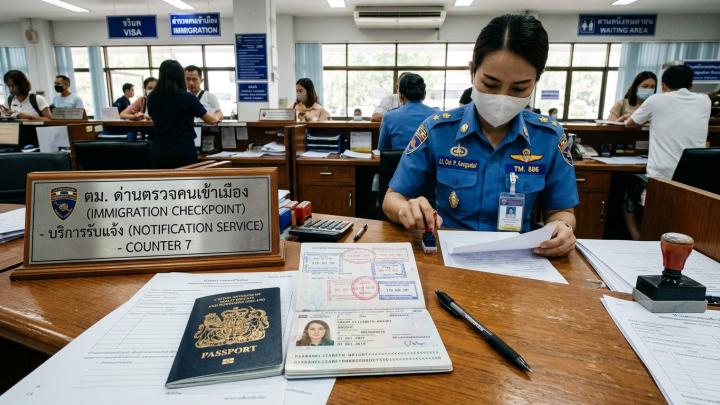
  1. TM30 (Section 38): Notification of alien residence, strictly mandatory within 24 hours of arrival at any property. Legally falls upon the landlord, property owner, or hotel manager.
  2. TM47 (Section 37): 90-day continuous stay reporting, a personal legal obligation of the foreign national residing in Thailand.

1. TM30 Notification: Legal Duties, Steps, and Penalties

The TM30 receipt is an essential document in Thailand. Without a valid TM30 receipt (Tor Mor 30), immigration offices will routinely deny visa extensions, 90-day reports, and certificates of residence.

Who Must File the TM30?

  • Hotels & Guesthouses: Process automatic lodging registration via the commercial portal.
  • Private Landlords: Must file via tm30.immigration.go.th or the official mobile application.
  • Tenant Self-Filing: If the owner is unresponsive, tenants can file in person with the lease agreement, Chanote copy, and landlord's Thai ID/Tabien Baan copy.
Failure to Report Penalty Statutory Fine Range
Non-compliant landlord / hotel 800 to 2,000 THB per undeclared foreigner
Foreigner living in self-owned condo 800 to 1,600 THB upon regularization

2. TM47: Online 90-Day Stay Reporting

Foreigners residing continuously in Thailand for more than 90 days without exiting the country must submit a TM47 notification every 90 days.

Submission Windows:

  • Online (tm47.immigration.go.th): Between 15 days prior and the exact due date.
  • In-Person at Immigration: Between 15 days prior and 7 days after the due date.
  • Registered Mail: Sent at least 15 days prior to the due date.

Leaving Thailand Resets the Clock: Every departure from Thailand resets your 90-day count to zero. Your re-entry date becomes Day 1.


3. Frequently Asked Questions (FAQ)

What happens if I miss my 90-day report deadline?

A statutory fine of 2,000 THB will be assessed when reporting in person (up to 4,000 THB if arrested by authorities).

Do I need to file a TM47 if I extend my visa before day 90?

No. Processing a visa extension in person at immigration resets your 90-day reporting schedule.

Studying in Thailand: The Non-Immigrant ED (Education) Visa Explained
Visa & Immigration

Studying in Thailand: The Non-Immigrant ED (Education) Visa Explained

What the ED visa actually covers, from short-term language courses to full degree programs, how the application and 90-day reporting process works, and a clear warning about the 'visa mill' schools to avoid.

6 min ↗
Visa & Immigration

Studying in Thailand: The Non-Immigrant ED (Education) Visa Explained

· Last reviewed: 19 July 2026 · Written by Ricardo Dos Santos
Studying in Thailand: The Non-Immigrant ED (Education) Visa Explained
Ron Lach / Pexels

What the ED visa actually covers, from short-term language courses to full degree programs, how the application and 90-day reporting process works, and a clear warning about the 'visa mill' schools to avoid.

The Non-Immigrant "ED" visa is Thailand's education visa: a long-stay visa category for foreigners coming to study, covering everything from a short-term Thai-language course to a full university degree or a Ministry of Education-registered vocational program. It is genuinely useful for real students — and it has also been, historically, one of the most abused visa categories in Thailand, which is why due diligence matters as much as the paperwork itself. This guide explains how the ED visa actually works, end to end, and how to avoid the schemes built around it.

What the ED visa covers

The ED visa is not one fixed product; it spans a spectrum of study types, and the conditions attached to it depend heavily on what — and where — you are actually studying.

The basic end: short-term language study

At the simpler end, foreigners enroll in a Thai-language (or other language) course at a school registered with Thailand's Ministry of Education. This typically supports an initial visa or permit-of-stay period that is extended in relatively short increments while enrollment continues, with real class attendance expected. Because pure language-study ED visas were, for years, the category most exploited by "visa mill" operators (see below), Thai Immigration has periodically tightened how long a language-course ED visa can be renewed for — in practice, cumulative language-study stays are often capped well before an indefinite continuation, commonly discussed as being limited to roughly a year or so of pure language study at many immigration offices, though exact limits and enforcement vary by school, by immigration office, and over time. Never treat a specific duration as guaranteed; confirm current practice with the school and with Thai Immigration directly.

The advanced end: degree and registered vocational study

At the more substantial end, the same visa category covers enrollment in a full university degree program (undergraduate or postgraduate) at a Thai higher-education institution, or in vocational and professional training providers that are properly registered with the Ministry of Education or the relevant Thai authority — this includes some Muay Thai training programs and other professional/technical courses, provided the training provider holds real MOE-recognized registration rather than simply advertising "visa courses." For genuine degree and registered-program students, the ED visa is renewable annually for the duration of the study program, tied to continued enrollment and academic progress confirmed by the institution.

How the application and extension process works

The general path is broadly consistent regardless of the type of study:

  1. Enrollment first. You need a confirmed offer or letter of acceptance from an institution properly registered with the Ministry of Education (via the Office of the Private Education Commission for private schools, or the relevant higher-education authority for universities) before a visa application can proceed.
  2. Initial visa application. This is normally done at a Thai embassy or consulate in your home country (or country of legal residence) using the Non-Immigrant "ED" category, supported by the institution's documents, proof of financial means, and standard visa-application paperwork (TM7 form, photos, passport validity).
  3. Arrival and address registration. Once in Thailand, your accommodation (or you, if renting privately without a registered landlord filing it) generally needs to notify Immigration of your address (TM30) — hotels and many landlords handle this automatically, but it's worth confirming.
  4. 90-day reporting. As with other long-stay visa categories, ED-visa holders must report their current address to Thai Immigration every 90 days (TM47), either in person, by mail, or online, for as long as they remain in the country continuously.
  5. Extensions. Extending your permit of stay is handled at a Thai Immigration office inside Thailand, and each extension typically requires an updated confirmation letter from the school or university verifying continued enrollment and — increasingly scrutinized — genuine attendance.

Exact document lists, fees, and processing details change and also vary somewhat by immigration office, so always confirm current requirements directly with the Thai embassy/consulate handling your application and with the Immigration office that will handle your extensions, rather than relying solely on a school's summary of the process.

Scam warning: "visa mill" schools

This is the part of the ED visa system every prospective student should read carefully. For years, a number of Thailand's language schools and course providers have functioned less as real schools and more as "visa mills" — operations whose actual business model is selling long-stay visa status, with little or no real class attendance required. Thai authorities have carried out periodic crackdowns on these operations (Thai Immigration and the Ministry of Education have both, at different points, delisted or investigated schools found to be issuing enrollment documents without providing genuine education), and getting caught up with a delisted or fraudulent provider can put your entire visa status at risk, not just your course fees.

Red flags to watch for:

  • A school whose marketing leads with "get your visa" rather than with the course content, teachers, or curriculum.
  • Promises of little or no real class attendance, or vague statements like "you don't really need to show up."
  • Package pricing that bundles "visa service" as the product, rather than pricing a genuine course with the visa support as a normal administrative service.
  • No visible, specific class schedule, no real curriculum outline, and no ability to see a sample class or meet a teacher before enrolling.
  • A school that cannot show, or is evasive about, its Ministry of Education / Office of the Private Education Commission registration.
  • Reports or reviews from past students describing the school as never actually checking attendance.

Due-diligence steps before enrolling:

  • Verify the school's registration directly — Thailand's Ministry of Education (moe.go.th) and the Office of the Private Education Commission (opec.go.th) oversee registered private education providers; a legitimate school should be able to confirm its registration status without hesitation.
  • Ask for the actual weekly class schedule and the minimum attendance requirement, and treat vague or evasive answers as a warning sign, not a detail to sort out later.
  • Cross-check the school's reputation with independent reviews and expat/student communities, not only its own marketing materials.
  • Confirm current visa and extension requirements directly with Thai Immigration (immigration.go.th) — policy and enforcement around education visas has changed multiple times, and a school's claims about visa rules are not a substitute for the current official position.
  • Be especially cautious of "too good to be true" pricing for a full visa-and-course package — legitimate education has real delivery costs, and unusually cheap all-inclusive visa packages are a recurring pattern in past crackdowns.

The ED visa is a legitimate, useful route for people who are genuinely in Thailand to study — but it only stays that way if the institution behind it is real. Treat "is this a real school" as at least as important a question as "will I get the visa."