Skip to content
SawaLife BETA

Practical Thailand guides

Practical Thailand guides

Step-by-step guidance for planning a trip, a longer stay or a move to Thailand.

Common Scams in Thailand: Verification Before Payment Guide 2026
Moving to Thailand

Common Scams in Thailand: Verification Before Payment Guide 2026

Anti-fraud survival guide for Thailand: fake Facebook rental deposits, unlicensed visa agents, nominee bank accounts, and reporting scams.

1 min ↗
Moving to Thailand

Common Scams in Thailand: Verification Before Payment Guide 2026

· Last reviewed: 23 September 2026 · Written by Ricardo Dos Santos
Common Scams in Thailand: Verification Before Payment Guide 2026

Anti-fraud survival guide for Thailand: fake Facebook rental deposits, unlicensed visa agents, nominee bank accounts, and reporting scams.

Common Scams in Thailand: Verification Before Payment Guide 2026

Cybercrime Vigilance Notice: The majority of expat-targeted scams occur online through social media rental groups and messaging apps. Never send deposit funds before physically viewing a property or verifying the recipient's authenticated banking identity.


1. Top Three Scams and Countermeasures

  1. Fake Rental Deposits on Social Media: Scammers post stolen luxury condo photos at below-market rates, pressuring buyers for immediate PromptPay deposits.
    • Defense: Never transfer money before an in-person viewing and verifying the owner's Chanote title deed.
  2. Fraudulent Visa Agents: Unlicensed operators providing counterfeit immigration stamps that lead to blacklisting and deportation.
    • Defense: Apply only through official immigration portals or certified law firms.
  3. Mule Bank Accounts: Payments routed through straw men accounts.
    • Defense: Ensure recipient bank accounts match the exact name on the legally binding lease or agreement.
PromptPay & QR Payments in Thailand: The 2026 Cashless Guide
Moving to Thailand

PromptPay & QR Payments in Thailand: The 2026 Cashless Guide

How PromptPay works in Thailand: bank activation, merchant QR scanning, zero-fee instant transfers, and transaction security rules.

1 min ↗
Moving to Thailand

PromptPay & QR Payments in Thailand: The 2026 Cashless Guide

· Last reviewed: 23 September 2026 · Written by Ricardo Dos Santos
PromptPay & QR Payments in Thailand: The 2026 Cashless Guide

How PromptPay works in Thailand: bank activation, merchant QR scanning, zero-fee instant transfers, and transaction security rules.

PromptPay & QR Payments in Thailand: The 2026 Cashless Guide

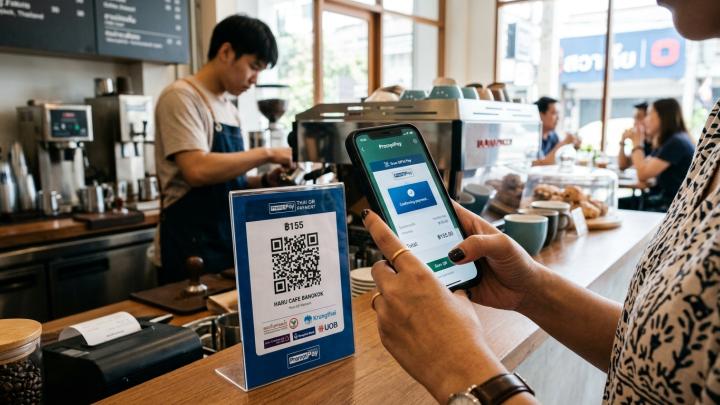
Universal Cashless Adoption: PromptPay, overseen by the Bank of Thailand, is the ubiquitous backbone of daily commerce in Thailand. From street food stalls to luxury department stores, over 95% of retail transactions are completed via mobile QR scanning with zero buyer fees.


1. How to Setup and Use PromptPay

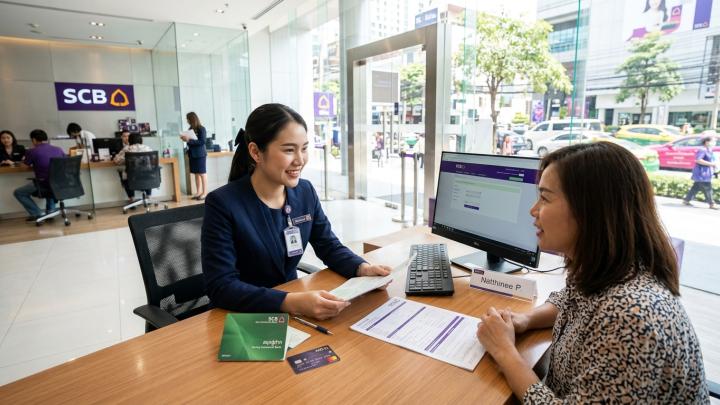
  1. Account Linkage: Open a Thai bank account (Kasikornbank, Bangkok Bank, SCB) and link your registered Thai mobile number via the banking app.
  2. Paying Merchants (Scan to Pay): Open your mobile banking app, tap Scan, frame the merchant's Thai QR Code, confirm the verified recipient name, and authorize the amount with your PIN or biometric ID.
  3. Receiving Funds: Display your personal in-app receiving QR code or share your registered mobile number for instant, zero-fee remittances.
Opening a Thai Bank Account in 2026: Requirements & Best Banks
Moving to Thailand

Opening a Thai Bank Account in 2026: Requirements & Best Banks

Practical guide to opening a bank account in Thailand in 2026: eligible visas (Non-Immigrant, LTR, Elite), DTV visa status, recommended banks, and TrueMoney Wallet alternative for PromptPay.

3 min ↗
Moving to Thailand

Opening a Thai Bank Account in 2026: Requirements & Best Banks

· Last reviewed: 23 September 2026 · Written by Ricardo Dos Santos
Opening a Thai Bank Account in 2026: Requirements & Best Banks

Practical guide to opening a bank account in Thailand in 2026: eligible visas (Non-Immigrant, LTR, Elite), DTV visa status, recommended banks, and TrueMoney Wallet alternative for PromptPay.

Opening a Thai Bank Account in 2026: Requirements & Best Banks

Bank of Thailand 2026 Regulations & DTV Visa Status: Due to heightened Anti-Money Laundering (AML) controls and strict measures against mule accounts, traditional Thai banks now restrict bank account openings to residents with long-term visas and local anchoring (Non-Immigrant B with Work Permit, Non-Immigrant O marriage/retirement, LTR, Elite/Privilege). Important notice for DTV (Destination Thailand Visa) holders: As the DTV is classified under the nomad/special tourist category without a local work permit, traditional banks generally refuse to open standard bank accounts for DTV holders. However, DTV holders can register and use the TrueMoney Wallet for Foreigners app to scan and pay seamlessly via the nationwide PromptPay QR network.


1. Recommended Traditional Banks for Eligible Foreigners

Bank Expat Policy & Acceptance Required Visas & Conditions Mobile Banking Strengths
Bangkok Bank (BBL) Most expat-friendly for long-term residents Non-O, Non-B, LTR, Elite + Certificate of Residence Direct SWIFT transfers and robust bilingual app
Kasikornbank (KBank) Industry-leading K PLUS user interface Work Permit or long-term visa strictly required Effortless PromptPay integration and merchant QR scanning
SCB (Siam Commercial Bank) Major presence across metropolitan branches Non-Immigrant visas with proof of income or lease Modern SCB EASY app with virtual card support
Krungsri (Bank of Ayudhya) Expat-focused services backed by MUFG Non-Immigrant or LTR with financial background Favorable FX exchange rates and cross-border remittances

2. Required Document Checklist (Physical Banks)

Eligible applicants (Non-Immigrant, LTR, Elite) should bring the following to their branch appointment:

  1. Original Passport with valid visa sticker/stamp (Non-O, Non-B, LTR, Smart Visa, Elite).
  2. Work Permit or Proof of Residence: Work Permit book/digital WP, Immigration Certificate of Residence, or 1-year registered lease with TM30 slip.
  3. Income or Employment Proof: Thai employment contract, employer recommendation letter, or official pension slip for retirees.
  4. Registered Thai SIM Card: Active local mobile number registered under your name for 2FA SMS/OTP verification.

3. DTV Visa Holders: The TrueMoney Wallet Solution for PromptPay

Since physical bank branches generally refuse account openings for DTV holders, TrueMoney Wallet (Foreigner) serves as the most effective official solution for everyday living and spending in Thailand:

Feature Details for DTV Visa Holders
Eligibility & Sign-Up Open to foreigners with a valid passport and valid DTV visa stamp/e-visa.
Identity Verification (e-KYC) Complete in-app passport scanning + biometric verification at any True Shop or 7-Eleven kiosk.
PromptPay QR Payments Scan and pay instantly at any street food vendor, restaurant, mall, or supermarket accepting PromptPay QR.
Wallet Top-Up Top up THB balance using international credit/debit cards (Visa/Mastercard, Wise, Revolut) or cash over-the-counter at 7-Eleven.
Supported Services Bill payments, rides/orders on Grab / Lazada / Shopee, and peer-to-peer TrueMoney transfers.

Pro-Tip for DTV Digital Nomads: Link an international multi-currency card (such as Wise or Revolut) to your TrueMoney account to easily fund your daily living expenses across Thailand without needing a local bank account.


Foreigner Taxation in Thailand 2026: Tax Residency & Section 41
Moving to Thailand

Foreigner Taxation in Thailand 2026: Tax Residency & Section 41

Comprehensive analysis of 2026 Thai taxation: 180-day rule, taxation of remitted foreign income, and Foreign Tax Credit guidelines.

1 min ↗
Moving to Thailand

Foreigner Taxation in Thailand 2026: Tax Residency & Section 41

· Last reviewed: 23 September 2026 · Written by Ricardo Dos Santos
Foreigner Taxation in Thailand 2026: Tax Residency & Section 41

Comprehensive analysis of 2026 Thai taxation: 180-day rule, taxation of remitted foreign income, and Foreign Tax Credit guidelines.

Foreigner Taxation in Thailand 2026: Tax Residency & Section 41

Revenue Department 2026 Enforcement: Under Section 41 of the Thai Revenue Code, individuals present in Thailand for 180 days or more in a calendar year qualify as tax residents. Foreign-sourced assessable income remitted into Thailand is subject to Thai Personal Income Tax (PIT) progressive rates.


1. Key Rules of Thai Tax Residency

  • 180-Day Rule: Staying in Thailand for 180 days or more between January 1 and December 31.
  • Domestic Income: Taxable in Thailand regardless of residency duration.
  • Foreign-Sourced Income: Taxable only when remitted or transferred into a Thai financial institution.

2. Personal Income Tax (PIT) Brackets 2026

Net Assessable Income (THB) Marginal Tax Rate
0 – 150,000 THB 0% (Exempt)
150,001 – 300,000 THB 5%
300,001 – 500,000 THB 10%
500,001 – 750,000 THB 15%
750,001 – 1,000,000 THB 20%
1,000,001 – 2,000,000 THB 25%
2,000,001 – 5,000,000 THB 30%
Over 5,000,000 THB 35%

3. Double Taxation Agreements (DTA) & Foreign Tax Credit

Thailand has active Double Tax Agreements with over 60 countries. Tax paid in your home jurisdiction on foreign income may be credited against Thai tax obligations using the Revenue Department's official Foreign Tax Credit provisions.