
Education
Thailand's Education System: Public Schools, Private Schools and Language Schools
Last reviewed: 2026-07-19
Written by Ricardo Dos Santos
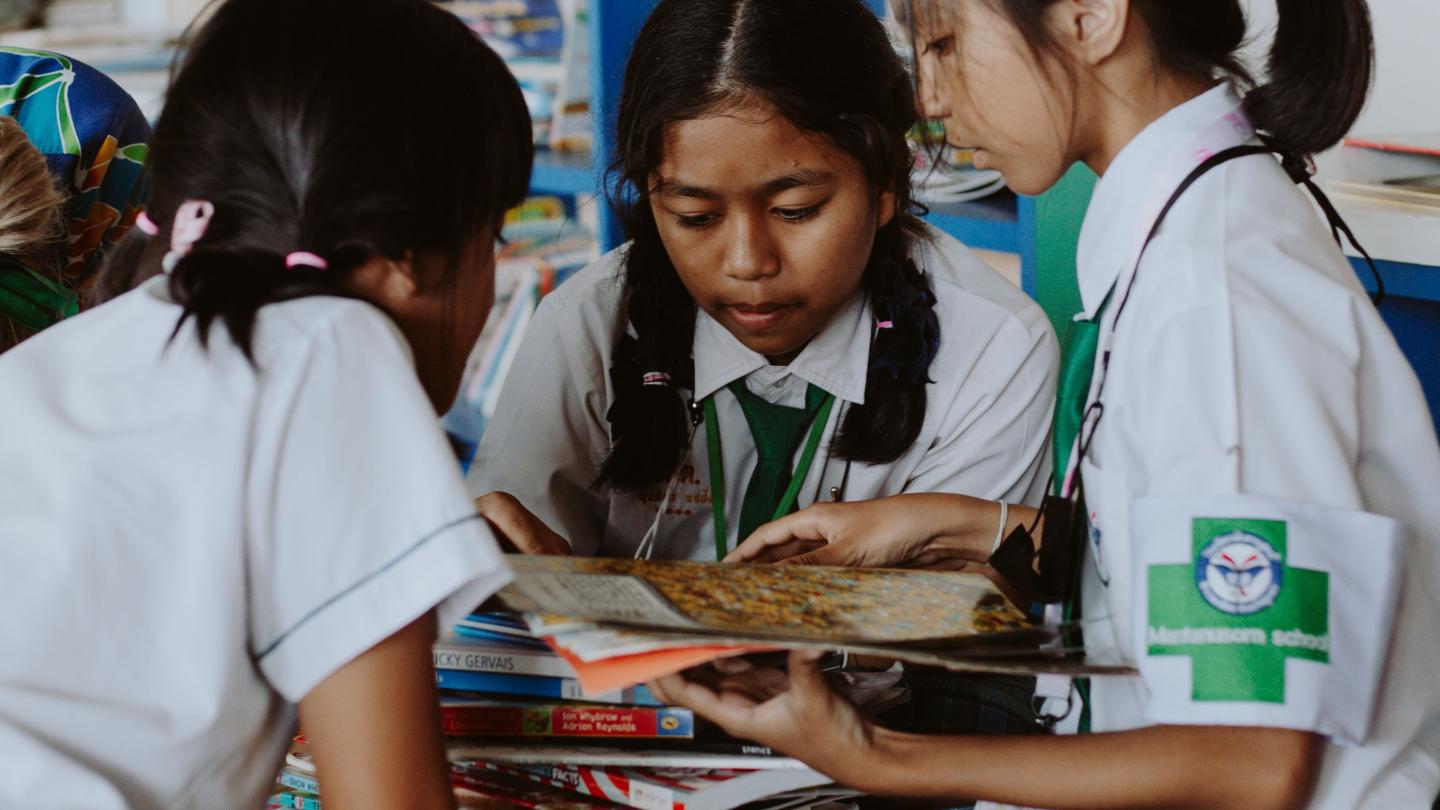
How Thai public education actually works from kindergarten to university, what private and international schools cost and where they cluster, and how the country's language-school landscape fits together — a plain-language guide before you enroll a child or start a course.
Thailand's education landscape is a mix of a large public system run by the Ministry of Education, a fast-growing private and international-school sector concentrated in a handful of cities, and a wide range of language schools serving both foreign residents learning Thai and Thai students learning English and other languages. This guide walks through all three, in plain terms, so you can understand how schooling actually works before you plan a family move, choose a school, or budget for tuition.
Public and state schools
Early years through lower secondary
Thai public education follows a structure familiar to most parents moving from abroad, but with local names worth learning. Children usually start with anuban (kindergarten), roughly ages 3 to 5, which is widely attended but not compulsory. Primary school, prathom 1 to 6, covers ages 6 to 12. Lower secondary, matthayom 1 to 3 (often written M1-M3), follows directly. Together, primary and lower secondary make up Thailand's legally compulsory education: nine years, from prathom 1 through matthayom 3, under the Compulsory Education Act. Beyond that, government policy has extended free basic education well past the compulsory minimum, covering pre-primary through the end of upper secondary in public schools, administered mainly through the Office of the Basic Education Commission (OBEC) under the Ministry of Education.
Upper secondary and the academic calendar
Upper secondary, matthayom 4 to 6 (M4-M6, roughly ages 15 to 18), is not compulsory but is free in public schools and is where students choose a track — broadly science-math, arts-language, or vocational-oriented streams — that shapes their later university applications. The Thai academic year does not follow the Northern Hemisphere September-to-June pattern: it typically runs from mid-May to around March, split into two semesters with a short break around October and a longer break over the Thai summer (April), which matters for anyone timing a family relocation or transfer. Instruction in standard public schools is in Thai. A subset of public schools run English Program (EP) or Mini English Program (MEP) tracks that teach a portion of the curriculum in English, but full public education in English is the exception rather than the rule.
University and higher education
Higher education is where Thailand's public university system becomes genuinely internationally regarded. Admission to public universities runs through TCAS (Thai University Central Admission System), a centralized, multi-round process — including portfolio-based rounds, quota rounds, and a general admission round — that replaced the older separate entrance-exam system. Students apply and rank preferred faculties through the official TCAS platform. Long-established public universities with strong international reputations include Chulalongkorn University and Thammasat University in Bangkok, and Mahidol University, particularly recognized for medicine and the sciences; other major public universities include Chiang Mai University and Kasetsart University. Many public universities also run international programs taught fully in English, alongside their standard Thai-medium faculties, and these are increasingly popular with both Thai and foreign students.
Private and international schools
Curricula and accreditation
Outside the public system, Thailand has a large and diverse private-school sector, broadly split into two tiers. Bilingual schools generally follow the Thai national curriculum with a significant English-language component, sometimes marketed as an "English Program" within an otherwise Thai school. Full international schools instead follow a foreign curriculum end to end — commonly the British curriculum (IGCSE and A-Levels), the American curriculum (AP courses and a US-style high-school diploma), or the International Baccalaureate (IB, from the Primary Years Programme through the Diploma Programme). Private schools operating in Thailand are registered with the Office of the Private Education Commission (OPEC), a body under the Ministry of Education, and many international schools additionally hold accreditation from recognized international bodies (such as the Council of International Schools or US regional accreditors) on top of that domestic registration — worth checking independently for any school you're considering, since accreditation quality varies.
Where international schools concentrate
International and bilingual schools are not spread evenly across the country. Bangkok has by far the largest concentration and the widest range of curricula, reflecting its size and its large expatriate and affluent local population. Chiang Mai has a smaller but genuinely established international-school scene, popular with long-term expat and digital-nomad families. Phuket and the Pattaya/Chonburi area also host a meaningful number of international schools, tied to their resident foreign communities. Outside these four hubs, options for full international curricula thin out considerably.
Typical fees and the enrollment process
Fees vary enormously by school prestige, curriculum, campus, and grade level, so treat any figure as a general market range rather than a quote. As a rough guide: bilingual, Thai-English programs tend to run somewhere in the order of 150,000 to 400,000 THB per year. Full international or IB schools tend to run higher, roughly 300,000 to 900,000+ THB per year at primary level, generally rising further at secondary and IB Diploma level. On top of tuition, expect a non-refundable registration or application fee, sometimes a refundable enrollment deposit, and separate costs for uniforms, books, and materials. Popular schools — particularly well-regarded international schools in Bangkok — commonly run waiting lists, so early enrollment enquiries and entrance assessments (academic testing and/or a family interview) are standard practice rather than a formality. This guide intentionally does not name or recommend individual schools; treat all school-specific claims (fees, curriculum details, accreditation status) as something to verify directly with the institution and, where relevant, with OPEC.
Language schools
Learning Thai as a foreigner
Alongside the school system, Thailand has a substantial network of language schools and language centers, most heavily concentrated in Bangkok and Chiang Mai. For foreign residents, the most common reason to enroll is learning Thai — for daily life, for work, or, in many cases, because enrollment at a Ministry of Education-registered language school is itself the basis for an ED (education) visa (covered in detail in a separate guide). Thai-language schools range from small independent operators to larger, longer-established institutes, and quality and real classroom rigor vary significantly between them — a point worth taking seriously rather than treating language study as a formality.
English and other language schools
For Thai students and professionals, English-language schools and tutoring centers are widespread, ranging from large international chains to small local academies, reflecting strong demand for English proficiency for work, study abroad, and international university programs. Beyond English and Thai, language schools teaching Chinese, Japanese, Korean, and other languages have grown alongside Thailand's expanding regional trade and tourism ties, particularly in Bangkok.
Course structures
Course formats are fairly consistent across the sector: group classes (typically the most affordable option), one-on-one private tutoring (more expensive, more flexible), and a choice between intensive courses (several hours a day, multiple days a week — the format most relevant for anyone using study as the basis for a long-stay visa) and part-time or evening/weekend courses aimed at residents balancing study with work. Course length, weekly hour requirements, and pricing differ meaningfully from school to school, so comparing actual class schedules — not just marketing material — is the most reliable way to judge a program before enrolling.