Skip to content
BETA

Menu

Account

Language

Thailand knowledge

Articles about Thailand

Clear, reviewed information to help you plan your Thailand journey with confidence.

  • Travel

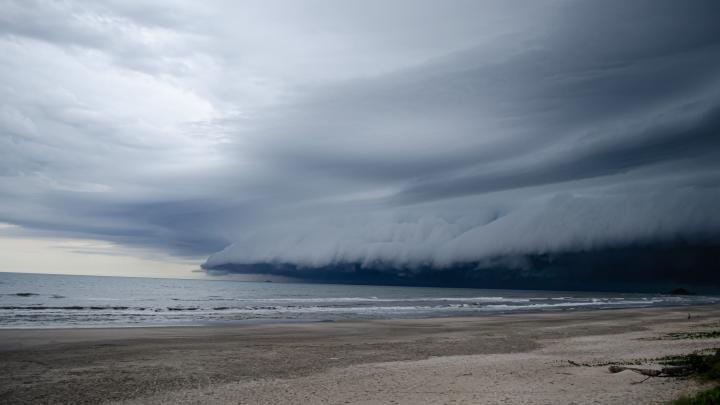
    Practical habits for beaches, reefs, small islands and national parks that protect the places visitors have come to enjoy.

    2 min read

    How to visit Thailand’s islands with less impact and more awareness

    Travel

    How to visit Thailand’s islands with less impact and more awareness

    Last reviewed: 16 July 2026 Written by Ricardo Santos

    Anetta Kolesnikova / Pexels

    Practical habits for beaches, reefs, small islands and national parks that protect the places visitors have come to enjoy.

    Why this belongs on a Thailand itinerary

    Visiting Thailand’s islands is a privilege that comes with the responsibility of stewardship. Small islands often struggle to manage finite water supplies, waste disposal, and the pressure of tourism on shoreline access and reef ecosystems. The decision to visit is not just about where to swim or sleep; it is about how your presence—and your consumption of supplies—affects the destination.

    Adopting responsible habits

    To minimize your impact, adopt practical habits that protect the environment. Carry a reusable water bottle where refill options are available, and pack out any waste that cannot be responsibly disposed of on the island. When in the water, avoid touching coral or wildlife, as these ecosystems are fragile. On land, stick to marked paths and follow all mooring rules to prevent damage to the seabed and shoreline.

    Respecting local norms

    It is important to remember that a beach is not an excuse to ignore local clothing norms once you leave the sand. As you move from the beach into the local community, ensure your attire is respectful of the local culture. This simple act of awareness helps maintain the harmony between the visitor population and the local residents who call these islands home.

    Navigating conservation closures

    National-park access, restoration closures, and visitor limits are subject to change without notice. These measures are implemented to protect the environment, not to hinder your holiday. If you encounter a closure, accept it as a necessary conservation measure. Always read the current authority notice before your departure to ensure you are aware of any restrictions in place for your destination.

    The role of the conscious traveller

    By choosing to be a conscious traveller, you contribute to the longevity of the places you visit. This means being aware of the day-trip pressure on small islands and choosing to support local businesses that prioritize sustainability. Your choices directly influence the health of the reefs and the quality of life for the island communities.

    Verification before travel

    Operational details, access, conservation rules, and local instructions can change. Always verify the current official information before travelling. For the latest updates on national parks and conservation efforts, consult the Department of National Parks, Wildlife and Plant Conservation.

    Sources

  • Travel

    A clear way to compare coastal weather, sea travel and flexible itineraries without assuming that conditions are identical across Thailand.

    2 min read

    Plan Thailand’s coasts by season, not by a single “best time” label

    Travel

    Plan Thailand’s coasts by season, not by a single “best time” label

    Last reviewed: 16 July 2026 Written by Ricardo Santos

    Dijanynni Kiratza / Pexels

    A clear way to compare coastal weather, sea travel and flexible itineraries without assuming that conditions are identical across Thailand.

    Why this belongs on a Thailand itinerary

    Many travellers make the mistake of searching for a single “best time” to visit Thailand. However, because the country features long coastlines facing different seas, weather patterns are highly localized. A clear way to compare coastal weather and plan sea travel is to build your itinerary around a specific region and include a fallback plan, rather than relying on a country-wide weather slogan.

    Understanding regional weather patterns

    Thailand’s geography means that rain, wind, and wave conditions vary significantly depending on whether you are on the Gulf or the Andaman coast. Because these conditions are local, an island-hopping plan must be built with regional awareness. What is considered a safe or pleasant season in one part of the country may not apply to another, making it vital to research the specific seasonal outlook for your intended destination.

    Practical planning for sea travel

    Ferry-dependent itineraries are inherently sensitive to weather. To manage this, keep the first and last night of your trip flexible. If you have an international flight to catch, ensure you leave a significant margin of time before your departure to account for potential delays. Always rely on official weather and transport notices rather than social-media rumours or outdated travel blogs. Remember: a sunny forecast on land is never a guarantee of safe marine conditions.

    The importance of official guidance

    This information is for planning purposes and does not constitute a marine or safety alert. Always follow official warnings, park closures, and the specific instructions provided by boat operators. Never treat a published itinerary as permission to travel if conditions are unsafe. Your safety depends on your willingness to heed the advice of those who monitor the seas daily.

    Building a flexible framework

    By accepting that weather is a variable rather than a constant, you can build a more resilient itinerary. If a particular island or route is affected by poor conditions, having a pre-planned alternative or a flexible schedule allows you to adjust without compromising your safety or the quality of your trip. This approach turns potential disruption into a manageable part of the travel experience.

    Verification before travel

    Operational details, access, weather, and local instructions can change. Always verify the current official information before travelling. For the most reliable seasonal outlooks, consult the Thai Meteorological Department.

    Sources

  • Travel

    How to approach active Buddhist temples respectfully, understand the difference between a monument and a living religious space, and prepare for changing local rules.

    2 min read

    Visiting Thai temples with respect: a practical guide for first-time travellers

    Travel

    Visiting Thai temples with respect: a practical guide for first-time travellers

    Last reviewed: 16 July 2026 Written by Ricardo Santos

    Kirandeep Singh Walia / Pexels

    How to approach active Buddhist temples respectfully, understand the difference between a monument and a living religious space, and prepare for changing local rules.

    Why this belongs on a Thailand itinerary

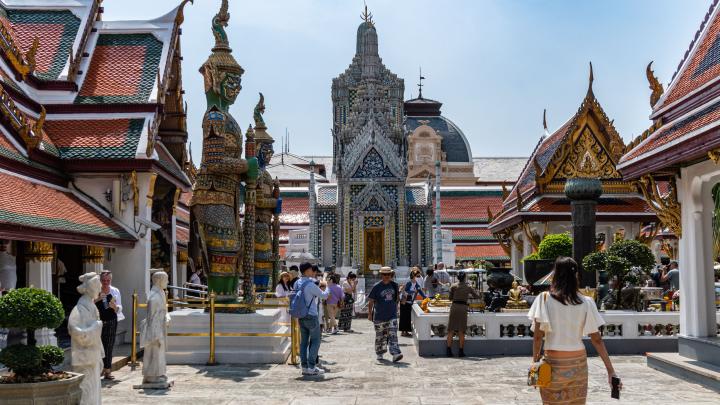
    Visiting Thai temples is a central part of the travel experience, but it requires a shift in perspective. These sites are not merely historical monuments or photo opportunities; they are active, living religious spaces. Understanding how to approach these sites with respect is essential for any first-time traveller to Thailand.

    The dual nature of temple sites

    It is important to recognize that a temple is a place of worship first and a site of art and history second. A celebrated chedi, an intricate mural, or a revered Buddha image may be housed within a compound that is used daily by monks and local worshippers. This reality changes the visitor’s responsibility. When you enter these grounds, you are entering a space of ongoing religious practice, which necessitates a higher level of awareness and decorum.

    Standards of conduct and dress

    Respectful behaviour is defined by both action and appearance. Visitors should wear clothing that covers the shoulders and knees. When entering a building where it is required, you must remove your footwear. Inside the temple grounds, maintain a quiet demeanour. Remember that photography, access to specific halls, and the ceremonial use of spaces can vary significantly from one temple to another and even from day to day.

    Avoiding the 'generic' trap

    Do not rely on a generic etiquette list found online to guide your behaviour at every building. Rules are often specific to the site and the current needs of the monastic community. Upon arrival, look for notices or signs that outline specific requirements for that location. If you encounter a restriction, treat it as a necessary part of the site’s religious function rather than an inconvenience to your visit.

    Respecting the religious space

    Your primary goal should be to avoid interrupting worship. If a ceremony is in progress, observe from a distance and remain unobtrusive. By following staff directions and respecting the sanctity of the space, you ensure that your presence does not detract from the spiritual life of the temple. This approach allows for a more meaningful and authentic engagement with Thai culture.

    Verification before travel

    Operational details, access, conservation rules, ceremonies, and local instructions can change. Always verify the current official information before travelling. For guidance on Bangkok’s temple sites and destination profiles, consult the Tourism Authority of Thailand.

    Sources

  • Travel

    Koh Mak without scooters, Koh Kood without high-rises, Koh Jum without a schedule: five islands where Thailand still runs on fishermen's time, not sunbed time.

    5 min read

    Thailand's secret islands: journeys to the archipelagos tourism hasn't found yet

    Travel

    Thailand's secret islands: journeys to the archipelagos tourism hasn't found yet

    Last reviewed: 18 July 2026 Written by Ricardo Santos

    Photo by Marcelo Verfe / Pexels

    Koh Mak without scooters, Koh Kood without high-rises, Koh Jum without a schedule: five islands where Thailand still runs on fishermen's time, not sunbed time.

    The moment Thailand goes quiet again

    There is a precise instant, on the ferry leaving Laem Ngop for Koh Mak, when the noise stops. Trat's scooters fade, the 7-Eleven signs disappear with the coastline, and all that remains is the diesel engine's chug and the smell of salt and rubber — Koh Mak still runs on rubber plantations as much as on its beaches. That shift, more than any postcard beach, is what travellers looking beyond Phuket and Koh Samui are actually chasing: a place Thailand hasn't yet staged for them.

    These islands genuinely exist, and none require a heroic expedition to reach. What they require is giving up the ease of a direct flight and a big resort, and accepting that a ferry runs on its own schedule, that the internet connection will sometimes be unreliable, and that dinner might depend on what the fishing boat brought in that morning.

    Koh Mak: the island that said no to scooters

    Koh Mak, in the Trat archipelago, is largely governed by two families who have farmed rubber and coconut here for generations, and who collectively decided, more than twenty years ago, to cap tourism development. The practical result: no nightclubs, transport limited mostly to bicycles and a handful of electric songthaews, and beaches — Ao Suan Yai, Ao Kao — that stay quiet even during the December peak. You can cycle across the entire island in about an hour, which tells you everything about its real scale.

    The best window runs November to April, ideally avoiding the very first weeks of December when Thai families arrive for New Year. Crossings run by speedboat from Laem Ngop (about an hour) or by slower ferry from the same pier, itself reached by overnight bus or a short flight from Bangkok to Trat. There is no airport on the island — that is precisely what protects it.

    Koh Kood: the last big island that never over-built

    Further south, Koh Kood (also spelled Ko Kut) is Thailand's second-largest island after Phuket, yet holds a fraction of its population and a tenth of its visitors. Roads are only paved along part of the island's loop; the rest is negotiated by rented pickup or 4x4. Klong Chao waterfall, reached by a shaded trail from the village of the same name, is still visited without a queue on weekdays, and the turquoise waters of Ao Bang Bao shelter a stilted fishing village that still functions as a working harbour, not as a stage set.

    The island connects by direct ferry from Trat (about 1.5 hours) or a bus-boat combination from Bangkok arranged by most accommodations. High season, November to April, is dependable; monsoon (June to October) closes some services and can make crossings rough for smaller boats — a genuine planning factor, not a footnote.

    Koh Phayam: the Andaman Sea without the Phuket crowds

    On the opposite coast, off Ranong in the Andaman Sea, Koh Phayam stays off the radar largely because it doesn't fit neatly into a standard southern Thailand loop — which is exactly what preserves its character. Coconut groves still anchor the local economy, wild pigs occasionally cross the island's few unpaved roads, and Ao Yai, its main beach, stretches nearly three kilometres with almost no permanent construction.

    Access is by boat from Ranong port, itself reached from Bangkok by direct flight (75 minutes) or overnight bus. Dry season (November to April) is by far the most reliable window; monsoon hits the Andaman coast particularly hard.

    Koh Yao Noi and Koh Jum: a world apart between Phuket and Krabi

    Wedged literally between the south's two busiest tourist hubs — Phuket and Krabi — Koh Yao Noi and Koh Jum prove an island can be geographically central while staying culturally apart. Both are majority-Muslim, live on fishing and small rubber holdings, and effectively keep alcohol out of daily life outside a few visitor-oriented spots — a cultural fact to respect, not a friction to route around.

    Koh Yao Noi offers direct views of Phang Nga Bay's famous limestone karsts without ever becoming a saturated postcard set itself; kayaks rent easily for dawn mangrove exploration, when low light carves the cliffs into sharp relief. Koh Jum, smaller and rougher around the edges, has only a handful of beachfront bungalows and an interior road still partly unpaved — it takes effort to reach, but rewards with near-total quiet outside peak months.

    Travelling these islands without unbalancing them

    What protects these destinations isn't geographic luck: it's a combination of deliberately limited access, local economies that don't depend solely on tourism, and planning decisions that have refused large-capacity hotels. A visitor who wants that balance to last will favour family-run guesthouses over international chains, won't push for infrastructure that isn't there (round-the-clock air conditioning, guaranteed high-speed wifi), and will accept that power sometimes cuts out at night on the smaller islands.

    Booking full board with a local family, renting a bicycle instead of a noisy scooter, eating at village food stalls rather than the handful of internationally-styled restaurants — these are simple choices, and over time they are the difference between visiting a quiet island and slowly turning it into the next saturated one.


    Sources