Skip to content
BETA

Menu

Account

Language

Thailand knowledge

Articles about Thailand

Clear, reviewed information to help you plan your Thailand journey with confidence.

  • Travel

    Objective mobility evaluation: why motorbikes are optional in Bangkok but essential on islands, accident statistics, and insurance prerequisites.

    2 min read

    Motorbike traffic and transport dilemma in Thailand: mobility versus road safety

    Travel

    Do You Really Need a Scooter in Thailand? Mobility vs Safety in 2026

    Last reviewed: 23 September 2026 Written by Ricardo Santos

    SawaLife Editorial / Authentic Documentary Photography

    Objective mobility evaluation: why motorbikes are optional in Bangkok but essential on islands, accident statistics, and insurance prerequisites.

    Riding a scooter along coastal roads epitomizes tropical freedom in Thailand. Affordable to rent and fuel, motorbikes seem like the obvious choice. However, Thailand consistently records high traffic fatality statistics. In 2026, deciding whether to ride requires an objective risk-benefit calculation.


    1. Geographic Necessity Breakdown

    Destination Motorbike Necessity Available Public Transit Road Risk Assessment
    Bangkok Not Recommended Superb BTS, MRT, affordable meter taxis, Grab High (Congestion, expressways ban motorbikes)
    Chiang Mai Convenient Songthaews, Grab, bicycle friendly zones Moderate (Moderate speeds in city center)
    Phuket Useful but Risky Expensive taxi cartels, limited buses High (Steep coastal hills, intoxicated tourists)
    Koh Samui / Phangan Essential Extremely scarce public transport High (Steep unpaved gradients, gravel, sand)
    Hua Hin Helpful Main strip songthaews, walkable core Low to Moderate

    2. Mandatory Legal Requirements

    1. 1949 Convention IDP: You must hold a valid International Driving Permit with Category A (motorcycle) endorsement.
    2. Insurance Invalidation: Operating a two-wheeler on a car-only permit voids private health and travel insurance coverage.
    3. Certified Helmets: Mandatory for both driver and passenger.

    3. Frequently Asked Questions (FAQ)

    How much does monthly scooter rental cost in 2026?

    A reliable 125cc scooter (Honda Click or Yamaha Grand Filano) rents for 3,000 to 4,500 THB/month.

    Can a foreigner legally buy and register a scooter in Thailand?

    Yes. With a valid visa and an official Certificate of Residence from Immigration, you can register a green ownership book (Lehm Kieow) in your own name at the Department of Land Transport (DLT).

    Sources

  • Cost of Living

    Deconstructing the structural drivers of island costs: maritime freight, freshwater delivery, private power, transport monopolies, and medical premiums.

    2 min read

    Koh Samui tropical coastline depicting the logistics and real estate costs of the Island Premium

    Cost of Living

    The Island Premium: Why Living on Thai Islands Costs 20% to 45% More in 2026

    Last reviewed: 23 September 2026 Written by Ricardo Santos

    SawaLife Editorial / Authentic Documentary Photography

    Deconstructing the structural drivers of island costs: maritime freight, freshwater delivery, private power, transport monopolies, and medical premiums.

    Relocating to a tropical Thai island like Koh Samui, Koh Phangan, Koh Tao, or Phuket represents the quintessential tropical dream. However, island life carries a structural economic surcharge known as the Island Premium, elevating baseline living expenses by 20% to 45% over mainland cities.


    1. The 4 Structural Drivers of Island Costs

    1. Maritime Logistics & Fuel Surcharges

    Every carton of milk, building material, and liter of fuel must cross maritime channels on commercial ferries from ports in Surat Thani or Chumphon, imposing an automatic 10% to 25% markup on retail goods.

    2. Freshwater Delivery & Power Grid Variations

    Smaller islands feature limited municipal water networks. Private residential villas routinely purchase trucked freshwater deliveries costing 400 to 800 THB per 2,000-liter load.

    3. Local Transportation Cartels

    Without public mass transit networks, local island songthaews and private taxis enforce elevated flat rates, often charging 300 to 500 THB ($9–$15) for short 5-kilometer hops. Personal vehicle ownership becomes a necessity.

    4. Healthcare Surcharges & Medevac Logistics

    Private island hospital care commands higher fees. Severe trauma cases requiring medical evacuation by speedboat or helicopter to mainland tertiary centers cost between 100,000 and 450,000 THB.


    2. Cost Comparison: Mainland vs Island Living (in THB)

    Expense Item Mainland (Chiang Mai / Hua Hin) Tourist Island (Koh Samui / Phangan) Variance
    Weekly Supermarket Basket 2,500 THB 3,400 THB +36%
    2-Bed Pool Villa Rent 25,000 THB 42,000 THB +68%
    Short Taxi Ride (5 km) 80 – 120 THB 300 – 500 THB +250%
    Cooking Gas Cylinder (15 kg) 420 THB 540 THB +28%

    3. Frequently Asked Questions (FAQ)

    Does Phuket experience the same freight markup as Koh Samui?

    Because Phuket connects to the mainland via Sarasin Bridge, road cargo keeps grocery retail prices closer to Bangkok rates, although taxi and rental costs remain premium.

    Sources

  • Healthcare

    Medical and environmental analysis: agricultural burning season in Northern Thailand, winter temperature inversions in Bangkok, HEPA mitigation, and relocation tactics.

    2 min read

    Northern Thailand mountain landscape and PM2.5 air quality monitoring

    Healthcare

    PM2.5 Air Pollution: How to Choose Where to Live in Thailand in 2026

    Last reviewed: 23 September 2026 Written by Ricardo Santos

    SawaLife Editorial / Authentic Documentary Photography

    Medical and environmental analysis: agricultural burning season in Northern Thailand, winter temperature inversions in Bangkok, HEPA mitigation, and relocation tactics.

    Air quality has emerged as a top health consideration for residents living in Thailand. Annually between January and April, elevated levels of fine particulate matter (PM2.5) affect specific regions of the country.


    1. Geographic PM2.5 Peak Calendar

    Region Peak Risk Period Primary Drivers Average Peak AQI
    Chiang Mai & Northern Valley Mid-Feb to Late April Regional agricultural burning + valley basin topography 150 – 350+ (Unhealthy to Hazardous)
    Bangkok & Central Plains December to February Vehicular emissions + winter temperature inversions 120 – 190 (Unhealthy for sensitive groups)
    Isan Agricultural Plains February to April Sugarcane and rice paddock burning 130 – 220 (Unhealthy)
    Phuket, Krabi & Southern Islands Clean year-round Constant maritime ocean breeze 15 – 45 (Good / Clean)
    Hua Hin & Coastal Strip Jan to Feb (Mild) Rapid coastal ventilation 40 – 80 (Moderate)

    2. Northern Thailand's "Burning Season"

    In Chiang Mai, Chiang Rai, and Mae Hong Son, agricultural clearing coincides with atmospheric stagnation, trapping smoke against surrounding mountain ranges.

    • The Expat Coping Strategy: Many seasoned nomads and retirees maintain a "snowbird" lifestyle, relocating south to Phuket or Koh Samui between February and April.

    3. Essential Home Health Safeguards

    1. True HEPA Air Purifiers: Install dedicated units in bedrooms and work spaces (e.g., Xiaomi, Daikin).
    2. Certified N95 / FFP2 Masks: Standard blue surgical masks do not capture particles under 2.5 microns.
    3. Sealed Condo Frames: Ensure apartment sliding doors have proper weather-stripping.

    4. Frequently Asked Questions (FAQ)

    Which app accurately tracks Thai air pollution?

    IQAir (AirVisual) and Air4Thai (the official app of the Thai Pollution Control Department) offer reliable live hourly station data.

    Is Southern Thailand consistently free from smog?

    Yes. Phuket, Krabi, Koh Samui, and Koh Phangan enjoy clean maritime air throughout the entire calendar year.

    Sources

  • Travel

    Complete meteorological breakdown: Andaman Sea vs Gulf of Thailand monsoon offset, flash flooding preparedness, and seasonal living realities.

    2 min read

    Tropical seascape and monsoon clouds showing regional weather patterns in Thailand

    Travel

    Understanding Monsoon Seasons by Region in Thailand (2026 Weather Guide)

    Last reviewed: 23 September 2026 Written by Ricardo Santos

    SawaLife Editorial / Authentic Documentary Photography

    Complete meteorological breakdown: Andaman Sea vs Gulf of Thailand monsoon offset, flash flooding preparedness, and seasonal living realities.

    The term "monsoon season" often conjures images of non-stop torrential downpours for months on end. In reality, Thailand's climate is governed by two distinct monsoon wind systems that create substantial weather differences between the Andaman Coast and the Gulf of Thailand.


    1. Regional Weather Calendar Breakdown

    Region / Destination Primary Monsoon Window Peak Rainfall Months Prime Dry Season
    Andaman Coast (Phuket, Krabi, Lanta) May to October September – October December to April
    Gulf Coast (Koh Samui, Phangan, Tao) October to December November – Early Dec January to August
    Bangkok & Central Plains June to October September – October November to February
    Chiang Mai & Northern Highlands May to October August – September November to February
    Hua Hin & Western Gulf September to November October – November December to May

    2. The Andaman vs Gulf Weather Offset

    A key geographic advantage of Thailand is the meteorological offset between its two coastlines:

    • When the West Coast (Phuket, Krabi) experiences the Southwest Monsoon with choppy seas in July and August, Gulf islands (Samui, Phangan) enjoy predominantly sunny skies and calm swimming conditions.
    • Conversely, in November, when Phuket enters peak dry season, Koh Samui experiences the Northeast Monsoon and its heaviest rainfall of the year.

    3. Practical Tips for Everyday Living During Rainy Season

    1. Tropical Rain Dynamics: Showers typically occur in intense 45-minute bursts during late afternoons rather than continuous all-day rain.
    2. Flash Flooding in Bangkok: Certain low-lying side streets (sois) in Sukhumvit experience localized water accumulation. Check street drainage before signing a long-term lease.
    3. Humidity Control: Run air conditioning units on "Dry" mode once weekly to prevent tropical mold formation in closets.

    4. Frequently Asked Questions (FAQ)

    Are national marine parks open year-round?

    No. Certain offshore marine reserves (such as the Similan and Surin Islands) close strictly from May 15 to October 15 for ecological rehabilitation and maritime safety. Major inhabited islands remain fully operational year-round.

    Sources

  • Moving to Thailand

    Essential methodology for discerning verified legal statutes (Royal Gazette, Immigration, Revenue Dept) from social media rumors and outdated blogs.

    2 min read

    Official government documentation and reliable legal research in Thailand 2026

    Moving to Thailand

    How to Find Reliable Information on Thailand in 2026: Official Sources vs Rumors

    Last reviewed: 23 September 2026 Written by Ricardo Santos

    SawaLife Editorial / Authentic Documentary Photography

    Essential methodology for discerning verified legal statutes (Royal Gazette, Immigration, Revenue Dept) from social media rumors and outdated blogs.

    In Thailand, misinformation travels fast across social media groups and expat message boards. Whether discussing foreign income taxation (Section 41), DTV requirements, or TM30 enforcement, anecdotal accounts are frequently mistaken for legal statutes. In 2026, protecting your legal standing requires knowing how to verify rules at the official source.


    1. Hierarchy of Verified Legal Authorities in Thailand

    To determine whether a regulation is enforceable, always refer to this verification hierarchy:

    1. Tier 1: The Royal Gazette (Ratchakitchanubeksa): The official government gazette of the Kingdom. No statute, Royal Decree, or Ministerial regulation possesses legal force until published here.
    2. Tier 2: Official Government Portals (.go.th):
      • Immigration Bureau: immigration.go.th
      • Revenue Department: rd.go.th
      • Department of Land Transport: dlt.go.th
      • Ministry of Foreign Affairs: mfa.go.th
    3. Tier 3: Royal Thai Embassies & Official e-Visa Portal: thaievisa.go.th.
    4. Tier 4 (Use with caution): Expat forums, Facebook groups, and unverified blogs, which often confuse personal luck with statutory law.

    2. Red Flags of Misinformation

    • "My friend did this yesterday": Discretionary leniency at a remote border post does not establish legal precedent at Suvarnabhumi Airport.
    • Undated advice: Immigration regulations evolve swiftly. Articles older than 6 months without verification stamps are frequently outdated.
    • "Guaranteed" visa bypass services: Agents claiming to bypass mandatory bank deposit requirements often use fraudulent documentation that risks deportation.

    3. Frequently Asked Questions (FAQ)

    Where can I access official Double Taxation Agreements (DTA)?

    The complete library of bilateral tax treaties is available in official English and Thai on the Revenue Department portal (rd.go.th).

    Do Thai immigration officers have discretionary power?

    Yes. Under the Immigration Act of 1979, border officers hold statutory discretion to verify financial means and genuine traveler intent upon entry.

    Sources

  • Moving to Thailand

    Essential preventive guide for newcomers: premature 12-month leases, TM30 compliance oversights, unverified landlord deposits, and driving license traps.

    2 min read

    Peaceful Thai street depicting settlement and avoiding the common first 90 days expat mistakes

    Moving to Thailand

    Top Expat Mistakes in the First 90 Days in Thailand (2026 Guide)

    Last reviewed: 23 September 2026 Written by Ricardo Santos

    SawaLife Editorial / Authentic Documentary Photography

    Essential preventive guide for newcomers: premature 12-month leases, TM30 compliance oversights, unverified landlord deposits, and driving license traps.

    The first three months of living in Thailand are critical. During this initial honeymoon phase, over 80% of preventable financial and administrative missteps occur.


    1. The 5 Major Expat Pitfalls and How to Avoid Them

    Mistake 1: Signing a 12-Month Lease Immediately

    Rushing into a full-year contract before understanding neighborhood micro-climates, traffic choke points, or nearby construction sites is the most common mistake.

    • Best Practice: Book 30 days in a serviced residence to test commute times, noise levels, and walkability before committing.

    Mistake 2: Overlooking the TM30 Residence Notification

    Under Section 38 of the Thai Immigration Act, property owners must register foreign guests within 24 hours. Missing this registration blocks banking, driving license applications, and visa extensions.

    • Best Practice: Obtain your official TM30 receipt immediately upon check-in.

    Mistake 3: Riding a Scooter Without the 1949 IDP Motorcycle Endorsement

    Operating a motorbike on a car-only license or non-1949 convention permit invalidates health and travel insurance in the event of an accident.

    • Best Practice: Carry a valid 1949 Geneva Convention IDP with Category A endorsement and convert to a local DLT license promptly.

    Mistake 4: Wiring Deposits to Unverified Agents

    Never transfer rental deposits based on social media listings before inspecting the physical unit and reviewing the landlord's title deed (Chanote).

    Mistake 5: Missing the 90-Day Report (TM47)

    Staying 90 consecutive days in Thailand mandates filing form TM47. Late reporting incurs fines of 2,000 to 5,000 THB.


    2. 90-Day Settlement Checklist

    • Verified TM30 receipt secured.
    • Local bank account with PromptPay activated.
    • Comprehensive international health coverage in place.
    • 90-day reporting deadline saved in calendar with 15-day advance reminder.

    Sources

  • Travel

    Multi-criteria comparison of Bangkok, Chiang Mai, Phuket, Hua Hin, and Pattaya: hospitals, public transport, rents, air quality, and expat communities.

    2 min read

    Urban panorama comparing Bangkok, Chiang Mai, Phuket, Hua Hin and Pattaya for everyday living

    Travel

    Comparing Thai Cities for Everyday Living in 2026: Bangkok, Chiang Mai, Phuket, Hua Hin, Pattaya

    Last reviewed: 23 September 2026 Written by Ricardo Santos

    SawaLife Editorial / Authentic Documentary Photography

    Multi-criteria comparison of Bangkok, Chiang Mai, Phuket, Hua Hin, and Pattaya: hospitals, public transport, rents, air quality, and expat communities.

    Selecting where to settle in Thailand extends far beyond choosing between tropical beaches and northern mountains. In 2026, transit connectivity, density of internationally accredited (JCI) hospitals, residential rental prices, and seasonal air quality (PM2.5) dictate long-term satisfaction.


    1. Multi-Criteria Comparison Table of Top 5 Destinations

    Evaluation Criteria Bangkok Chiang Mai Phuket Hua Hin Pattaya (Chonburi)
    Average Rent (1-Bed Condo) 18,000 – 35,000 THB 10,000 – 18,000 THB 22,000 – 45,000 THB 14,000 – 24,000 THB 12,000 – 22,000 THB
    Mass Transit System World-class (BTS, MRT, SRT) Minimal (Songthaew / Grab) Very poor (Taxi monopolies) Limited (Local songthaews) Moderate (Circular Baht buses)
    JCI Accredited Hospitals Unmatched (Bumrungrad, MedPark) Very Good (Bangkok Hospital CM) Good (Bangkok Hospital Phuket) Good (Bangkok Hospital Hua Hin) Good (Bangkok Hospital Pattaya)
    Air Quality (Feb–April) Moderate to Poor Severe (Agricultural burning) Excellent (Maritime sea breeze) Good Moderate
    Target Expat Profile Professionals, DTV, Families Digital Nomads, Creatives Beach lovers, High-net-worth Peaceful Retirees, Golfers Active Retirees, Budget expats

    2. In-Depth City Breakdown

    Bangkok: The Hyper-Connected Global Hub

    Bangkok provides unparalleled urban convenience: mega-malls, world-leading private hospitals, Michelin dining, and air-conditioned elevated transit.

    • Pros: Endless networking, career opportunities, top-tier medical infrastructure.
    • Cons: Urban sprawl, heat island effect, winter smog periods.

    Chiang Mai: The Cultural Northern Capital

    Surrounded by misty mountains, Chiang Mai offers relaxed artisan cafe culture, co-working spaces, and low housing costs.

    • Pros: Relaxed lifestyle, vibrant nomad community, affordable living.
    • Cons: Severe annual smoke season from February through April requires seasonal relocation.

    Phuket: The Premier Island Lifestyle

    Phuket combines island scenery with international amenities including reputable IB world schools and direct global flight routes.

    • Pros: Beautiful coastlines, top international education facilities.
    • Cons: High living costs and steep local transport prices.

    3. Frequently Asked Questions (FAQ)

    Can you easily live in Bangkok without a car or scooter?

    Yes. Living within a 5-minute walk of a BTS Skytrain or MRT Subway station makes personal vehicle ownership completely unnecessary.

    Which city is best for retirement?

    Hua Hin is widely recognized as the premier destination for peaceful seaside retirement, offering excellent private healthcare, golf courses, and a mature community.

    Sources

  • Cost of Living

    Deconstructing the vacation perception bias: how transition from temporary traveler to long-term resident reveals hidden recurring fixed costs.

    2 min read

    Bangkok rooftop restaurant showing holiday perception vs real daily living costs in Thailand

    Cost of Living

    Why Holidays Feel Cheap but Living Long-Term Costs More in Thailand 2026

    Last reviewed: 23 September 2026 Written by Ricardo Santos

    SawaLife Editorial / Authentic Documentary Photography

    Deconstructing the vacation perception bias: how transition from temporary traveler to long-term resident reveals hidden recurring fixed costs.

    Nearly every traveler spending three weeks in Thailand leaves with the same conviction: with $9 Thai massages, $2 street food dishes, and charming hotel rooms for $35/night, living here full-time must cost virtually nothing. Yet once settled as a permanent resident, the financial equation shifts dramatically.


    1. The Vacation Perception Bias

    During a short vacation, travelers only encounter marginal variable expenses. They bypass all structural overheads that define long-term expat life:

    • No annual comprehensive international health insurance policies ($1,500–$4,500/year).
    • No continuous electricity bills for daily air conditioning ($100–$200/month).
    • No annual visa maintenance fees, legal paperwork, or blocked bank deposits.
    • No vehicle depreciation, maintenance, or tropical appliance wear-and-tear.

    2. Comparison Table: Vacationer vs. Long-Term Resident Costs

    Expense Area Vacationer Experience (2 Weeks) Resident Reality (Annual Basis)
    Housing Hotels/Airbnb with daily housekeeping and electricity included 12-month lease, 2-month deposit, separate electricity billing
    Healthcare Basic travel insurance bundled with credit card Full comprehensive inpatient/outpatient policy with high guarantees
    Food & Dining Exciting street food discoveries at every meal Routine home cooking, cravings for imported Western comfort foods
    Mobility Casual Grab rides, tuk-tuks, and airport transfers Owning/leasing a motorbike or car, insurance, and DLT driving license
    Legal Status Free 60-day visa exemption stamp at immigration Locked funds in Thai bank (400k–800k THB), 90-day reports, visa renewals

    3. The Three Pitfalls of the "Endless Holiday" Mindset

    1. Daily Entertainment Spending: Dining out at Western bistros and beach clubs every evening quickly matches European or US expense levels.
    2. Skipping Health Coverage: Operating without comprehensive medical insurance leads to catastrophe if an intensive care hospitalisation is required.
    3. Ignoring Apartment Orientation: Renting top-floor units facing west dramatically increases cooling costs.

    4. Frequently Asked Questions (FAQ)

    Why are imported Western groceries heavily taxed in Thailand?

    Thailand levies protective import tariffs on foreign agricultural and luxury goods, especially dairy products, processed meats, and alcoholic beverages.

    Can an expat still maintain a low budget long term?

    Yes, by adopting a predominantly local lifestyle: provincial housing, traditional fresh market cooking, and local community amenities.

    Sources

  • Cost of Living

    Comprehensive 2026 economic analysis: realistic monthly budgets for singles and families, electricity spikes, private healthcare, and local vs imported groceries.

    3 min read

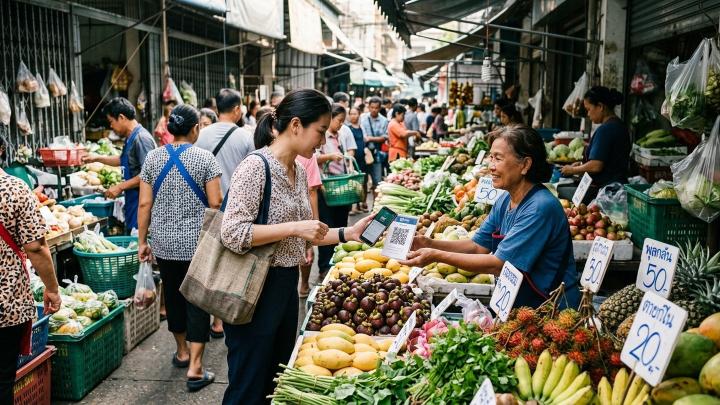
    Local Thai market and daily life illustrating the true cost of living in Thailand in 2026

    Cost of Living

    The Real Cost of Living in Thailand in 2026: Detailed Budget Breakdown

    Last reviewed: 23 September 2026 Written by Ricardo Santos

    SawaLife Editorial / Authentic Documentary Photography

    Comprehensive 2026 economic analysis: realistic monthly budgets for singles and families, electricity spikes, private healthcare, and local vs imported groceries.

    The myth of living luxuriously in Thailand for $500 a month belongs to 1990s travel lore. In 2026, while Thailand remains remarkably good value compared to North America or Western Europe, the actual cost of long-term residence depends heavily on your housing standards, eating habits, and health coverage requirements.


    1. Three Realistic Monthly Budget Models for 2026

    Here is a detailed breakdown of monthly living expenses across three typical expat profiles:

    Monthly Expense Category Frugal Solo (Chiang Mai / Isan) Comfortable Solo (Bangkok / Hua Hin) Expat Family (2 Adults + 1 Child in Bangkok/Phuket)
    Housing (Modern Condo / Pool Villa) 9,000 – 14,000 THB 22,000 – 35,000 THB 45,000 – 80,000 THB
    Utilities (MEA/PEA Electric, Water, 1Gbps Fiber) 2,000 – 3,500 THB 4,500 – 7,000 THB 8,000 – 14,000 THB
    Food & Dining (Local markets vs Western dining) 10,000 – 15,000 THB 20,000 – 32,000 THB 38,000 – 60,000 THB
    Transportation (Motorbike / Transit / Family SUV) 2,500 – 4,000 THB 5,000 – 9,000 THB 14,000 – 25,000 THB
    Comprehensive Health Insurance (IPD + OPD) 3,500 – 5,500 THB 6,500 – 12,000 THB 18,000 – 32,000 THB
    Fitness, Hobbies & Social Life 4,000 – 8,000 THB 12,000 – 22,000 THB 20,000 – 40,000 THB
    Annual Visa Sinking Fund & Legal Retainers 1,500 – 2,500 THB 3,000 – 5,000 THB 6,000 – 10,000 THB
    International Schooling (per child) — — 35,000 – 75,000 THB / month
    TOTAL ESTIMATED MONTHLY 32,500 – 52,500 THB (~$900 – $1,450) 73,000 – 122,000 THB (~$2,050 – $3,450) 184,000 – 336,000 THB (~$5,150 – $9,450)

    2. Unanticipated Costs for Newcomers

    Electricity Consumption and Climate Realities

    Official utility electricity tariffs (MEA in Bangkok, PEA in the provinces) average 4.20 to 4.80 THB per kWh.

    • Running inverter air conditioners for 14 hours daily costs between 3,500 and 5,500 THB per month.
    • Older residential buildings lacking insulation and inverter units frequently see monthly electric bills surpassing 8,000 to 11,000 THB.

    Sub-metering markups: Ensure your lease contract specifies that utility bills are paid directly at government rates. Landlords charging flat rates of 8 to 10 THB/unit are operating against Consumer Protection Board standards.

    Grocery Shopping: Local vs Western Diet

    • Local food: Traditional fresh markets (Talat) offer seasonal fruits, vegetables, eggs, and chicken at a fraction of Western supermarket prices.
    • Imported goods: Western dairy, European cheese, wine, and Australian steaks at Gourmet Market or Villa Market carry heavy customs duties that can quickly triple your grocery expenses.

    3. Geographic Price Disparities Across Thailand

    1. Bangkok: Higher condo rents in prime central zones (Sukhumvit, Silom, Ari), balanced by inexpensive rapid mass transit (BTS/MRT) and high hospital density.
    2. Phuket & Samui: Islands command a 20% to 35% premium on transportation, dining out, and residential villa rentals.
    3. Chiang Mai & Hua Hin: Premier quality-to-cost ratio, offering modern living at rents 35% lower than Bangkok.
    4. Isan & Provincial Heartland: Ultra-low cost of living for retirees willing to adopt a fully localized Thai lifestyle.

    4. Frequently Asked Questions (FAQ)

    What is a comfortable monthly income for a single expat in 2026?

    A net income of 60,000 to 80,000 THB (approx. $1,700 to $2,250 USD) provides an excellent standard of living, including a modern high-rise condo, private medical insurance, and regular leisure activities.

    What is the standard rental deposit in Thailand?

    The standard deposit for a 12-month lease is 2 months of security deposit plus 1 month of rent in advance.

    Sources

  • Travel

    The Airport Rail Link (ARL) connects Suvarnabhumi International Airport to central Bangkok in under 30 minutes at an economical fare. Discover stations, BTS/MRT interchanges, ticketing, and luggage tips.

    3 min read

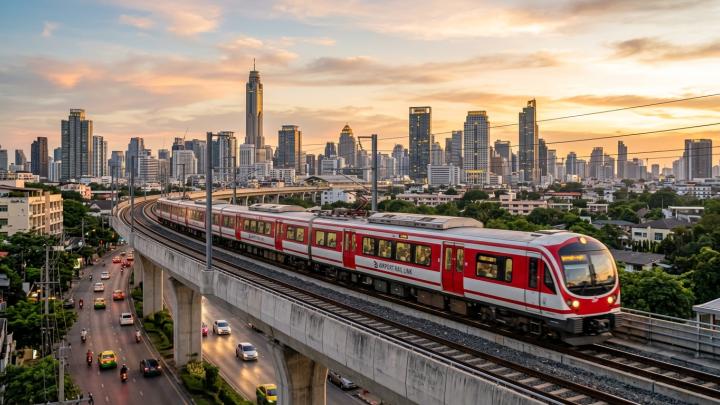
    Bangkok Airport Rail Link commuter train

    Travel

    Bangkok Airport Rail Link: Complete Transit Guide from Suvarnabhumi Airport to City Center

    Last reviewed: 20 September 2026 Written by Ricardo Santos

    SawaLife Transit & Urban Mobility

    The Airport Rail Link (ARL) connects Suvarnabhumi International Airport to central Bangkok in under 30 minutes at an economical fare. Discover stations, BTS/MRT interchanges, ticketing, and luggage tips.

    Fast and Reliable Airport-to-Downtown Transit

    The Bangkok Airport Rail Link (ARL) offers the fastest, most reliable, and most economical transit method connecting Suvarnabhumi International Airport (BKK) directly to downtown Bangkok. Operating along a 28.6-kilometer elevated rail viaduct, the ARL bypasses surface highway gridlock entirely.

    The journey between the airport terminal and the western terminus at Phaya Thai takes 26 to 30 minutes, with one-way fares ranging from 15 to 45 THB (approx. $0.45 to $1.30 USD).

    Suvarnabhumi Airport Rail Link station concourse


    Route Overview and Key Transit Interchanges

    The line features 8 elevated and underground stations:

    1. Suvarnabhumi (A1): Located on Basement Level (Floor B) of the main airport passenger terminal.
    2. Lat Krabang (A2): Serves eastern residential suburbs and KMITL university.
    3. Ban Thap Chang (A3): Suburban residential district.
    4. Hua Mak (A4): Future connection point to the Yellow Line Monorail.
    5. Ramkhamhaeng (A5): Commercial and educational district.
    6. Makkasan (A6): Major Interchange with the MRT Blue Line (Phetchaburi Station) via an enclosed, pedestrian skywalk bridge (150 meters). Provides direct underground access to Sukhumvit (Asok), Silom, Chinatown (Wat Mangkon), and Krung Thep Aphiwat Central Terminal.
    7. Ratchaprarop (A7): Provides direct access to the Pratunam wholesale garment market and Baiyoke Sky Tower.
    8. Phaya Thai (A8): Western Terminus and Direct Interchange with the BTS Sukhumvit Line. Enables fast connections to Siam Central, Nana, Asok, and Chatuchak Weekend Market (Mo Chit).

    Step-by-Step Directions from the Arrivals Hall

    Upon collecting your luggage and clearing customs on Level 2 (Arrivals):

    1. Follow the overhead directional signage reading "Train to City / Airport Rail Link".
    2. Take the elevators or downward travelators directly to Level B (Basement).
    3. The station concourse houses automated ticketing kiosks (supporting English and Thai interfaces), staffed ticketing windows, and currency exchange booths (such as SuperRich and Value Plus) offering competitive rates.

    Ticketing, Fares, and Operating Hours

    1. Distance-Based Fare Matrix

    Fares are calculated based on the total number of stations traveled:

    • Suvarnabhumi to Hua Mak: 25 THB
    • Suvarnabhumi to Makkasan (MRT Interchange): 35 THB
    • Suvarnabhumi to Phaya Thai (BTS Interchange): 45 THB

    2. Fare Payment Methods

    • Single-Journey Tokens: Purchased at touch-screen ticket vending machines using Thai Baht coins and banknotes. Tap the token against the RFID gate sensor upon entry and deposit it into the turnstile slot upon exit.
    • Contactless EMV Bank Cards: Supported Visa and Mastercard contactless cards, as well as compatible transit Smart Passes, can be tapped directly at enabled automated fare gates.

    3. Service Schedule and Train Frequency

    • Operating Hours: Daily from 05:30 AM to 12:00 Midnight.
    • Train Frequency: Trains depart every 10 to 12 minutes during peak weekday commuter hours (07:00–09:00 and 17:00–19:30), and every 15 minutes during off-peak periods and weekends.

    Transit Comparison: Airport Rail Link vs. Metered Taxi / Ride-Hailing

    Comparison Factor Airport Rail Link (ARL) Metered Public Taxi (Level 1) Ride-Hailing (Grab / Bolt)
    Typical Cost 15 – 45 THB per traveler 250 – 450 THB (metered fare + expressway tolls + 50 THB airport surcharge) 350 – 550 THB (dynamic pricing based on traffic demand)
    Travel Duration 26 – 30 minutes (fixed time, zero traffic delay) 40 – 90 minutes (subject to highway traffic conditions) 40 – 90 minutes (subject to highway traffic conditions)
    Luggage Convenience Air-conditioned cars with baggage clearance, crowded during peak commuter hours Dedicated luggage trunk directly to hotel doorstep Door-to-door direct service
    Best Suited For Solo travelers, couples, backpackers, budget-conscious travelers Families, travelers with heavy luggage, late-night arrivals past midnight Travelers seeking app-based booking and electronic receipt tracking

    Practical Recommendations for Passengers

    • Commuter Rush Hours: Between 07:30–09:00 AM and 17:30–19:00 PM, trains heading towards downtown carry heavy local commuter traffic. Allow slight extra time if navigating with multiple full-sized suitcases.
    • Currency for Kiosks: Automated ticket machines accept 20, 50, and 100 THB banknotes along with 1, 5, and 10 THB coins. Staffed booths can break larger 500 and 1,000 THB notes.

    Sources

  • Travel

    Every late October, the Thai capital transforms into a vibrant hub of themed rooftop parties, street costume carnivals, and cultural entertainment. Here is the definitive city guide.

    2 min read

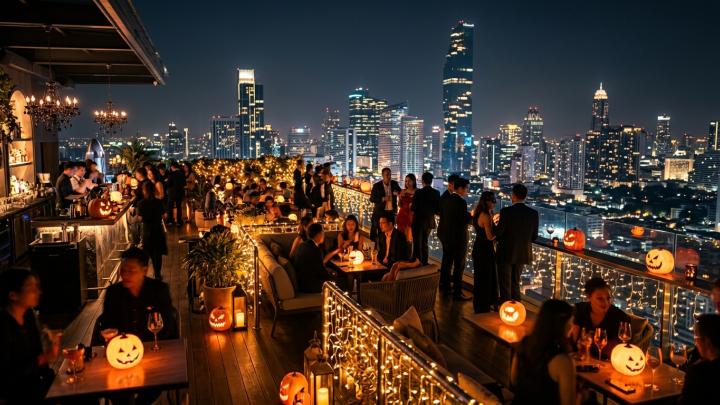
    Halloween themed rooftop lounge in Bangkok

    Travel

    Halloween Celebrations in Bangkok: Top Districts, Nightlife Events, and Festive Highlights

    Last reviewed: 20 September 2026 Written by Ricardo Santos

    SawaLife Lifestyle & Urban Culture

    Every late October, the Thai capital transforms into a vibrant hub of themed rooftop parties, street costume carnivals, and cultural entertainment. Here is the definitive city guide.

    The Rise of Halloween Festivities in the Thai Capital

    While Halloween is not a traditional Thai observance, Bangkok has developed into one of Southeast Asia's most dynamic capitals for late-October celebrations. Combining a celebrated nightlife infrastructure with creative hospitality concepts, the metropolis delivers diverse entertainment options ranging from open-air street gatherings to sophisticated high-altitude galas.

    Festive evening nightlife in Bangkok


    Prime Nightlife Districts and Street Festivals

    1. Khao San Road: The Grand Street Costume Carnival

    Every October 31st, Khao San Road transforms into a vibrant outdoor street festival. Thousands of international visitors and local residents gather in elaborate costumes. Pop-up makeup stations, official costume competitions, and open-air music venues animate the entire pedestrian strip until late hours.

    2. Silom (Soi 2 & Soi 4): High-Energy Performance Venues

    The Silom entertainment corridor is celebrated for its theatrical productions, world-class DJ sets, and renowned costume contests. Venues feature full-scale seasonal transformations, offering an inclusive and vibrant festive environment.

    3. Sukhumvit (Thong Lo & Ekkamai): Premium Clubs and Themed Galas

    For travelers seeking upscale nightlife, Thong Lo and Ekkamai host Bangkok’s premier nightclubs. These venues routinely curate immersive interior designs, feature international headlining DJs, and enforce creative dress codes.


    Elevated Rooftop Lounges and Skyline Gatherings

    Bangkok's iconic skyscrapers offer elevated perspectives over the illuminated skyline:

    • Sathorn & Riverside Venues: High-altitude terraces overlooking the Chao Phraya River curate specialty seasonal mixology menus and themed culinary experiences.
    • Sukhumvit & Ploenchit Corridors: Lounges situated between the 30th and 60th floors offer sophisticated ambiance, ambient lighting, and panoramic vistas.

    Family-Friendly Attractions and Daytime Events

    Halloween entertainment extends beyond nocturnal venues:

    • Major Retail Complexes (Siam Paragon, CentralWorld, ICONSIAM): Themed pop-up installations, interactive cosplay parades, and children’s entertainment zones.
    • Amusement Destinations (Dream World & Siam Amazing Park): Seasonal haunted walk-throughs and family-friendly costumed performances.

    Practical Planning and Transit Guidance

    Operational Aspect Essential Guidance
    Public Transit Use the elevated BTS Skytrain and underground MRT until midnight to bypass downtown road congestion. Ride-hailing services experience peak surge pricing after midnight.
    Advance Bookings Secure reservations for major nightclubs and rooftop venues at least two to three weeks prior to October 31st.
    Attire & Comfort Due to tropical humidity, select costume materials that are lightweight, breathable, and suitable for warm conditions.

    Sources

  • Safety

    The import, possession, sale, and use of electronic cigarettes are strictly prohibited throughout Thailand. Here is an objective overview of current enforcement, legal penalties, and practical advice.
    3 min read

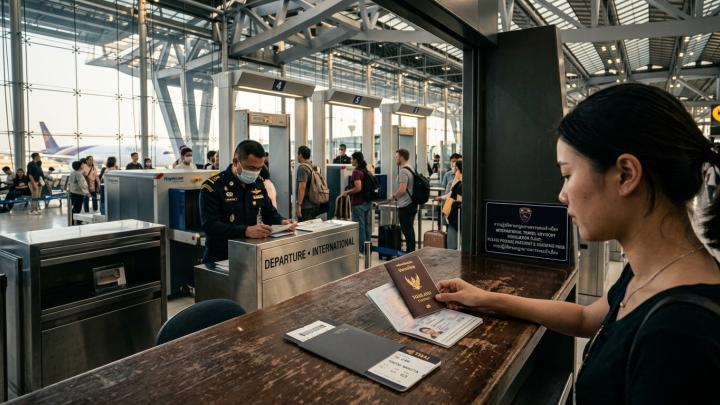
    Airport customs security and regulations in Thailand

    Safety

    Vaping and E-Cigarette Regulations in Thailand: Legal Status, Penalties, and Practical Rules

    Last reviewed: 20 September 2026 Written by Ricardo Santos

    SawaLife Editorial & Travel Compliance

    The import, possession, sale, and use of electronic cigarettes are strictly prohibited throughout Thailand. Here is an objective overview of current enforcement, legal penalties, and practical advice.
    A Strict and Unambiguous Legal Framework

    Thailand enforces some of the world’s most stringent regulations regarding electronic cigarettes, vaporizers, e-liquids, and heated tobacco products. Since Ministry of Commerce Order No. 382 (2014) and subsequent directives issued by the Office of the Consumer Protection Board (OCPB), all electronic vaping devices have been classified as prohibited goods within the Kingdom.

    No exemptions exist for personal, recreational, or medical usage, applying equally to short-term international tourists and long-term expatriates.

    Urban regulations and street enforcement in Thailand


    The Four Pillars of the Prohibition

    Thai legislation addresses the entire lifecycle of vaping products through complementary statutory measures:

    1. Prohibition on Importation

    Bringing e-cigarettes, vape pods, disposable devices, or refill liquids into Thailand in carry-on or checked baggage violates the Thai Customs Act. Security scanners at international gateways (Suvarnabhumi Airport, Don Mueang, Phuket, and Chiang Mai) routinely detect and seize these items, exposing travelers to customs penalties.

    2. Prohibition on Sales and Distribution

    The commercial sale, promotional display, and distribution of electronic cigarettes carry substantial criminal penalties. While unlicensed street vendors may occasionally be observed in major tourist areas, these vendors operate illegally. Purchasing items from street stalls confers no legal protection.

    3. Prohibition on Possession and Public Use

    Possessing or using a vape device in public streets, recreational parks, dining terraces, or beachfronts exposes the user to police inspection, confiscation, and judicial fines.


    Legal Penalties and Statutory Consequences

    The table below outlines the statutory penalties defined by Thai legislation:

    Offense Category Governing Legislation Legal Penalties
    Unauthorized Importation Customs Act B.E. 2560 (2017) Mandatory confiscation, fines up to four times the total item value, and potential prison terms of up to 10 years.
    Sale and Commercial Distribution Consumer Protection Board Directives Fines up to 500,000 THB and prison sentences of up to 5 years.
    Possession and Public Use Customs Act & Municipal Regulations Confiscation of equipment, judicial fines ranging between 20,000 and 100,000 THB, and possible court appearance.

    High-Enforcement Areas and Police Inspections

    Law enforcement checkpoints are routinely conducted across prominent tourist destinations:

    • Bangkok: Sukhumvit corridors (Nana, Asok, Thong Lo), Silom, Khao San Road, and public transit interchanges.
    • Phuket and Pattaya: Beach Road promenades, walking streets, and nightclub entertainment districts.
    • Island Destinations: Koh Samui, Koh Phangan, and Koh Tao.

    During any official interaction, travelers must remain polite, cooperative, and composed. If an official fine is issued, insist upon an itemized receipt issued at the local police station.


    Practical Recommendations for Travelers

    To ensure a smooth journey in Thailand, observe the following guidelines:

    1. Leave All Vaping Gear at Home: Do not pack electronic cigarettes, disposable pods, or e-juices in any luggage.
    2. Utilize Compliant Nicotine Substitutes: Nicotine replacement products such as patches and gums are legally sold in reputable pharmacy chains (Boots, Watsons, and hospital dispensaries).
    3. Adhere to Smoking Rules for Traditional Tobacco: While conventional cigarettes are legal (subject to the customs limit of 200 cigarettes per adult upon entry), smoking is strictly banned on public beaches, inside air-conditioned buildings, and within public parks, carrying a standard fine of 5,000 THB.

    Sources