Skip to content
SawaLife BETA

Thailand knowledge

Articles about Thailand

Clear, reviewed information to help you plan your Thailand journey with confidence.

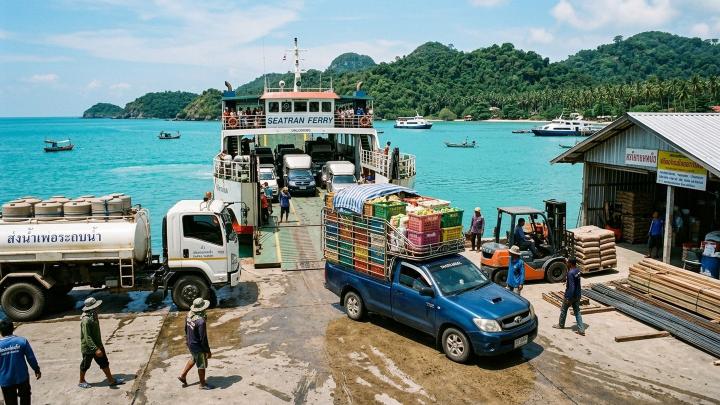
Koh Samui tropical coastline depicting the logistics and real estate costs of the Island Premium
Cost of Living

The Island Premium: Why Living on Thai Islands Costs 20% to 45% More in 2026

Deconstructing the structural drivers of island costs: maritime freight, freshwater delivery, private power, transport monopolies, and medical premiums.

2 min ↗
Cost of Living

The Island Premium: Why Living on Thai Islands Costs 20% to 45% More in 2026

· Last reviewed: 23 September 2026 · Written by Ricardo Dos Santos
Koh Samui tropical coastline depicting the logistics and real estate costs of the Island Premium
SawaLife Editorial / Authentic Documentary Photography

Deconstructing the structural drivers of island costs: maritime freight, freshwater delivery, private power, transport monopolies, and medical premiums.

Relocating to a tropical Thai island like Koh Samui, Koh Phangan, Koh Tao, or Phuket represents the quintessential tropical dream. However, island life carries a structural economic surcharge known as the Island Premium, elevating baseline living expenses by 20% to 45% over mainland cities.


1. The 4 Structural Drivers of Island Costs

1. Maritime Logistics & Fuel Surcharges

Every carton of milk, building material, and liter of fuel must cross maritime channels on commercial ferries from ports in Surat Thani or Chumphon, imposing an automatic 10% to 25% markup on retail goods.

2. Freshwater Delivery & Power Grid Variations

Smaller islands feature limited municipal water networks. Private residential villas routinely purchase trucked freshwater deliveries costing 400 to 800 THB per 2,000-liter load.

3. Local Transportation Cartels

Without public mass transit networks, local island songthaews and private taxis enforce elevated flat rates, often charging 300 to 500 THB ($9–$15) for short 5-kilometer hops. Personal vehicle ownership becomes a necessity.

4. Healthcare Surcharges & Medevac Logistics

Private island hospital care commands higher fees. Severe trauma cases requiring medical evacuation by speedboat or helicopter to mainland tertiary centers cost between 100,000 and 450,000 THB.


2. Cost Comparison: Mainland vs Island Living (in THB)

Expense Item Mainland (Chiang Mai / Hua Hin) Tourist Island (Koh Samui / Phangan) Variance
Weekly Supermarket Basket 2,500 THB 3,400 THB +36%
2-Bed Pool Villa Rent 25,000 THB 42,000 THB +68%
Short Taxi Ride (5 km) 80 – 120 THB 300 – 500 THB +250%
Cooking Gas Cylinder (15 kg) 420 THB 540 THB +28%

3. Frequently Asked Questions (FAQ)

Does Phuket experience the same freight markup as Koh Samui?

Because Phuket connects to the mainland via Sarasin Bridge, road cargo keeps grocery retail prices closer to Bangkok rates, although taxi and rental costs remain premium.

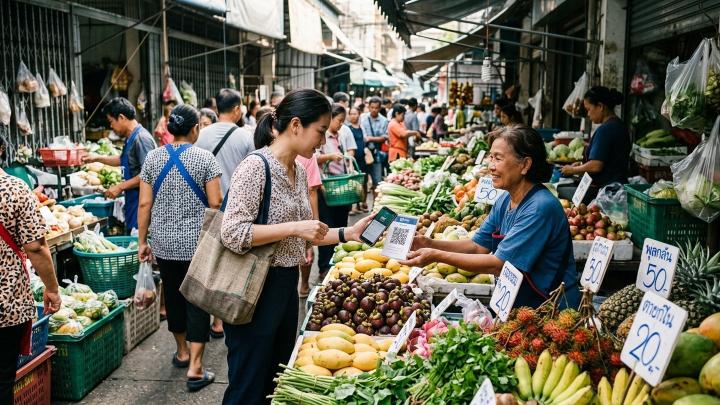
Local Thai market and daily life illustrating the true cost of living in Thailand in 2026
Cost of Living

The Real Cost of Living in Thailand in 2026: Detailed Budget Breakdown

Comprehensive 2026 economic analysis: realistic monthly budgets for singles and families, electricity spikes, private healthcare, and local vs imported groceries.

3 min ↗
Cost of Living

The Real Cost of Living in Thailand in 2026: Detailed Budget Breakdown

· Last reviewed: 23 September 2026 · Written by Ricardo Dos Santos
Local Thai market and daily life illustrating the true cost of living in Thailand in 2026
SawaLife Editorial / Authentic Documentary Photography

Comprehensive 2026 economic analysis: realistic monthly budgets for singles and families, electricity spikes, private healthcare, and local vs imported groceries.

The myth of living luxuriously in Thailand for $500 a month belongs to 1990s travel lore. In 2026, while Thailand remains remarkably good value compared to North America or Western Europe, the actual cost of long-term residence depends heavily on your housing standards, eating habits, and health coverage requirements.


1. Three Realistic Monthly Budget Models for 2026

Here is a detailed breakdown of monthly living expenses across three typical expat profiles:

Monthly Expense Category Frugal Solo (Chiang Mai / Isan) Comfortable Solo (Bangkok / Hua Hin) Expat Family (2 Adults + 1 Child in Bangkok/Phuket)
Housing (Modern Condo / Pool Villa) 9,000 – 14,000 THB 22,000 – 35,000 THB 45,000 – 80,000 THB
Utilities (MEA/PEA Electric, Water, 1Gbps Fiber) 2,000 – 3,500 THB 4,500 – 7,000 THB 8,000 – 14,000 THB
Food & Dining (Local markets vs Western dining) 10,000 – 15,000 THB 20,000 – 32,000 THB 38,000 – 60,000 THB
Transportation (Motorbike / Transit / Family SUV) 2,500 – 4,000 THB 5,000 – 9,000 THB 14,000 – 25,000 THB
Comprehensive Health Insurance (IPD + OPD) 3,500 – 5,500 THB 6,500 – 12,000 THB 18,000 – 32,000 THB
Fitness, Hobbies & Social Life 4,000 – 8,000 THB 12,000 – 22,000 THB 20,000 – 40,000 THB
Annual Visa Sinking Fund & Legal Retainers 1,500 – 2,500 THB 3,000 – 5,000 THB 6,000 – 10,000 THB
International Schooling (per child) — — 35,000 – 75,000 THB / month
TOTAL ESTIMATED MONTHLY 32,500 – 52,500 THB (~$900 – $1,450) 73,000 – 122,000 THB (~$2,050 – $3,450) 184,000 – 336,000 THB (~$5,150 – $9,450)

2. Unanticipated Costs for Newcomers

Electricity Consumption and Climate Realities

Official utility electricity tariffs (MEA in Bangkok, PEA in the provinces) average 4.20 to 4.80 THB per kWh.

  • Running inverter air conditioners for 14 hours daily costs between 3,500 and 5,500 THB per month.
  • Older residential buildings lacking insulation and inverter units frequently see monthly electric bills surpassing 8,000 to 11,000 THB.

Sub-metering markups: Ensure your lease contract specifies that utility bills are paid directly at government rates. Landlords charging flat rates of 8 to 10 THB/unit are operating against Consumer Protection Board standards.

Grocery Shopping: Local vs Western Diet

  • Local food: Traditional fresh markets (Talat) offer seasonal fruits, vegetables, eggs, and chicken at a fraction of Western supermarket prices.
  • Imported goods: Western dairy, European cheese, wine, and Australian steaks at Gourmet Market or Villa Market carry heavy customs duties that can quickly triple your grocery expenses.

3. Geographic Price Disparities Across Thailand

  1. Bangkok: Higher condo rents in prime central zones (Sukhumvit, Silom, Ari), balanced by inexpensive rapid mass transit (BTS/MRT) and high hospital density.
  2. Phuket & Samui: Islands command a 20% to 35% premium on transportation, dining out, and residential villa rentals.
  3. Chiang Mai & Hua Hin: Premier quality-to-cost ratio, offering modern living at rents 35% lower than Bangkok.
  4. Isan & Provincial Heartland: Ultra-low cost of living for retirees willing to adopt a fully localized Thai lifestyle.

4. Frequently Asked Questions (FAQ)

What is a comfortable monthly income for a single expat in 2026?

A net income of 60,000 to 80,000 THB (approx. $1,700 to $2,250 USD) provides an excellent standard of living, including a modern high-rise condo, private medical insurance, and regular leisure activities.

What is the standard rental deposit in Thailand?

The standard deposit for a 12-month lease is 2 months of security deposit plus 1 month of rent in advance.

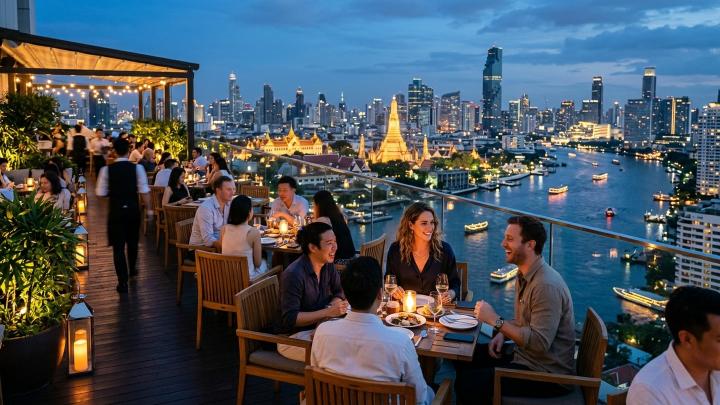
Bangkok rooftop restaurant showing holiday perception vs real daily living costs in Thailand
Cost of Living

Why Holidays Feel Cheap but Living Long-Term Costs More in Thailand 2026

Deconstructing the vacation perception bias: how transition from temporary traveler to long-term resident reveals hidden recurring fixed costs.

2 min ↗
Cost of Living

Why Holidays Feel Cheap but Living Long-Term Costs More in Thailand 2026

· Last reviewed: 23 September 2026 · Written by Ricardo Dos Santos
Bangkok rooftop restaurant showing holiday perception vs real daily living costs in Thailand
SawaLife Editorial / Authentic Documentary Photography

Deconstructing the vacation perception bias: how transition from temporary traveler to long-term resident reveals hidden recurring fixed costs.

Nearly every traveler spending three weeks in Thailand leaves with the same conviction: with $9 Thai massages, $2 street food dishes, and charming hotel rooms for $35/night, living here full-time must cost virtually nothing. Yet once settled as a permanent resident, the financial equation shifts dramatically.


1. The Vacation Perception Bias

During a short vacation, travelers only encounter marginal variable expenses. They bypass all structural overheads that define long-term expat life:

  • No annual comprehensive international health insurance policies ($1,500–$4,500/year).
  • No continuous electricity bills for daily air conditioning ($100–$200/month).
  • No annual visa maintenance fees, legal paperwork, or blocked bank deposits.
  • No vehicle depreciation, maintenance, or tropical appliance wear-and-tear.

2. Comparison Table: Vacationer vs. Long-Term Resident Costs

Expense Area Vacationer Experience (2 Weeks) Resident Reality (Annual Basis)
Housing Hotels/Airbnb with daily housekeeping and electricity included 12-month lease, 2-month deposit, separate electricity billing
Healthcare Basic travel insurance bundled with credit card Full comprehensive inpatient/outpatient policy with high guarantees
Food & Dining Exciting street food discoveries at every meal Routine home cooking, cravings for imported Western comfort foods
Mobility Casual Grab rides, tuk-tuks, and airport transfers Owning/leasing a motorbike or car, insurance, and DLT driving license
Legal Status Free 60-day visa exemption stamp at immigration Locked funds in Thai bank (400k–800k THB), 90-day reports, visa renewals

3. The Three Pitfalls of the "Endless Holiday" Mindset

  1. Daily Entertainment Spending: Dining out at Western bistros and beach clubs every evening quickly matches European or US expense levels.
  2. Skipping Health Coverage: Operating without comprehensive medical insurance leads to catastrophe if an intensive care hospitalisation is required.
  3. Ignoring Apartment Orientation: Renting top-floor units facing west dramatically increases cooling costs.

4. Frequently Asked Questions (FAQ)

Why are imported Western groceries heavily taxed in Thailand?

Thailand levies protective import tariffs on foreign agricultural and luxury goods, especially dairy products, processed meats, and alcoholic beverages.

Can an expat still maintain a low budget long term?

Yes, by adopting a predominantly local lifestyle: provincial housing, traditional fresh market cooking, and local community amenities.