
Travel
Phuket: reading the Sino-Portuguese facades of the Old Town
Last reviewed: 2026-07-16
Written by Ricardo Dos Santos
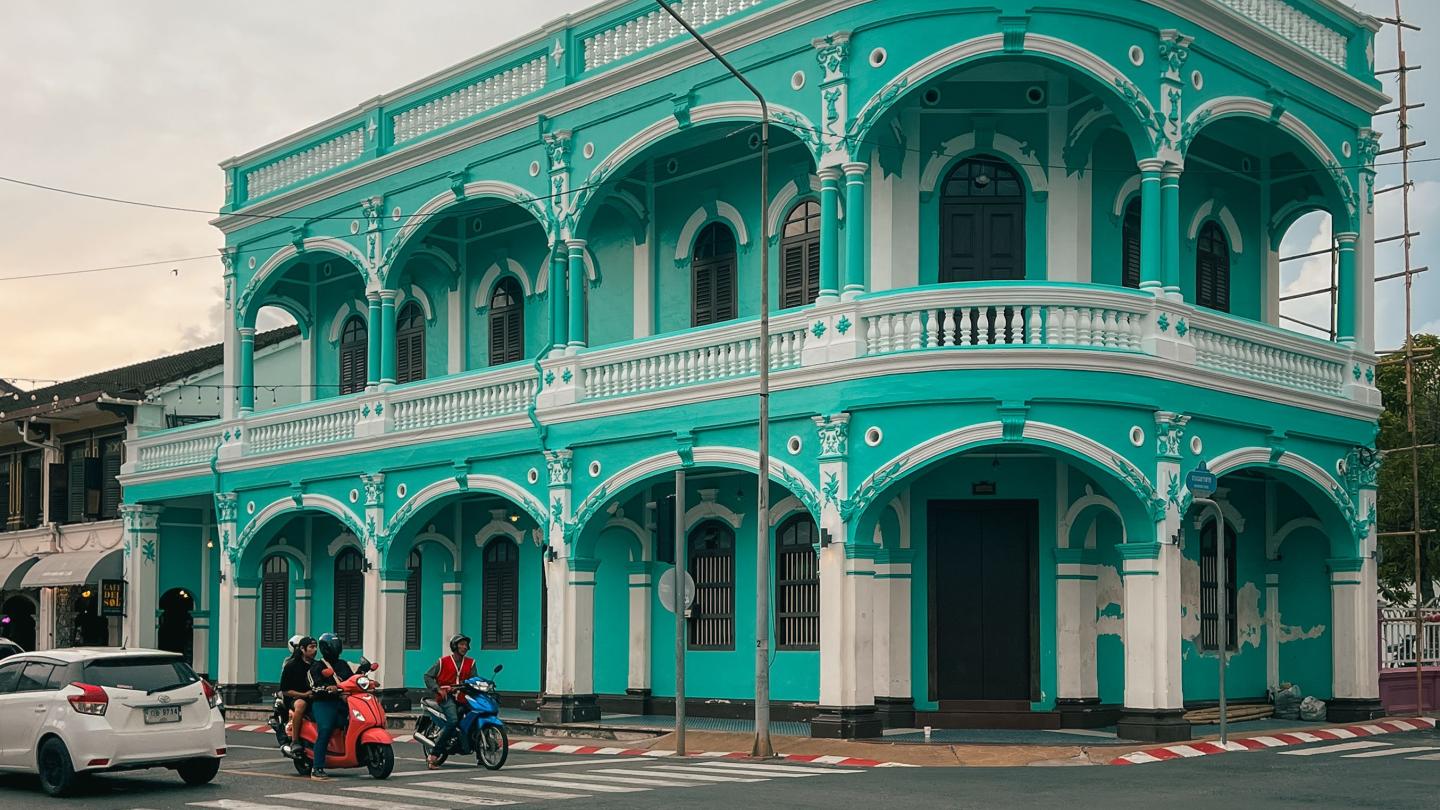
Phuket Old Town's Sino-Portuguese shophouses were built on tin money, not tourism — and the quietest lane, Soi Romanee, has the most revealing past.
A town built on tin, not sand
Long before Phuket became a byword for beaches, its wealth came from underground. From the late 18th century through the early 20th, Hokkien Chinese migrants worked tin deposits across the island, and the profits built a town a few kilometres inland from the coast. By the reign of King Rama V (1868-1910), the streets around Thalang, Dibuk, Krabi, Phang Nga and Yaowarat roads had filled with two-storey shophouses whose owners could afford to build in the fashionable style of the era: Sino-Portuguese.
Where the style actually comes from
The name is a shorthand, not a precise pedigree. Wealthy Hokkien merchants hired builders trained in the Portuguese-influenced architecture of Malacca and Penang, across the Strait of Malacca, and imported the look wholesale: shuttered windows, five-foot covered arcades running the length of each block, stucco garlands, and shophouse footprints rarely wider than six metres but sometimes eighty deep, courtyard after courtyard receding toward a rear kitchen. No single building marks the style's arrival in Phuket — it simply became the town's default over a few decades of tin-fuelled construction.
Read the street, not just the postcard
Thalang Road is the most photographed stretch, and deservedly so, but the more revealing walk is one block over on Soi Romanee. This narrow lane of candy-coloured facades was, within living memory, Phuket's red-light district, serving tin miners who had no families on the island. Its current prettiness is a second life, not the original one — a reminder that Old Town streets were working streets, not designed backdrops.
The Baba-Peranakan thread
Many of the tin fortunes were built inside mixed households: Hokkien miners married Siamese women, and their descendants, the Baba-Peranakan community, blended Chinese ancestor rites with Thai dress, language and food into something particular to this coast. Chinpracha House on Krabi Road, still lived in by descendants of the family that built it in 1903, is the clearest place to see that domestic world rather than just its street-facing shell.
Walk it on a Sunday if you can
On Sunday evenings, Thalang Road closes to traffic for the Lard Yai walking street market, when the same facades that once fronted tin-trading offices host food stalls late into the night. It's touristy, but it also fills the street with exactly the kind of foot traffic the shophouses were built to handle — a rare moment when the Old Town feels used rather than preserved.
Before you go
Wear comfortable shoes for uneven five-foot ways, carry water for the middle of the day, and time a first pass for late afternoon when the light is kinder to the facades and the heat has eased. A slow 90-minute loop covering Thalang, Dibuk, Krabi and Soi Romanee is enough for a first visit; add the Thai Hua Museum and Chinpracha House if you want the interiors as well as the exteriors.
Verification before travel
This SawaLife guide was researched and reviewed before publication. Opening hours, road closures, market schedules and conservation rules can change. Verify current details before travelling via the Tourism Authority of Thailand — Phuket Old Town.