
Travel
Koh Samui: Phra Yai and temple etiquette by the sea
Last reviewed: 2026-07-16
Written by Ricardo Dos Santos
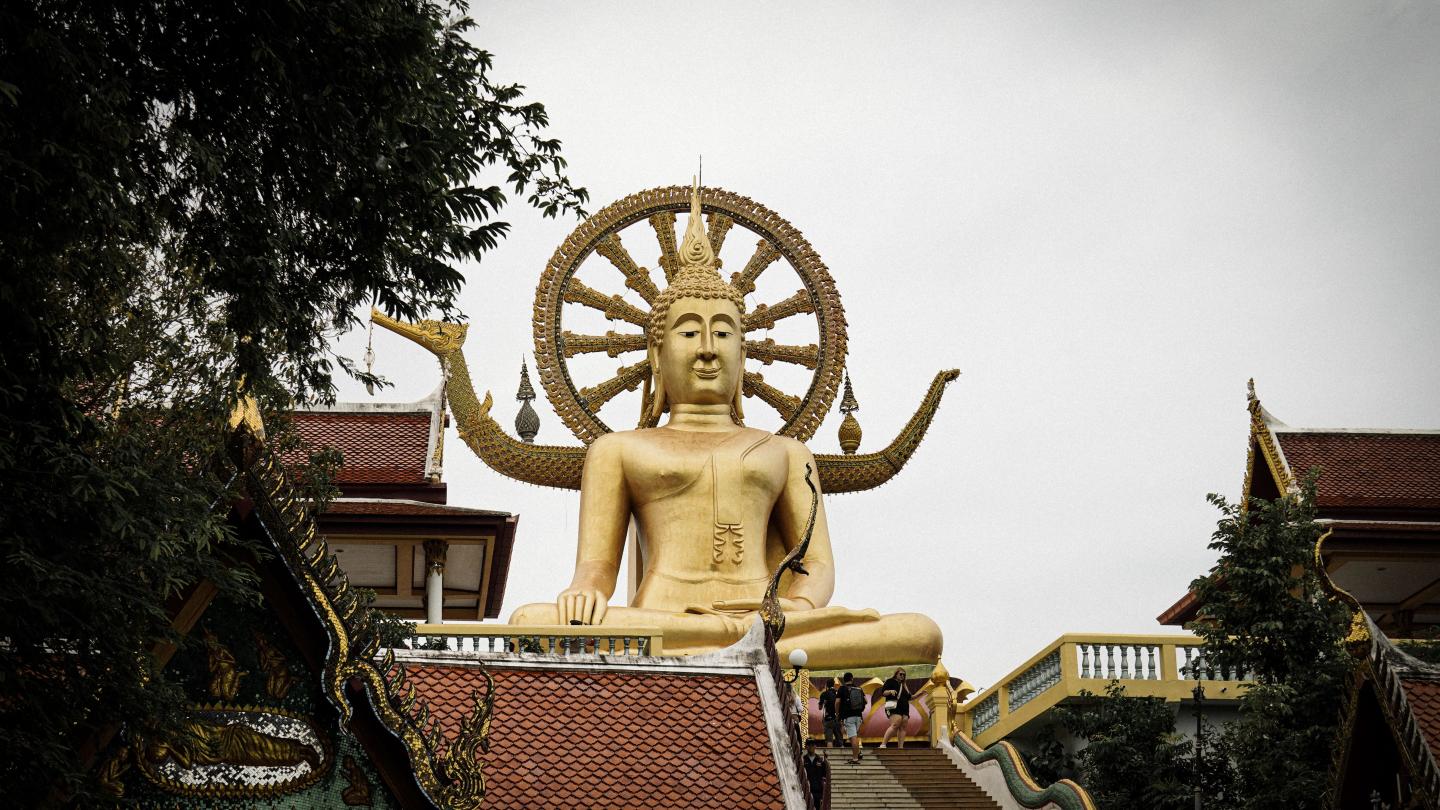
A 12-metre gold Buddha on a tidal islet off Koh Samui's northeast coast, and the small rituals of dress and conduct that keep a working temple working.
A giant that sits on its own tide
Come at Koh Samui from the north-east and the first landmark you register from the airport road is not a beach but a statue: a seated Buddha, 12 metres of gold-painted concrete, rising above the causeway that ties the mainland to a speck of land called Ko Faan. The islet is small enough to walk around in under ten minutes, and the statue was finished in 1972, paid for the way most working Thai temples are paid for — not by a single royal or corporate donor, but by an accumulation of small offerings from islanders and, later, from the visitors who kept coming. Locals simply call the place Wat Phra Yai, "the temple of the big Buddha." Tourism brochures added the nickname that stuck internationally.
The gesture the statue is making
Look closely before you photograph it: the right hand rests over the knee, fingertips reaching toward the ground, while the left lies open in the lap. This is the bhumisparsha pose, "touching the earth," the moment in the Buddha's story when he responds to the temptations and illusions of the demon Mara not with argument but by calling the earth itself to witness his resolve. It is one of the most common gestures in Thai religious art, but few visitors are told what it means as they climb the naga-flanked staircase toward the platform.
Layers added over fifty years
The temple has not stood still since 1972. A large ceremonial prayer wheel was installed behind the main statue only in 2012, four decades after the original build, and a smaller, separate statue depicting Maitreya — the Buddha still to come, in Thai belief — sits elsewhere on the grounds. The serpent balustrades lining the entrance stairs are a standard feature of Thai temple architecture, drawn from older Brahmanic and animist symbolism that Thai Buddhism absorbed rather than replaced. None of this is explained by a sign at the entrance; it rewards asking, or reading, before you go.
What the dress code actually requires
Entry is free, though donation boxes are placed discreetly around the platform and giving something small is customary rather than optional in spirit. The rule that is not optional: shoulders and knees covered for both men and women, and shoes removed before stepping into any covered shrine building. Sarongs are sold or lent at the entrance for anyone arriving in shorts or a tank top, so being turned away is avoidable but embarrassing if it happens.
Getting there and timing it well
From Chaweng, the drive is short — about 6 kilometres, some 15 minutes by road, since the temple sits close to Samui International Airport on the island's northeast tip. A shared songthaew runs roughly 70 baht per person if you can flag one heading the right way; chartering one privately or negotiating a taxi lands closer to 200-300 baht one-way. Most visits last 30 to 45 minutes, which is enough to see the statue, the smaller shrines, and the row of stalls selling drinks and souvenirs at the base of the causeway.
Why sunset earns its reputation
The temple opens early, generally from around 6 to 8 in the morning depending on the season, and stays accessible into the evening, typically until 6pm. Early morning avoids the tour buses; late afternoon, roughly between 5:30 and 6:30pm, is when the gold statue catches the low light against the sea — a genuinely photogenic hour, not just a marketing line, and one where a few extra minutes of patience for the crowd to thin is worth it.