
Travel
Bangkok: the Grand Palace and Wat Phra Kaew
Last reviewed: 2026-07-16
Written by Ricardo Dos Santos
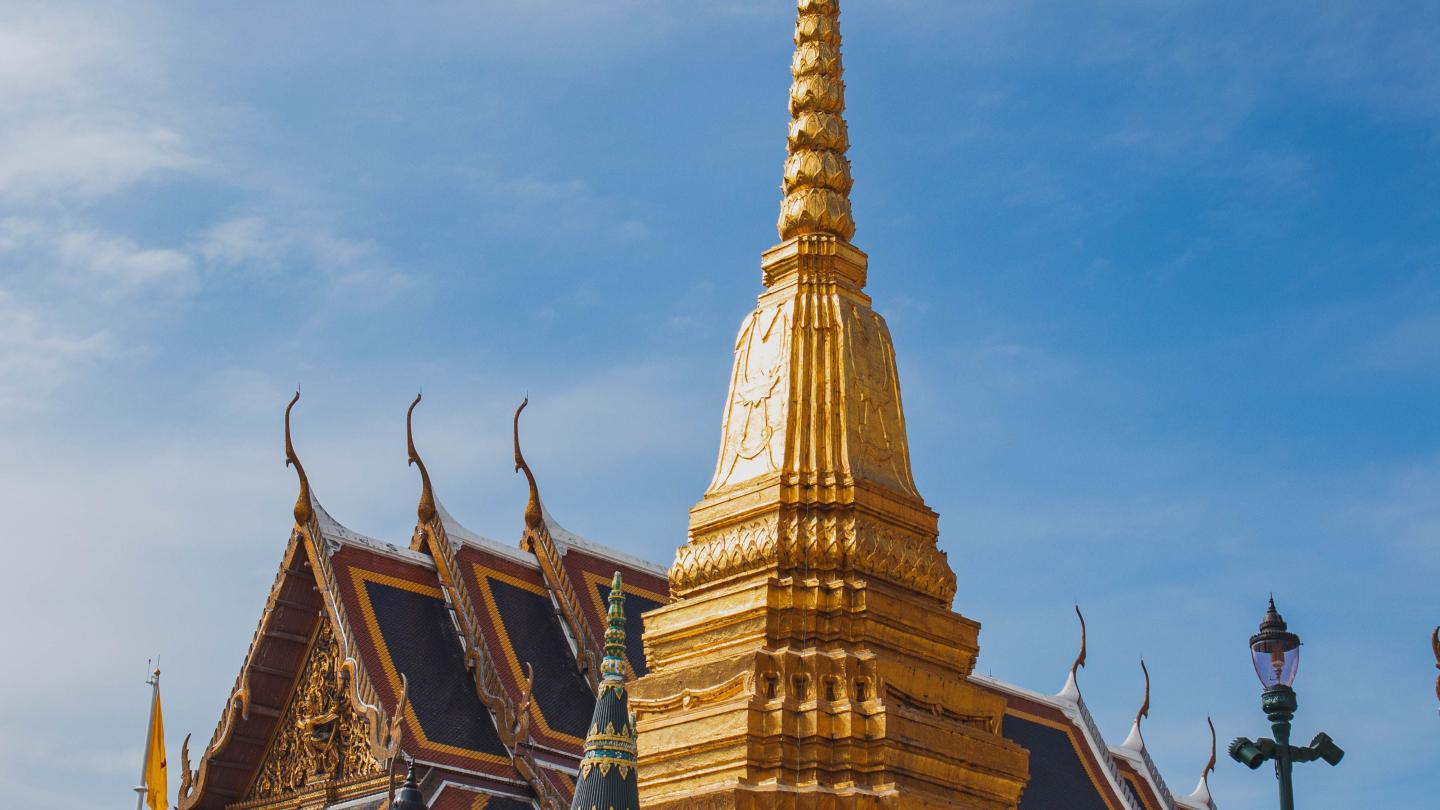
Inside the walled 218,000 m² compound where Rama I founded Bangkok in 1782: a jade Buddha with a 300-year odyssey, three seasonal costumes, and a royal chapel with no monks.
A capital founded in a single decree
When King Rama I crossed the Chao Phraya from Thonburi in 1782 to found the new Chakri capital, the first structure he ordered built wasn't a palace hall — it was a walled royal chapel to house the kingdom's most sacred object. That chapel, Wat Phra Kaew, still stands inside the 218,000 m², 1.9 km-long walled compound of the Grand Palace, and it remains the only Thai temple with no resident monks: it exists purely as the private chapel of the monarchy, mirroring a layout Rama I copied from the fallen Ayutthaya and Sukhothai courts he was determined to resurrect in miniature.
A green stone with a 300-year detour
The temple's namesake is not actually emerald. The Phra Kaew Morakot is carved from a single block of green jasper (or jadeite, depending on the source), and its documented story begins in 1434 in Chiang Rai, when lightning cracked open a stucco-covered chedi and monks found a gilded Buddha figure inside. It took years before a flake of plaster fell away to reveal green stone underneath. What followed reads like a relic on the run: Chiang Rai to Lampang, then Chiang Mai, then — remarkably — north to Luang Prabang and Vientiane in Laos, where it stayed for over two centuries. It only returned to Siam in 1778-79, carried back by the general who would become Rama I after a military campaign, and it has not left Bangkok since.
Three wardrobes for one Buddha
Twice a year, at the change of season, the King or a senior royal family member personally changes the Emerald Buddha's costume — a ceremony instituted by Rama I himself and still performed today. There is a gilded robe for the hot season, a gold-and-blue enamel set for the rains, and a solid-gold mesh cloak for the cool months. The figure itself is small, just 66 cm tall including its base, seated on a tall gilded traymasat altar that dwarfs it — deliberately, since scale here signals sanctity rather than spectacle.
Reading the compound like a map
Twelve marble pavilions ring the Convocation Hall, each marking a cardinal point of the sacred boundary; look for the Phra Si Rattana Chedi sheathed in gold mosaic tiles and the Phra Mondop library raised on a base to keep flood water from the palace's original scriptures. The murals lining the cloister gallery — over 1.9 km of them — narrate the entire Ramakien, Thailand's version of the Ramayana, painted and repainted since Rama I's reign whenever the tropical climate wore the pigment away.
Practical planning
The complex opens daily 8:30am-4:30pm, with the last ticket sold at 3:30pm — arrive by mid-morning if you want to avoid both the heat and the tour-group crush. Entry costs 500 THB for foreign visitors, which also includes the Queen Sirikit Textile Museum on-site; Thai nationals enter free with ID. The dress code is strictly enforced: no shorts, sleeveless tops, see-through fabric or tight clothing — sarongs are loaned free at the entrance if needed. The easiest access is BTS to Saphan Taksin, then the Chao Phraya express boat to Tha Chang pier, or MRT to Sanam Chai station followed by a short walk. Budget two to three unhurried hours, not a quick photo stop.
Source: Royal Grand Palace official visitor information, royalgrandpalace.th