
Travel
Wat Pho, Bangkok: the temple that invented Thai massage and carved medicine into marble
Last reviewed: 2026-07-16
Written by Ricardo Dos Santos
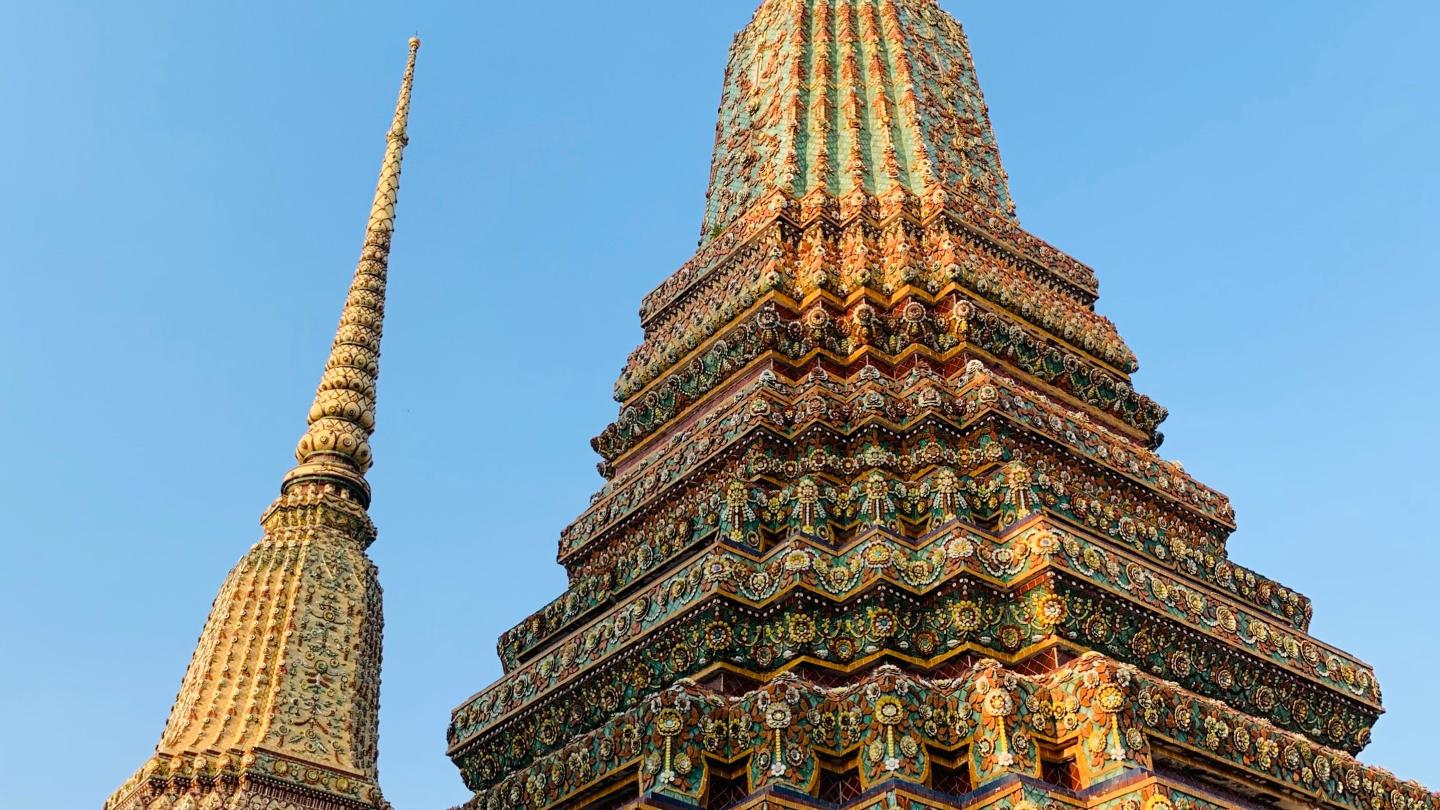
A 46-metre reclining Buddha with mother-of-pearl soles, over 1,000 UNESCO-listed medical and massage inscriptions: Wat Pho isn't just a monument — it was Thailand's first public university.
From an Ayutthaya-era temple to the kingdom's first public university
Wat Pho has existed since the Ayutthaya period, dating to the reign of King Phetracha in the late 17th century, but it was Rama I who turned it, from 1788, into the founding temple of the new capital — a restoration and expansion project that took nearly eight years. Rama III gave it its definitive form in 1830 with an unprecedented ambition: turning the temple into a knowledge centre open to everyone, teaching medicine, literature, martial arts and astrology to a population with no access to formal schooling. Wat Pho effectively became the country's first public university, long before any modern institution carried that name.
A 46-metre reclining Buddha with mother-of-pearl soles
The reclining Buddha, completed in 1832 under Rama III, is 46 metres long and 15 metres high, depicting the Buddha's entry into nirvana. The soles of its feet, entirely inlaid with mother-of-pearl, are divided into 108 panels illustrating auspicious symbols — elephants, tigers, dancers, altar objects — arranged around a central dharma wheel. Along an adjoining corridor stand 108 bronze bowls, one for each auspicious characteristic: visitors drop coins into them, a merit-making gesture believed to bring good fortune.
The birthplace of traditional Thai massage
Few visitors realise Wat Pho is the birthplace of Thai massage as a codified discipline. Between 1831 and 1841, Rama III had over a thousand marble inscriptions carved around the temple: medical texts, body maps marking the "sen" energy lines, massage diagrams — a genuine public-health encyclopaedia carved in stone so anyone could study it freely. This collection, the Epigraphic Archives of Wat Pho, is now inscribed on UNESCO's Memory of the World Register. The temple still runs an active traditional massage school, and it remains possible to get a massage within the complex itself — a rare continuity between heritage and living practice.
A vast site, not just a photo stop
Beyond the reclining Buddha, Wat Pho holds over a thousand Buddha images spread across chapels, cloisters and courtyards — a complex large enough that a quick visit only scratches the surface. Shoes come off before entering buildings (plastic bags are provided to carry them), and shorts aren't allowed.
Practical details
The temple is open 8am–7:30pm, with a 300 THB entrance fee (free for children under 120cm). Allow one-and-a-half to two hours on site given the scale of the complex and the number of buildings worth seeing.
Pairing it with Wat Arun, right across the water
Wat Pho sits on the same riverbank as the Grand Palace, a short walk from Tha Tien pier, where a cheap cross-river ferry (3–5 THB) reaches Wat Arun on the opposite bank. The classic itinerary combines the Grand Palace early in the morning, Wat Pho by late morning, then a ferry crossing to Wat Arun for the late-afternoon light.