
Thailand Announces New Excise Tax Structure for Imported Electric Vehicles
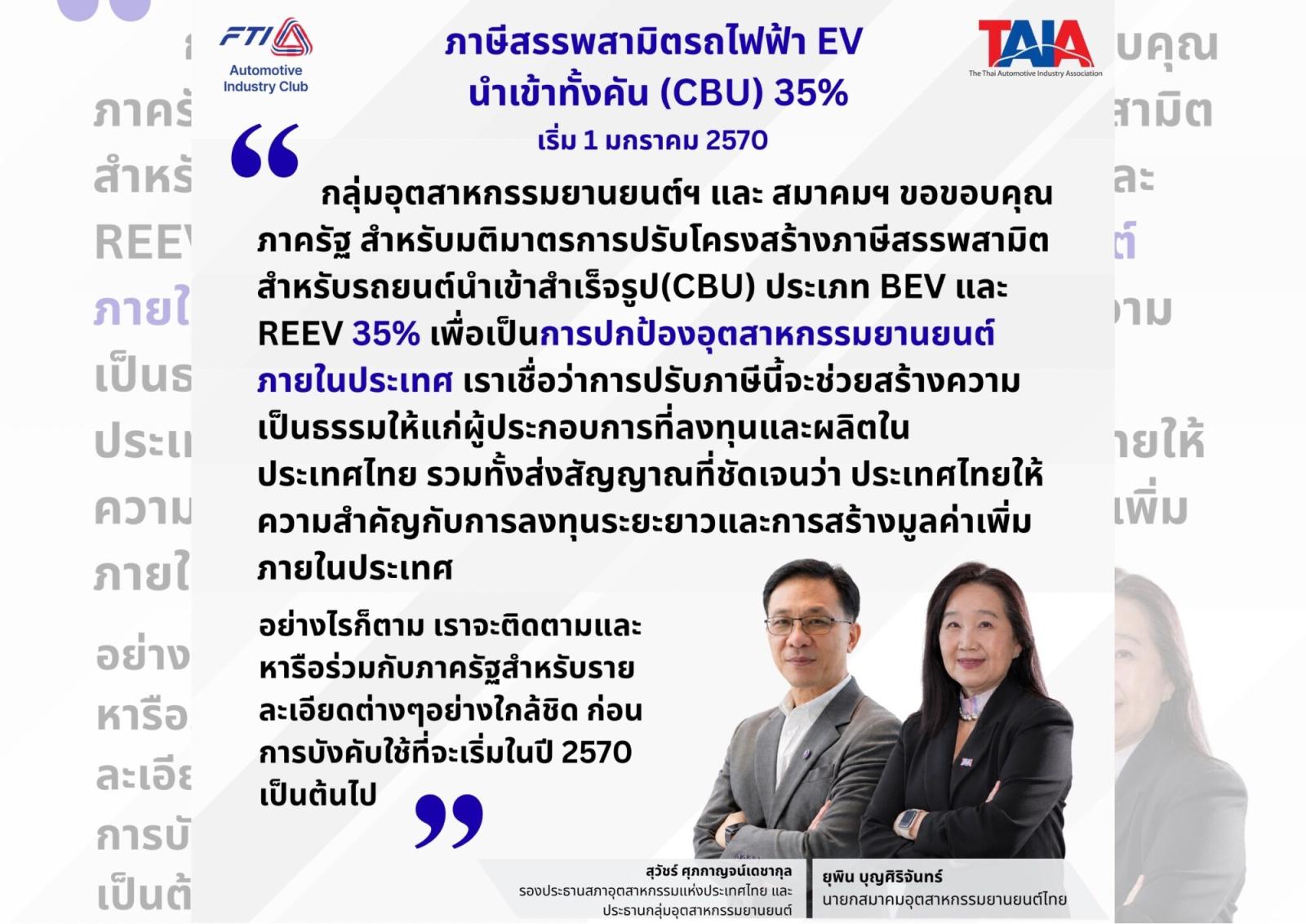
The Federation of Thai Industries has welcomed a government decision to impose a 35% excise tax on imported BEV and REEV vehicles starting in 2027 to support domestic manufacturing.
According to reports from Khaosod Online, the Federation of Thai Industries (FTI) and the Thai Automotive Industry Association have expressed support for a new government measure regarding excise taxes. The policy introduces a 35% excise tax rate specifically for completely built-up (CBU) battery electric vehicles (BEV) and range-extended electric vehicles (REEV) imported into Thailand. Suwat Supakarndejakul, Vice Chairman of the FTI, stated that this move is intended to protect the domestic automotive sector and ensure fair competition for manufacturers who have invested in local production facilities. The industry representatives believe this policy signals a commitment to long-term investment and domestic value creation. The automotive sector remains a cornerstone of the Thai economy, supporting a supply chain of over 2,500 operators and providing employment for more than 800,000 people, ranging from parts manufacturers to SMEs and service providers. While the industry welcomes the measure, officials noted that they will continue to monitor and consult with the government regarding specific implementation details before the tax takes effect in 2027. For residents and those involved in the automotive market, this change highlights a strategic shift toward prioritizing local production over imports. Further details regarding the specific regulatory framework and potential impacts on vehicle pricing remain to be confirmed as discussions between the private sector and the government continue.
