
Travel
Chiang Rai: approaching the Golden Triangle as a border landscape
Last reviewed: 2026-07-16
Written by Ricardo Dos Santos
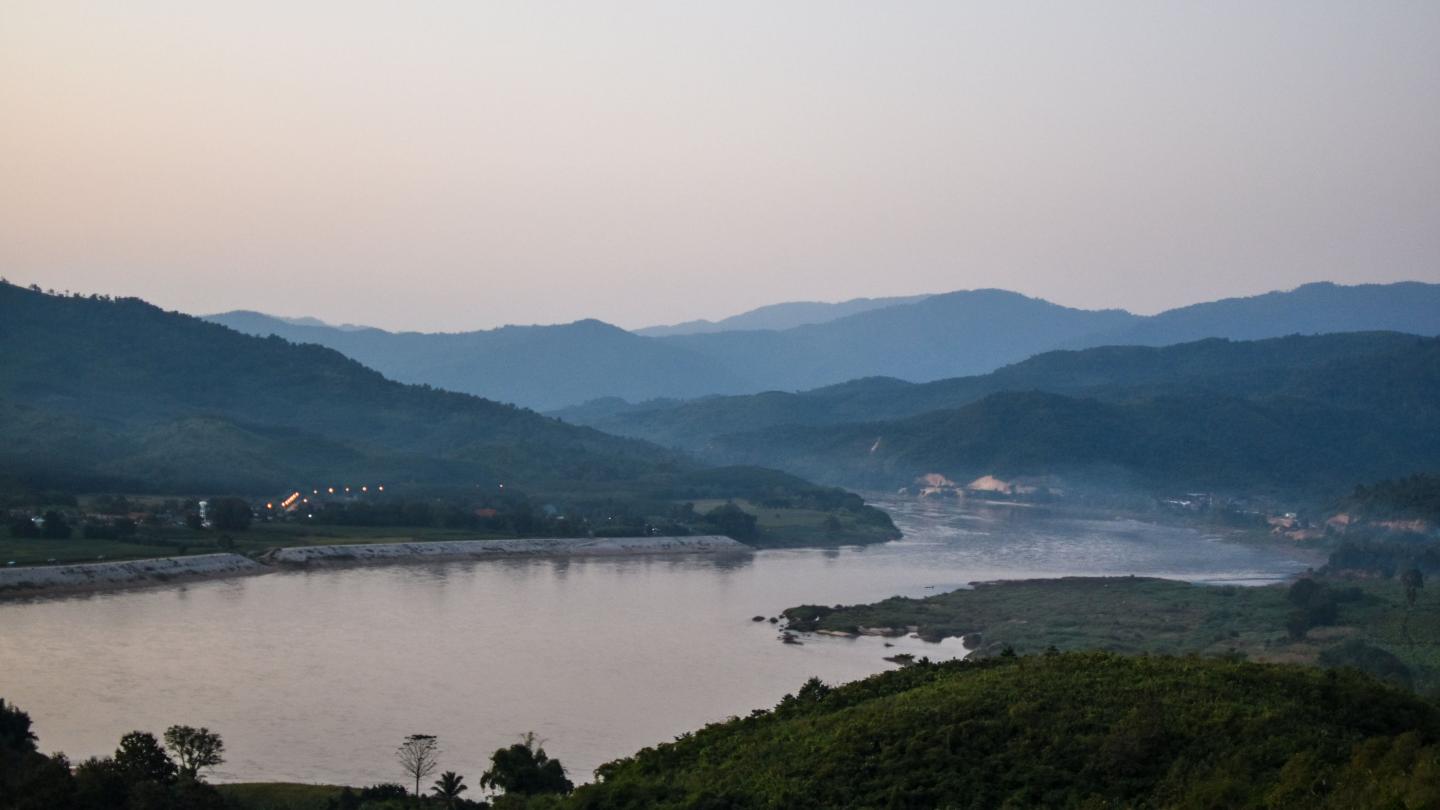
At Sop Ruak, the Ruak and Mekong rivers draw the line where Thailand, Myanmar and Laos meet. A former opium heartland turned museum and viewpoint — worth visiting for the geography and the history, not for crossing anything.
Where three countries meet
At Sop Ruak, roughly 70km north of Chiang Rai town (about an hour to ninety minutes by road), the small Ruak River flows into the Mekong. It is exactly at this confluence that the borders of Thailand, Myanmar and Laos touch. From the Thai bank, you are literally looking at the other two countries without ever crossing into them — the scene is geographical and symbolic before it is any kind of crossing point.
Where the name comes from
The phrase "Golden Triangle" originated in a U.S. State Department memo describing the region's dominance of global opium production. Through the 1960s, Thailand alone produced an estimated 145 tonnes of raw opium a year, rivalling present-day Afghanistan. Hill-tribe farmers, Kuomintang remnant forces who had retreated south after 1949, and regional warlords — most notoriously Khun Sa — built an economy in which a kilo of raw opium traded for a kilo of gold.
A little-known fact: the CIA and Air America
During the CIA's secret war in Laos through the 1960s and 70s, its proprietary airline Air America flew logistics for anti-communist Hmong forces in the region. Historian Alfred McCoy argued this indirectly enabled opium transport through the Golden Triangle; later scholars dispute whether the CIA or its pilots were knowingly involved. It remains a contested footnote of Cold War history, tied directly to this stretch of river.
From opium to coffee: the Royal Project
In 1969, King Bhumibol Adulyadej founded the Royal Project Foundation, Thailand's first crop-substitution programme, replacing poppy fields with coffee, strawberries, macadamia and flowers. Credited with helping more than 100,000 people, it played a central role in ending Thai opium production. The trade is now memorialised rather than practised: the Hall of Opium, a large government-run museum about 2km north of Sop Ruak, traces its global history across multiple exhibition levels and a theatre space.
Practical information
The Hall of Opium is open 8am-4pm, entrance 200 baht. The smaller House of Opium, founded in 1990 by private collector Patcharee Srimatyakul, is open 7am-6pm, entrance 50 baht. Long-tail boats leave from the Sop Ruak pier for roughly 30-minute rides covering 5-6km with views of the tri-border point, at around 1,000 baht per person for an hour (shared boats cost less per head).