Jiajia Mian: A Millennial Tibetan Culinary Heritage
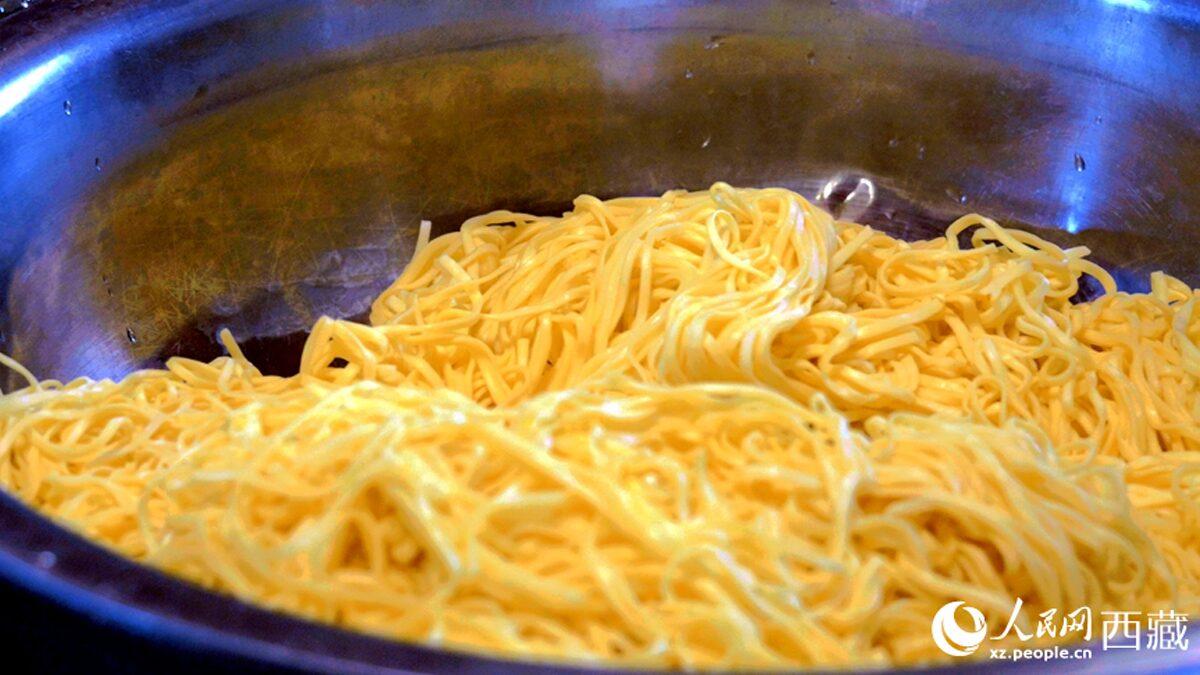
The traditional Jiajia Mian noodle dish from Markam County, Tibet, recognized as intangible cultural heritage, offers a unique dining experience rooted in ancient tea-horse trade history.
According to Khaosod Online, Jiajia Mian (加加面) is a traditional noodle dish from Markam County in the Chamdo region of Tibet, China, with a history spanning nearly 1,000 years. Originally served to merchants and caravans traveling the ancient tea-horse route, the dish has evolved into a celebrated local specialty. In 2010, the art of making Jiajia Mian was officially registered as an intangible cultural heritage at the regional level.
Zhuo Ma La Mu, a practitioner of this culinary craft, explains that the secret lies in hand-kneading the dough and a precise five-stage boiling process. This method ensures the noodles achieve a perfect texture while absorbing the flavors of a broth made from wild matsutake mushrooms, local Tibetan pork, and ancient salt. The dish is uniquely served in small bowls containing only 5-6 strands each. To track consumption, diners place a river stone on the table for every empty bowl, which are then counted for payment. This tradition is often accompanied by lively singing and blessings.
For travelers, this dish represents a deep connection to Tibetan history and local hospitality. While the preparation techniques are well-documented, the specific availability of authentic Jiajia Mian experiences for tourists in various parts of the region remains subject to local seasonal operations and specific cultural tourism initiatives.