
Thai Trade Policy Office Promotes Eco-Friendly Loy Krathong Materials
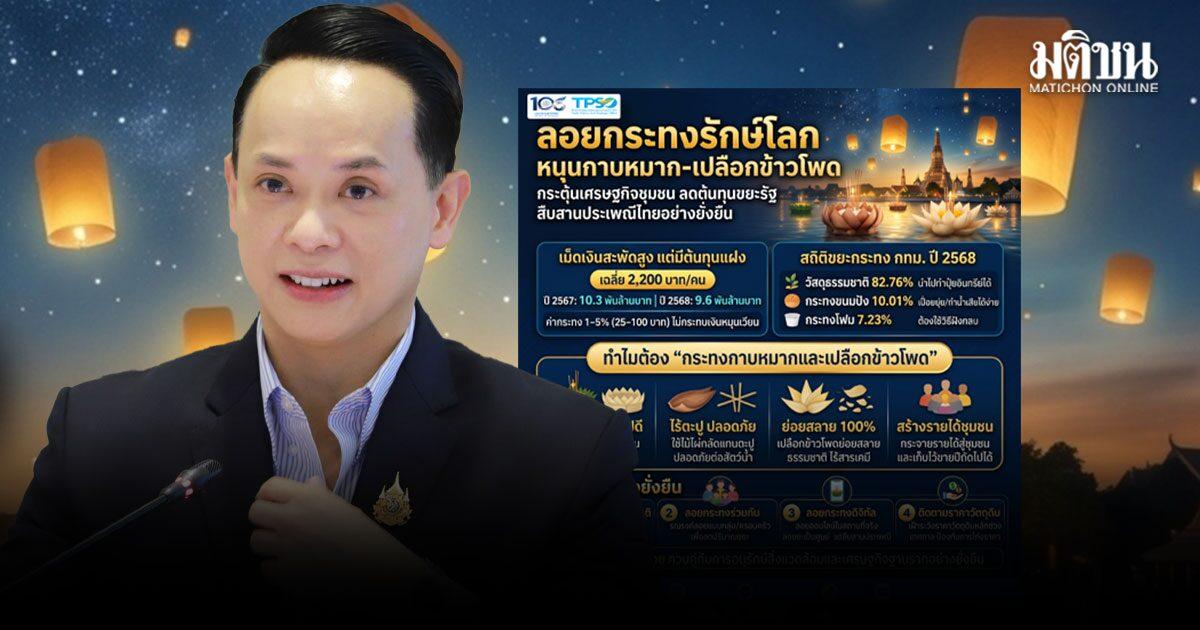
The Trade Policy and Strategy Office (TPSO) is encouraging the use of betel nut husks and corn husks for Loy Krathong floats to boost local economies and reduce waste.
The Trade Policy and Strategy Office (TPSO) of Thailand has launched an initiative to promote the use of environmentally friendly materials for the upcoming Loy Krathong festival. According to a report by Matichon Online, the TPSO is advocating for the use of natural, biodegradable materials such as betel nut husks and corn husks to construct krathongs.
This initiative serves a dual purpose: it aims to stimulate local community economies by creating demand for these agricultural by-products while simultaneously reducing the municipal budget required for post-festival waste management. By shifting away from non-biodegradable materials, the TPSO hopes to mitigate the environmental impact typically associated with the festival.
For residents and travellers, this shift represents a growing emphasis on sustainable tourism practices in Thailand. Choosing eco-friendly floats is a simple way to participate in the cultural tradition while supporting local artisans and environmental conservation efforts. While the TPSO is actively promoting these materials, it remains to be seen how widely these specific alternatives will be adopted by vendors across different provinces. Travellers are encouraged to look for these sustainable options at local markets to contribute to the initiative's success.
