
Long-Tailed Lizard Sparks Curiosity and Folklore Discussions
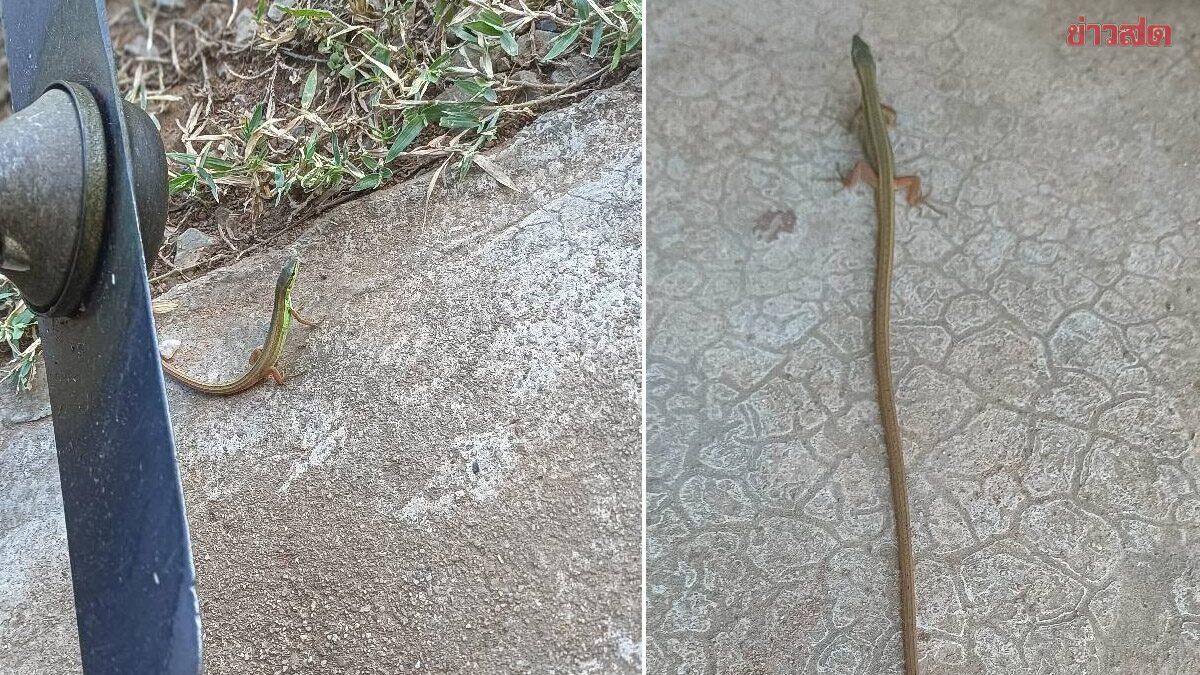
A social media inquiry about a long-tailed lizard has led to expert identification and a look into regional Thai superstitions.
A recent social media post in a Thai identification group has sparked interest after a user shared photos of a creature with an exceptionally long tail. Experts identified the animal as the Asian grass lizard (Takydromus sexlineatus), locally known as 'Sang Ha' or 'Ngu Kha'. Despite its common names, which often include the word 'snake', the creature is a non-venomous lizard belonging to the Lacertidae family. It is characterized by a slender body and a tail that can reach up to five times the length of its torso. The species is widely distributed across Asia, including India, Southern China, and throughout Thailand, where it can even be found in urban areas like Bangkok. Beyond its biological classification, the lizard holds a place in Thai folklore. In the Northeast region, there is a long-standing superstition that the creature is highly venomous, with myths suggesting that its tail can inflict fatal burns. These beliefs have even been referenced in famous Thai literature such as 'Phet Phra Uma'. For residents and travelers, this serves as a reminder of the intersection between local wildlife and traditional beliefs. While the lizard is harmless, the persistence of these myths highlights the cultural significance of local fauna. Further confirmation regarding the specific regional variations of these superstitions continues to be a topic of interest among cultural researchers.
