
Japan Launches Historic Mission to Collect Samples from Mars' Moon Phobos
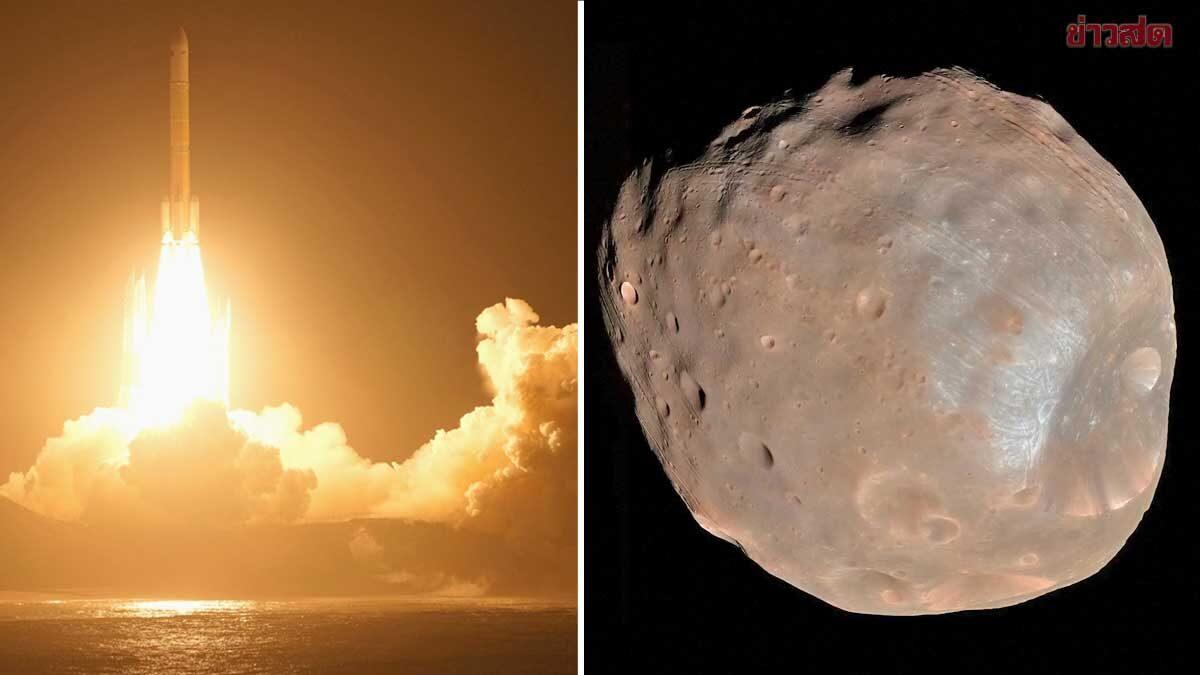
The Japan Aerospace Exploration Agency (JAXA) has successfully launched the Martian Moons eXploration (MMX) mission to retrieve surface samples from Phobos.
On October 20, 2026, the Japan Aerospace Exploration Agency (JAXA) successfully launched an unmanned spacecraft toward Phobos, one of the moons orbiting Mars. According to reports from Khaosod Online, the mission utilized an H3 rocket, which lifted off from the Tanegashima Space Center in southwestern Japan at 05:52 local time. This marks the first interplanetary mission for the H3 rocket.
The MMX spacecraft is expected to reach the Martian system by August 2027. The primary objective is to collect at least 10 grams of material from the surface of Phobos, which is the larger of Mars' two moons. If successful, the samples are scheduled to be returned to Earth for analysis in 2031. Scientists hope this data will clarify the origins of the Martian moons and provide deeper insights into the early history of our solar system.
For residents and travelers interested in space exploration, this mission represents a significant milestone in international aerospace technology. While the launch was successful, the long-term success of the mission remains to be confirmed as the spacecraft must navigate the complex journey to Mars and execute the precise sample collection process over the coming years.
