
Thailand Proposes ASEAN Economic Resilience Strategy Amid Global Uncertainty
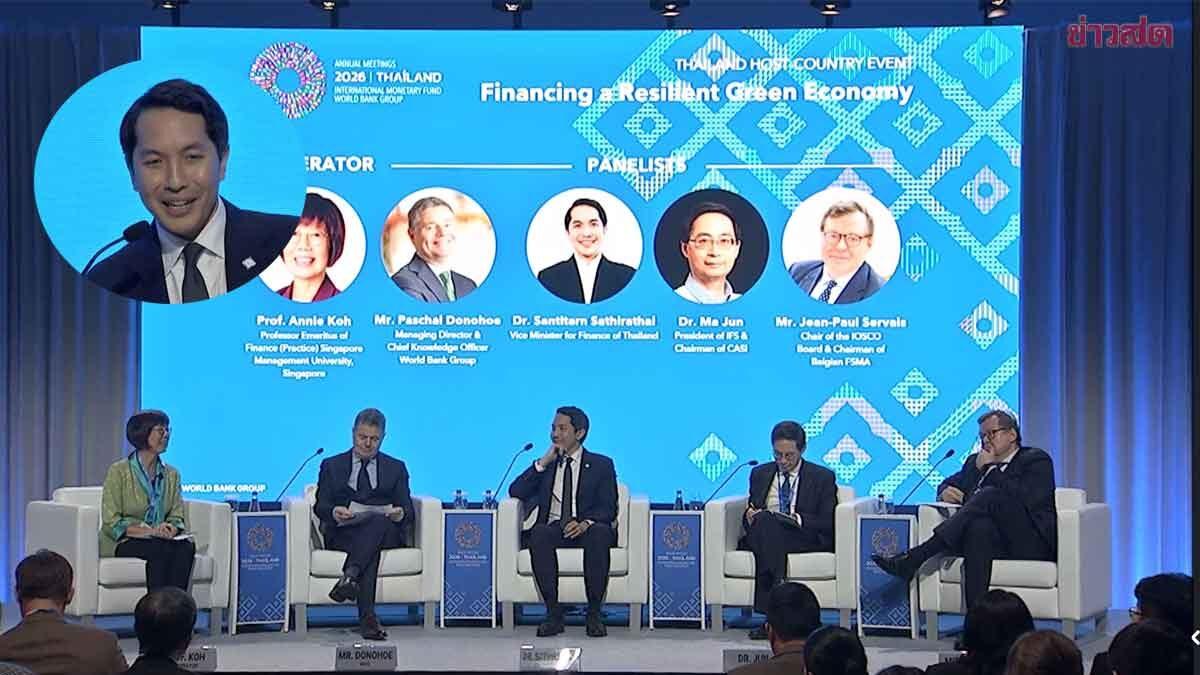
Thai Finance Ministry official Santi Kiranand has urged ASEAN nations to strengthen regional economic defenses, citing Thailand's high energy import dependency.
Speaking at the 2026 IMF-World Bank Group Annual Meetings in Bangkok, Assistant Minister to the Minister of Finance, Santi Kiranand, highlighted the need for Thailand and its ASEAN neighbors to build robust economic safeguards. Addressing the topic of 'Financing a Resilient Green Economy,' Santi noted that Thailand faces significant exposure to global economic volatility, with energy imports accounting for nearly 10% of the nation's GDP.
To mitigate these risks, the Ministry has proposed a three-pronged strategy: 'Support, Transition, and Invest.' This approach involves providing targeted assistance to households and businesses affected by price fluctuations, rather than broad subsidies that may distort market signals. Furthermore, the strategy emphasizes a transition toward clean energy and increased investment in electrical infrastructure to reduce long-term vulnerability to external shocks.
For residents and travelers, this policy shift suggests a potential move toward more focused government spending and a long-term push for energy sustainability. While the proposal aims to stabilize the economy against climate and energy crises, the specific implementation timelines and the extent of regional cooperation remain to be confirmed. The initiative underscores the government's focus on structural reform to ensure national economic stability in an increasingly complex global environment.
