
General
Thailand Strengthens Climate Resilience in Land Reform Areas
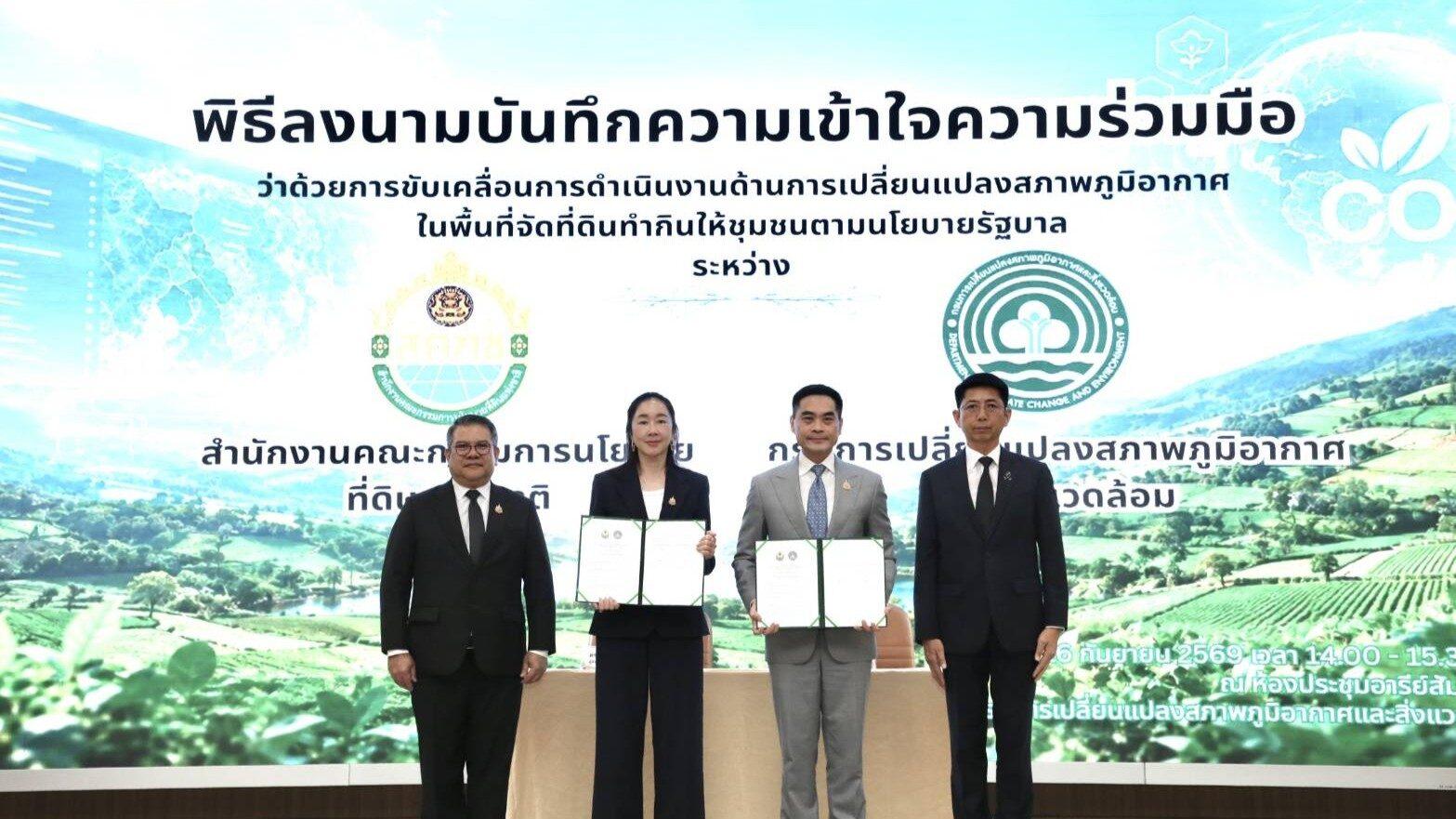
The National Land Policy Committee and the Department of Climate Change and Environment have signed a five-year agreement to integrate sustainable land management with climate action.
On September 16, 2026, the National Land Policy Committee (NLPC) and the Department of Climate Change and Environment (DCCE) officially signed a Memorandum of Understanding (MoU) to address climate change within government-allocated land areas (KThCh). According to Khaosod Online, this five-year partnership, effective through September 16, 2031, aims to integrate land management data with environmental conservation strategies.
Dr. Chayanan Phakdeejit, Director of the NLPC, stated that the initiative focuses on fair land distribution, which serves as a foundation for improving the quality of life for residents. By securing land rights and providing infrastructure and market support, the government intends to reduce natural resource encroachment while promoting biodiversity and soil conservation.
For residents and those interested in Thailand’s rural development, this collaboration signifies a shift toward more structured land use that prioritizes environmental sustainability. It may lead to more stable land tenure and improved agricultural practices in designated areas. However, the specific operational details regarding how this will affect individual landholders or local tourism-related land use remain to be confirmed. As the project is in its early stages, stakeholders should monitor future announcements from the NLPC regarding the implementation of these climate-resilient land management policies.