
Travel
Railay, Krabi: the roadless peninsula only a boat can reach
Last reviewed: 2026-07-18
Written by Ricardo Dos Santos
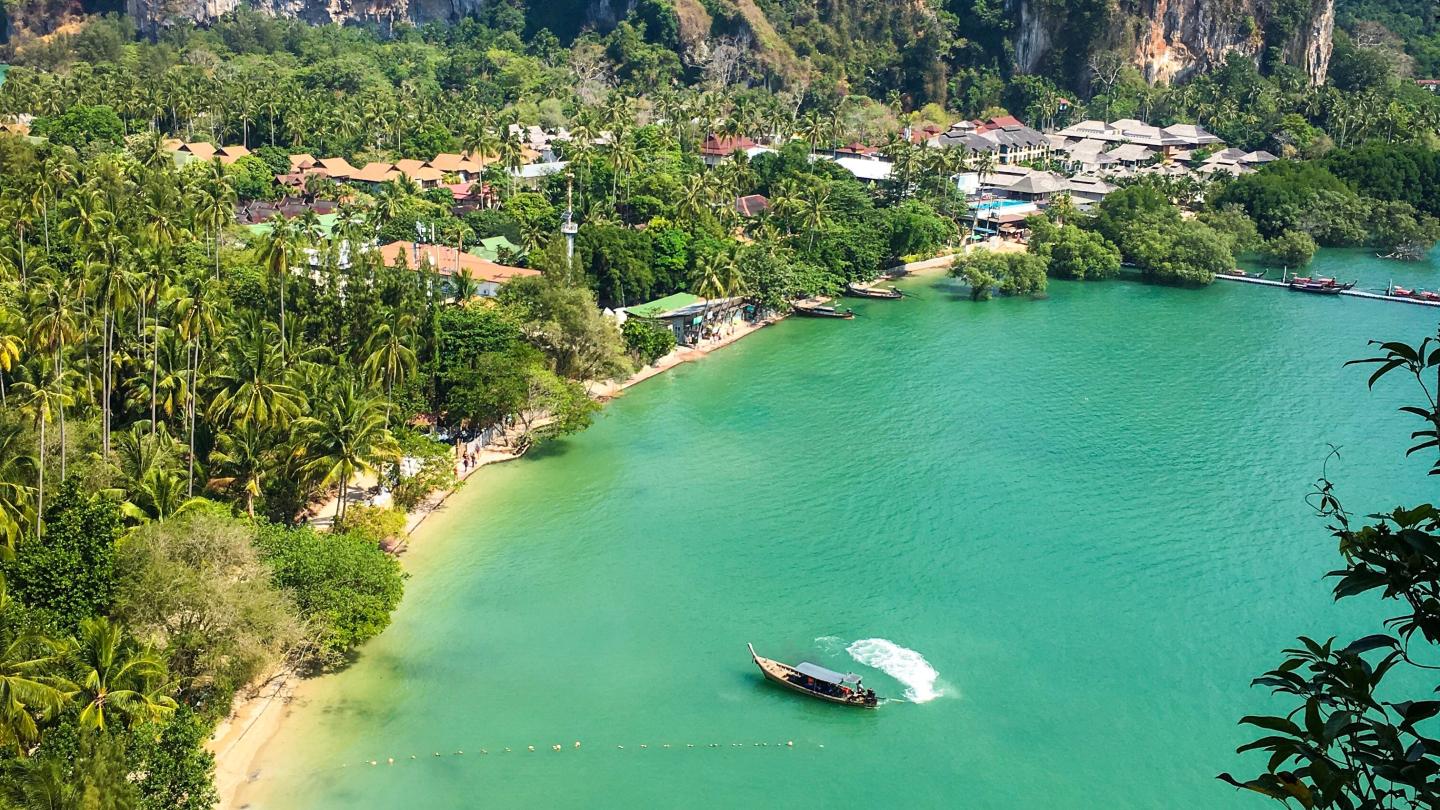
No road reaches Railay: limestone cliffs, the hidden Phra Nang beach, a secret lagoon, and the climbing village of Tonsai, reachable only by longtail boat.
A peninsula the road never reached
No paved road connects to Railay: karst limestone cliffs drop straight into the Andaman Sea all around it, cutting this peninsula off from the rest of Krabi despite being only a few kilometres away as the crow flies. The only way in is a longtail boat from Ao Nang or Krabi Town, which naturally filters the flow of visitors and preserves a pace most Thai coastal destinations lost long ago.
Getting there: boat logistics, not road logistics
Longtails leave Ao Nang every 15-20 minutes during the day (about a 15-20 minute crossing) and land, depending on the tide, at either Railay East (mangrove side, permanent jetty) or Railay West (main beach, direct landing on sand). At low tide the boat sometimes stops short of the beach and you wade through shallow water — sandals and a dry bag for electronics are worth carrying. There is no regular night crossing: the last boat usually leaves before 6pm, which catches travellers used to late departures off guard.
Railay West versus Railay East: two moods, one isthmus
Railay West holds the region's best sunsets and most beachfront accommodation, with clear water good for swimming year-round. Railay East, a five-minute walk across the isthmus, has an unglamorous mangrove shoreline at low tide but concentrates the bars, budget restaurants, and most of the nightlife — the two sides complement rather than compete with each other.
Phra Nang: the sacred beach that belongs to a shrine
A fifteen-minute walk south of Railay West, Phra Nang beach holds a shrine to a legendary princess, where local fishermen still leave carved wooden phallic offerings — an old fertility and maritime-protection practice, worth observing respectfully and without intrusive photography. White sand and turquoise water framed by vertical rock walls make this Railay's most photographed beach; it's best seen early morning, before the organised tour boats arrive around 10am.
The hidden lagoon and viewpoint few visitors reach
A trail climbing from the far end of Railay East leads, via fixed ropes and improvised scrambling over wet rock, to a viewpoint overlooking the whole peninsula, then down into a brackish lagoon ringed by sheer walls — accessible only at low tide and inadvisable after rain, when the rock turns slick. The effort involved (30-45 minutes each way, demanding terrain, no railings) explains why only a minority of day-trippers attempt it, which makes it one of the few genuinely quiet corners left in Railay.
Tonsai: the climbing village right next door
A ten-minute walk or a very short boat hop from Railay West, Tonsai remains the epicentre of sport climbing in Thailand, with more than 700 bolted routes on the surrounding cliffs, climbable year-round for intermediate to advanced levels thanks to the region's compact limestone. The vibe is deliberately rougher — fewer upscale stays, more simple bungalows, and a population of long-stay climbers that gives Tonsai an identity distinct from beach-resort Railay.
When to go, and how to keep the balance
Dry season, November to April, brings the calmest sea and best climbing conditions; monsoon (May to October) brings heavier swell that can suspend boat crossings for hours, a real factor for any tight itinerary. As with most fragile Thai natural sites, favouring certified local climbing guides, never taking coral or shells, and respecting the quiet and posted hours around the Phra Nang shrine are what let Railay stay what it is: a peninsula the road never reached, and doesn't need to.