
Must-See
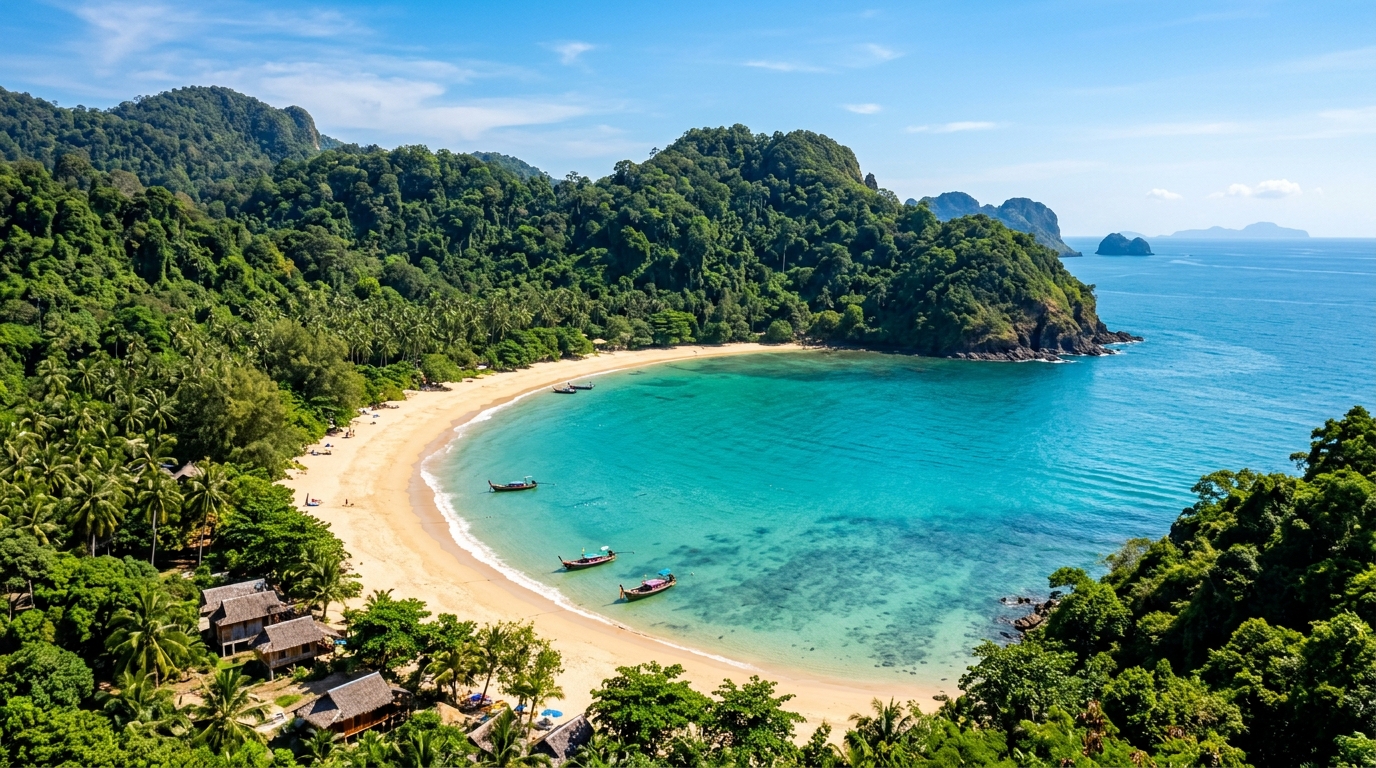
Koh Lanta is a long, flat, comparatively low-key island in Krabi province that tends to suit families and slower long-stays better than nightlife-driven islands do. It has a real local town alongside its beach strip, but it is still an island—transport, seasonal weather and service reach need honest planning before treating it as an easy long-term base.
Choose a beach strip that matches your daily needs
The west-coast beaches (Long Beach/Klong Dao through Klong Nin and the quieter southern coves) each have a different mix of restaurants, shops and quiet. Old Town, on the east side, is the more local, less resort-oriented centre. Visit at a normal hour of day—not just sunset—to judge road noise, shade, and the walk to a shop, a clinic or a school run before committing to an area.
Weather season affects both boats and businesses
Lanta's high season runs opposite the Andaman monsoon; during the wetter months (roughly May to October) some resorts, restaurants and boat operators close or reduce service, and sea conditions can affect ferry crossings from Krabi. If you're planning a stay through the low season, confirm in advance what will actually be open and running rather than assuming year-round continuity.
Family life is workable with the right checks
Lanta's calmer pace and beach access work well for families, but school options, paediatric care and rainy-day activities are more limited than on a mainland city. Test the school run, check what a nearby clinic can and cannot treat, and have a clear plan for anything that needs a mainland hospital.
Before choosing Koh Lanta
- Compare west-coast beach areas against Old Town for the daily errands you'll actually run.
- Check what stays open through the wet season if your stay spans it.
- Confirm ferry/boat schedules and Krabi transfer options before locking in travel dates.
- Verify local clinic capabilities and the nearest hospital route for anything beyond routine care.
Sources and review
This original SawaLife planning guide was reviewed on 14 July 2026. The links below are context sources, not endorsements of a personal decision. Service hours, routes, weather, prices and local conditions can change.
Things to See & Visit
Must-See Places & Recommendations in Koh Lanta
Explore iconic landmarks, revered temples, pristine natural wonders, and cultural gems curated by SawaLife.
Local weather
Weather in Koh Lanta
Local weather
26 °C
Cloudy · Feels like: 31.6 °C
Provider observation: 2026-09-25T02:00 (Asia/Bangkok)
Source: Open-Meteo
View weather sourceModelled AQI
AQI 32
Good · PM2.5: 7.9 µg/m³
Updated by SawaLife: 2026-09-24 20:00:50 UTC
Modelled source: Open-Meteo / CAMS Global
View air-quality sourceThis is a modelled air-quality estimate, not a local sensor measurement or health alert. Follow official local guidance.
City profile
Source-backed city profile
These nine planning signals are separate, reviewed criteria. They do not produce an overall rank or a personal recommendation.
9 of 9 current criteria are available.
How these city signals are produced
SawaLife city context methodology
- Purpose
- Nine independent planning signals describe relative city context. They are never combined into a total, ranking, winner or personal recommendation.
- Scale interpretation
- Each whole-number value uses a 0–100 contextual scale defined for its own criterion. A higher value means a stronger presence of that named context; it is not a percentage, probability, live measurement or guarantee.
- Source policy
- Every published value keeps its identifiable primary source, supporting source bundle, capture date and staff review. Volatile weather and air-quality readings stay separate. Unsupported commercial indexes and inferred values are excluded.
- Version
- city-score-v2
- Effective from
- 2026-07-14
- Staff reviewed
- 2026-07-15